
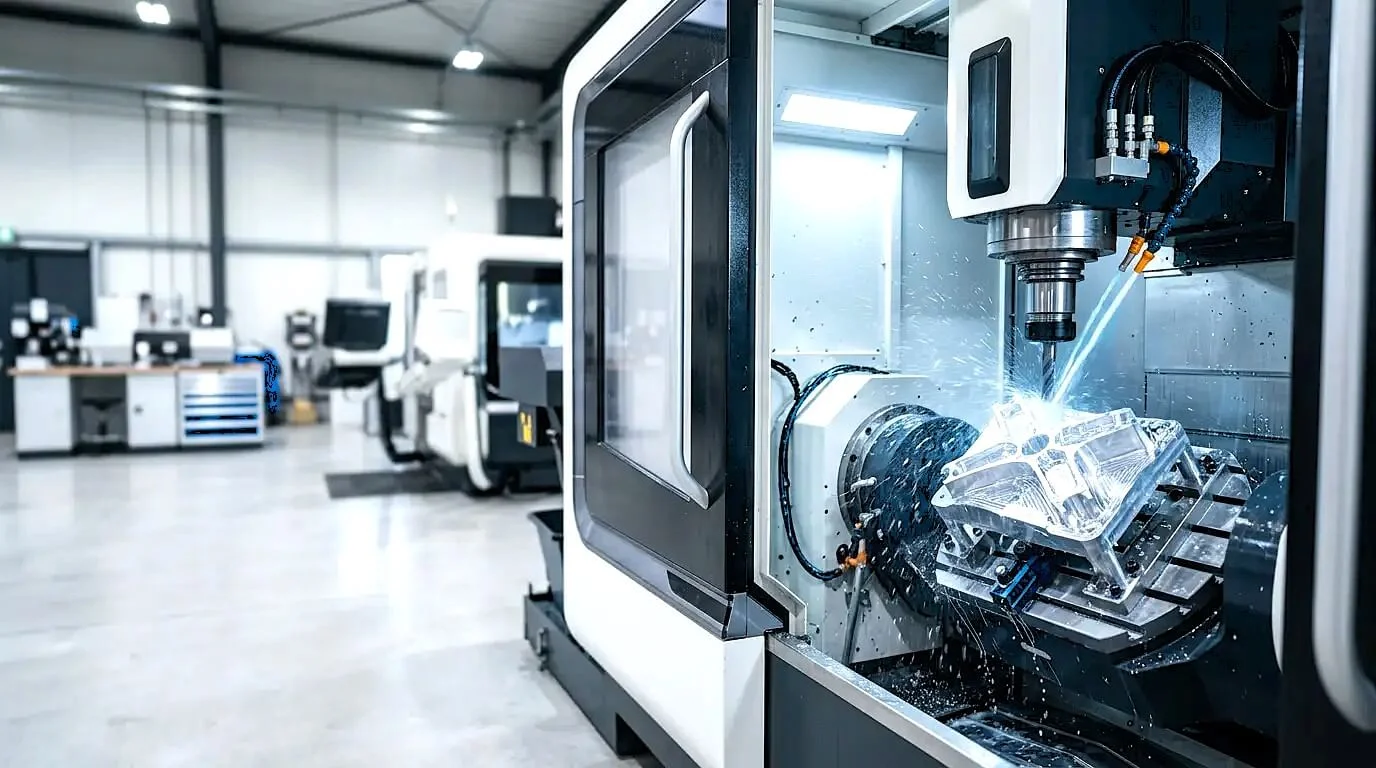
CNC Machining Capabilities
Batnon is a precision CNC machining manufacturer supporting engineers and procurement teams worldwide. This page summarizes our CNC machining capabilities—from 5 axis CNC machining services to CNC milling and turning capabilities, materials and finishes, and CNC machining inspection and quality control. If you need a fast CNC machining quote for custom parts, the blocks below are designed to match how buyers evaluate suppliers: capability fit → risk/quality evidence → cost/lead-time levers → RFQ.
Explore material-specific pages: Aluminum · Titanium · Brass · Ultem / PEI
What Experienced Buyers Actually Need
Intro Paragraph
Most people don’t search for “a machine.” They search for confidence — reliable fit, achievable tolerances, consistent finish, and predictable delivery. Use these blocks as a fast decision framework.
Fast Capability Fit
When comparing suppliers, start with the fundamentals: 5-axis capability, tight tolerance expertise, proven inspection processes, and material & finish options.
Reduce Quote Friction
The fastest and most accurate quotes happen when your RFQ includes a complete technical package and clearly defined CTQs.
Sourcing Reality
Experienced buyers optimize for predictable lead times and assembly fit — not just the lowest theoretical machining rate. A reliable quote requires clear CTQs, finishing requirements, and inspection deliverables.
- Best for: prototypes, pilot runs, and stable production programs
- Watch for: over-tolerancing, deep narrow pockets, and unspecified finishes
- Key Cost Lever: CTQ-driven tolerancing + setup consolidation
Capability Fit — What We’re Built to Make
Think in outcomes: part performance, assembly fit, and predictable delivery. These blocks describe what we do best—and how we keep tight tolerance CNC machining cost-competitive through process planning.
Multi‑Axis Milling
3/4/5‑axis milling for complex datums, pockets, multi-face features, and contoured surfaces. 5-axis often reduces setups, improving feature‑to‑feature accuracy.
Turning + Milled Features
CNC turning / lathe for shafts, bushings, fittings, and concentric features. We plan for stable runout control and predictable surface finish on journals and sealing faces.
Prototype → Production
Prototype to production CNC machining with DFM feedback, revision control, and repeatable inspection plans—so you move fast early and stay stable at scale.
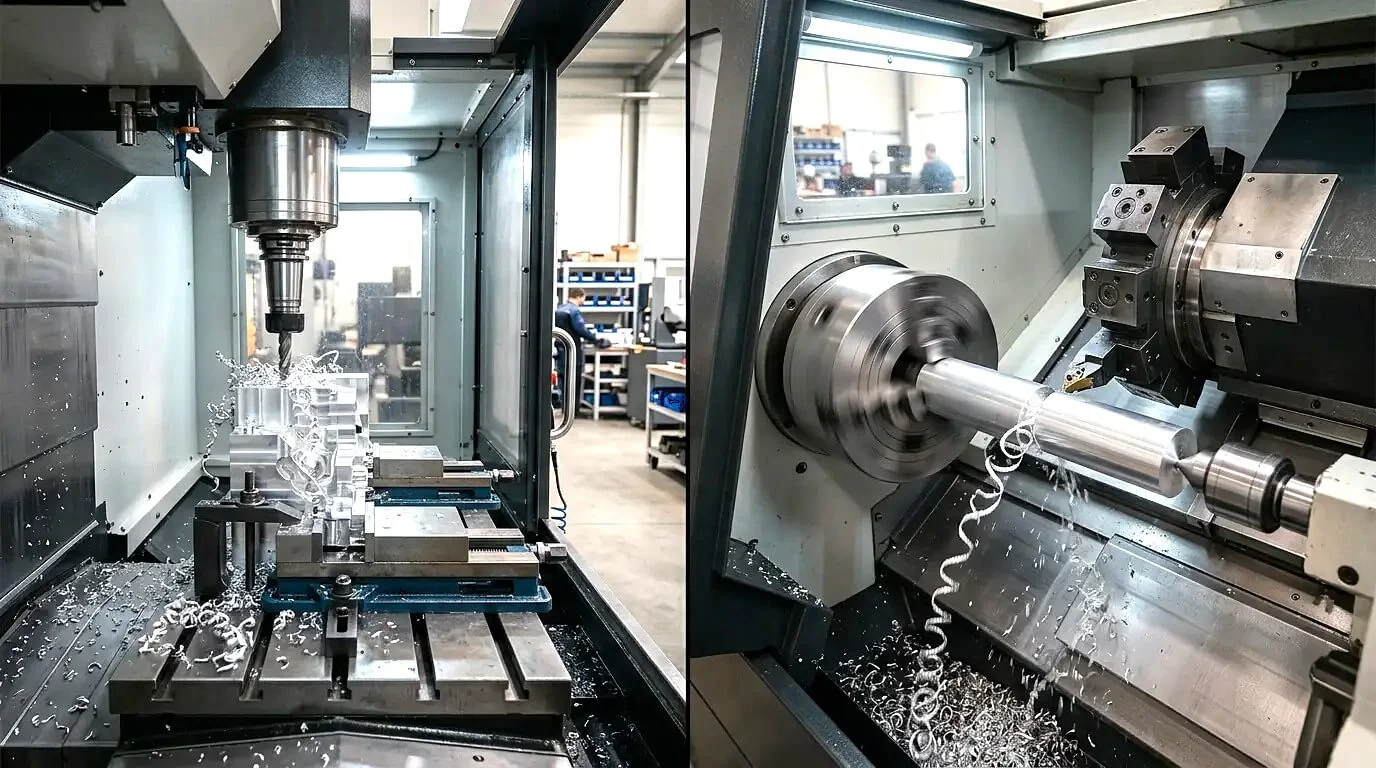
Milling + Turning Coverage
One supplier, one technical thread: datums, CTQs, inspection, and finishing planned from the first quote.
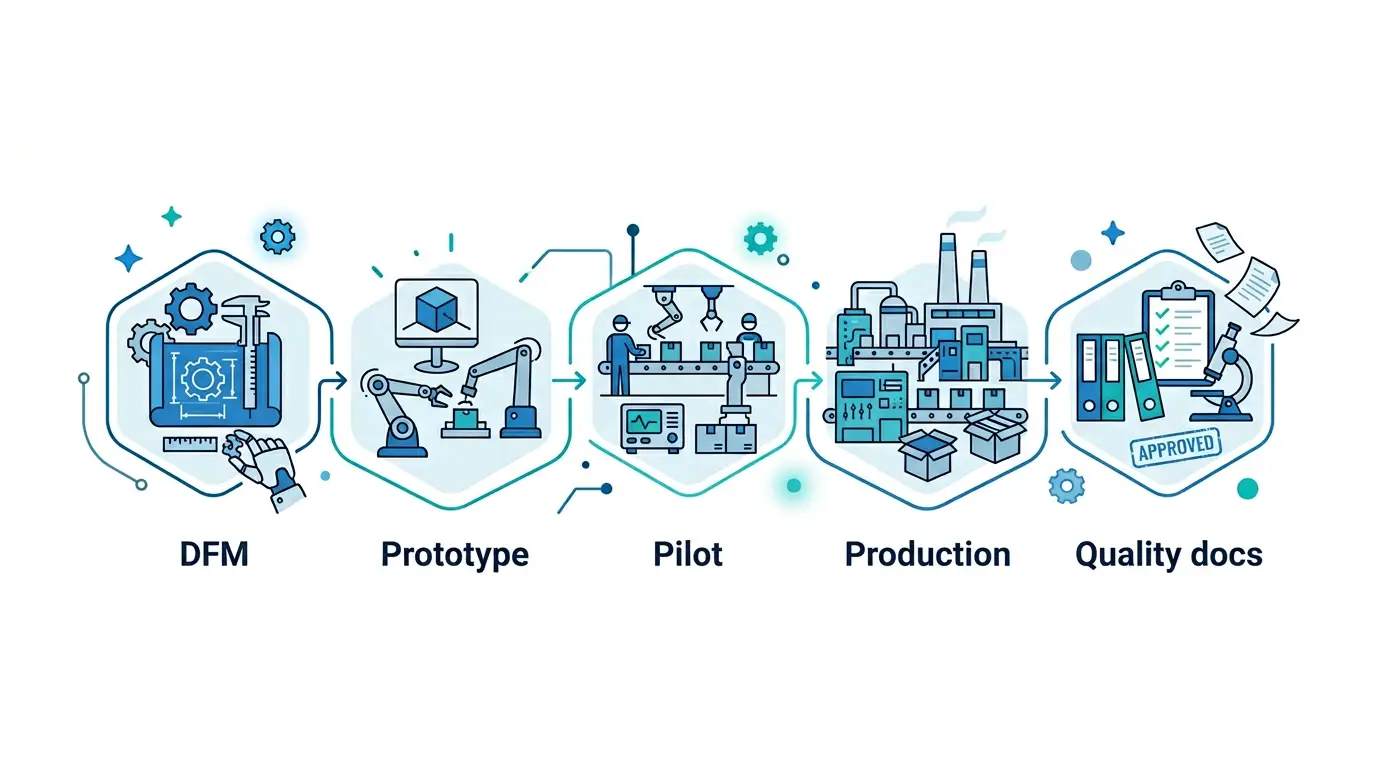
How Programs Scale
DFM → prototype → pilot → production. This is the path that reduces scrap risk and stabilizes lead time.
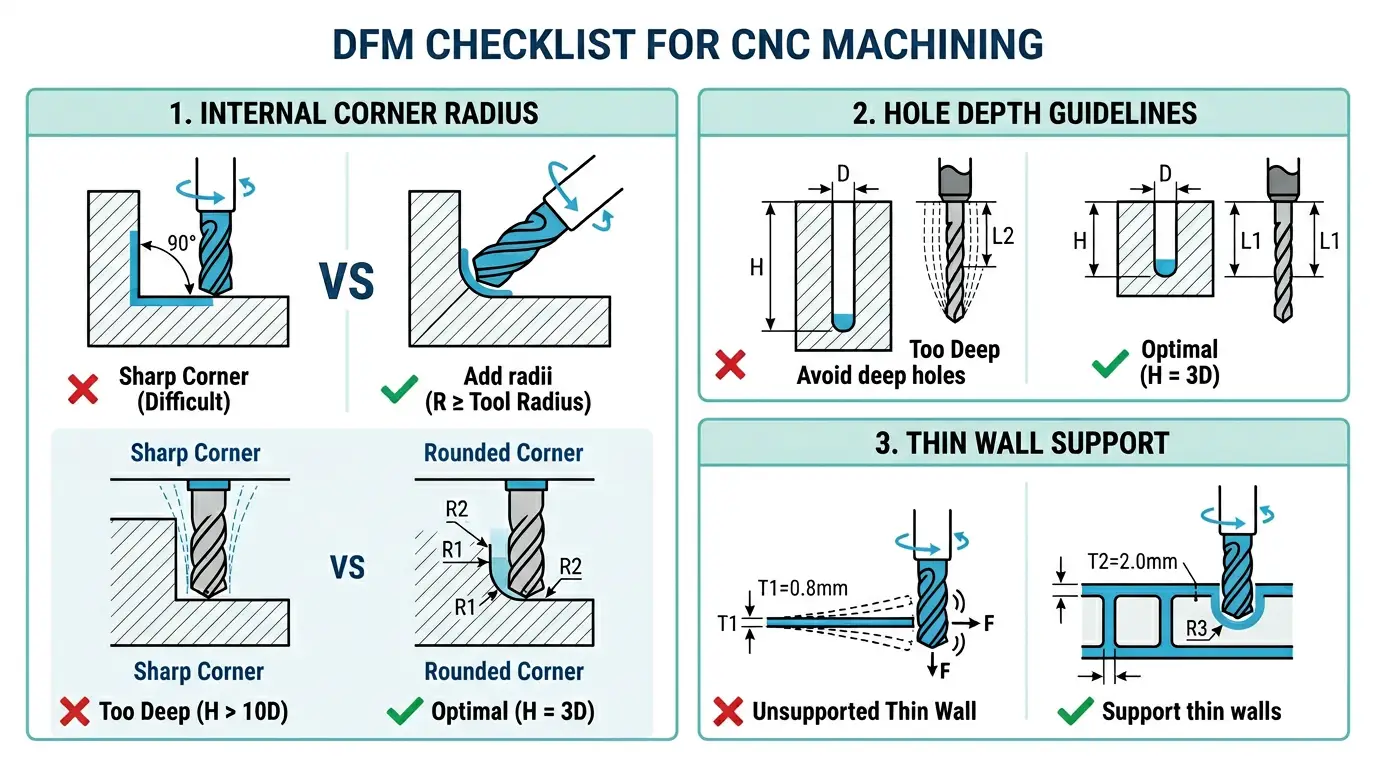
DFM That Actually Lowers Cost
Radii, depth-to-diameter rules, and thin-wall support—small drawing changes that often cut cycle time dramatically.
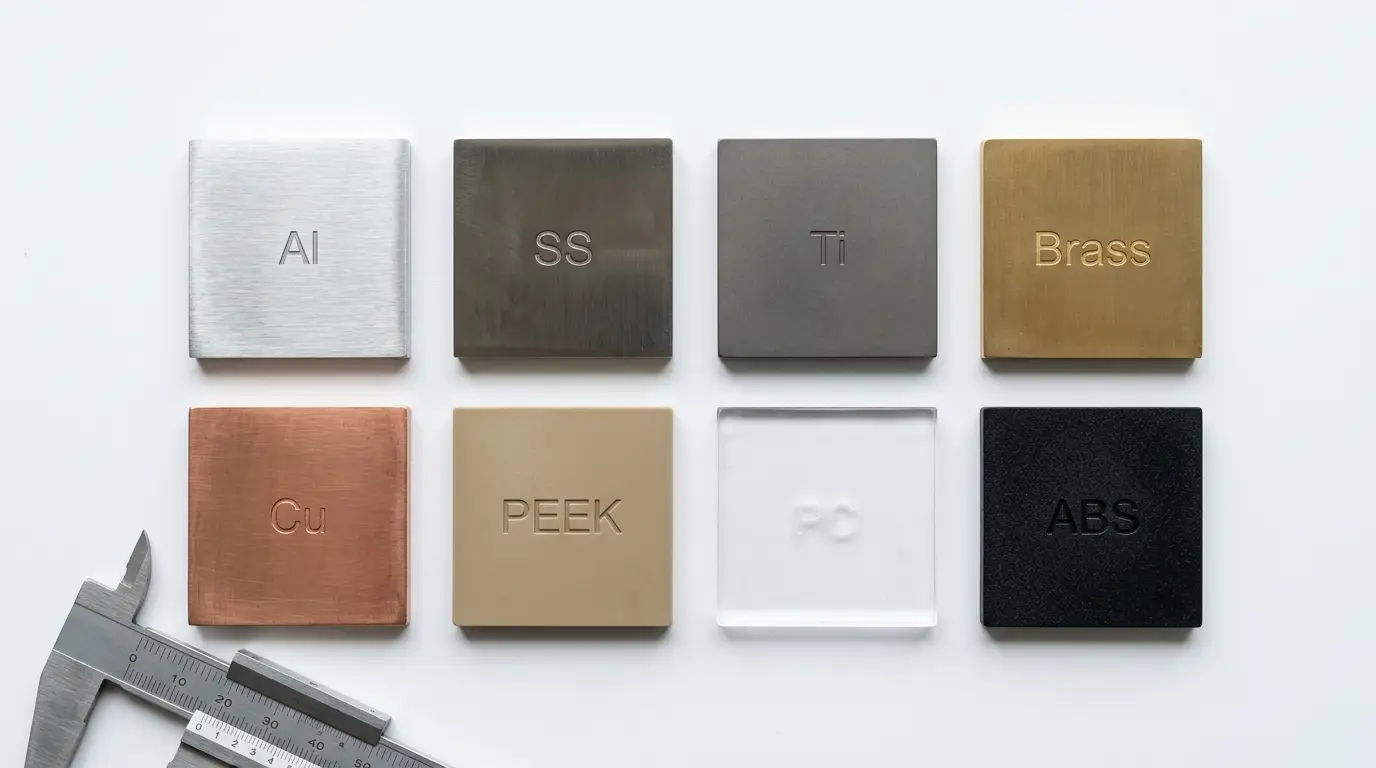
CNC Machining Materials and Finishes
Accurate pricing starts with a specific material grade and finish. “Aluminum” is not a material spec. Use this block to align material intent before RFQ—especially for programs with compliance and traceability needs.
| Material Family | Why Engineers Choose It | Typical Applications |
|---|---|---|
| Aluminum | Lightweight, excellent machinability, great for enclosures and brackets | Robotics frames, housings, heat sinks, fixtures |
| Stainless steel | Corrosion resistance + strength for harsh environments | Medical components, food equipment, industrial hardware |
| Titanium | Strength-to-weight + corrosion resistance; higher machining complexity | Aerospace brackets, motorsport parts, medical device components |
| Copper / Brass | Conductivity and machinability; great threads (brass) | Terminals, fittings, manifolds, connector bodies |
| Engineering plastics | Low weight, electrical insulation, corrosion resistance | Insulators, wear guides, fixtures, housings |
| High-performance plastics | High heat/chemical performance for demanding environments | Semiconductor equipment, high-temp tooling, specialty fixtures |
Surface Finishes (and Why They Affect Cost)
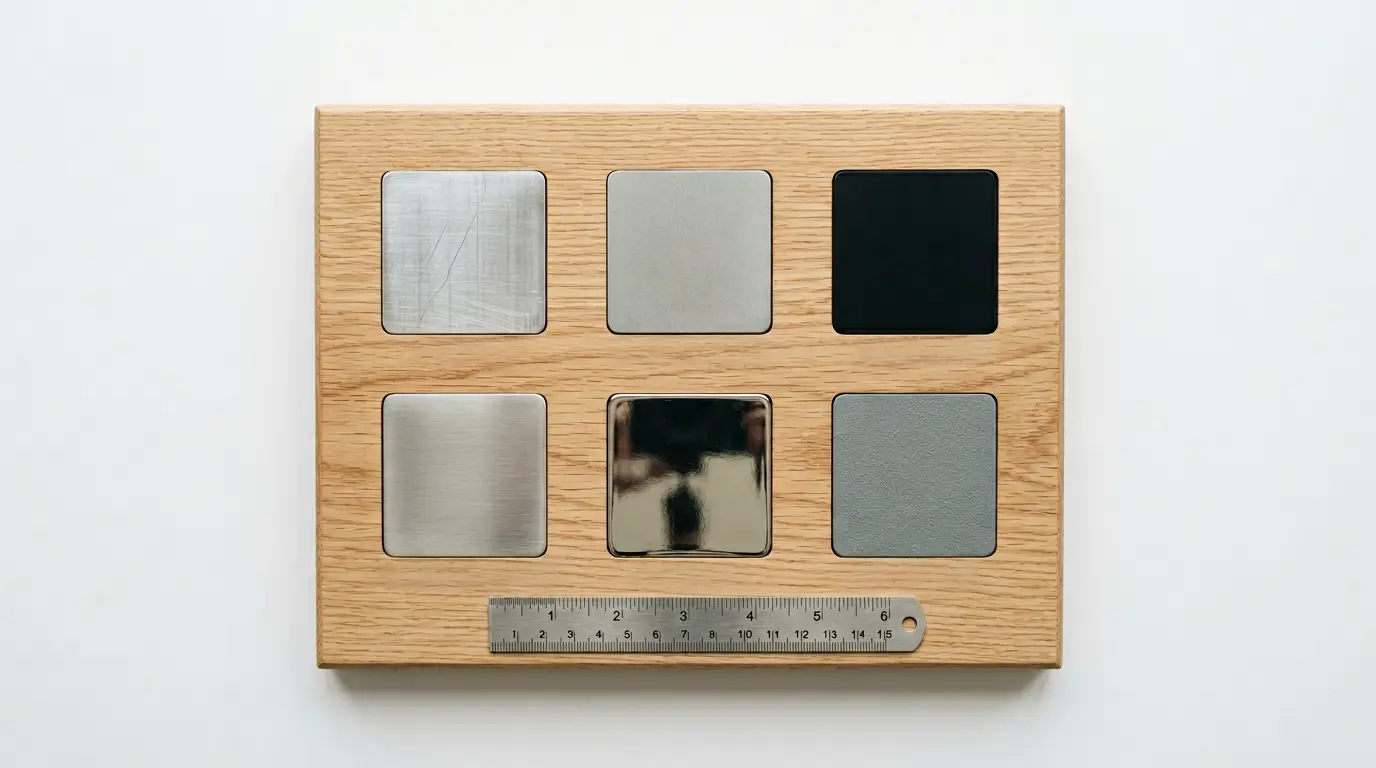
Finishes change more than appearance: they affect corrosion, friction, conductivity, and dimensional stack-up. If your part has tight fits, treat finish as a design input—not an afterthought.
Functional finishes
Anodize, passivation, plating, and coatings are often chosen for corrosion/wear. Define which surfaces are functional vs cosmetic to keep cost predictable.
Cosmetic finishes
Bead blast or brushing can hide tool marks. Polishing everywhere is expensive—specify only the faces that truly matter.
Finish-aware tolerancing
When finish impacts fits, the right workflow is: CTQs → allowance/masking → inspection plan. This reduces scrap risk and rework.
Quality, Inspection, and Documentation
Buyers don’t purchase “±0.01 mm” — they purchase evidence that the critical features will assemble. We align inspection to datums/CTQs, then deliver the evidence level you request.
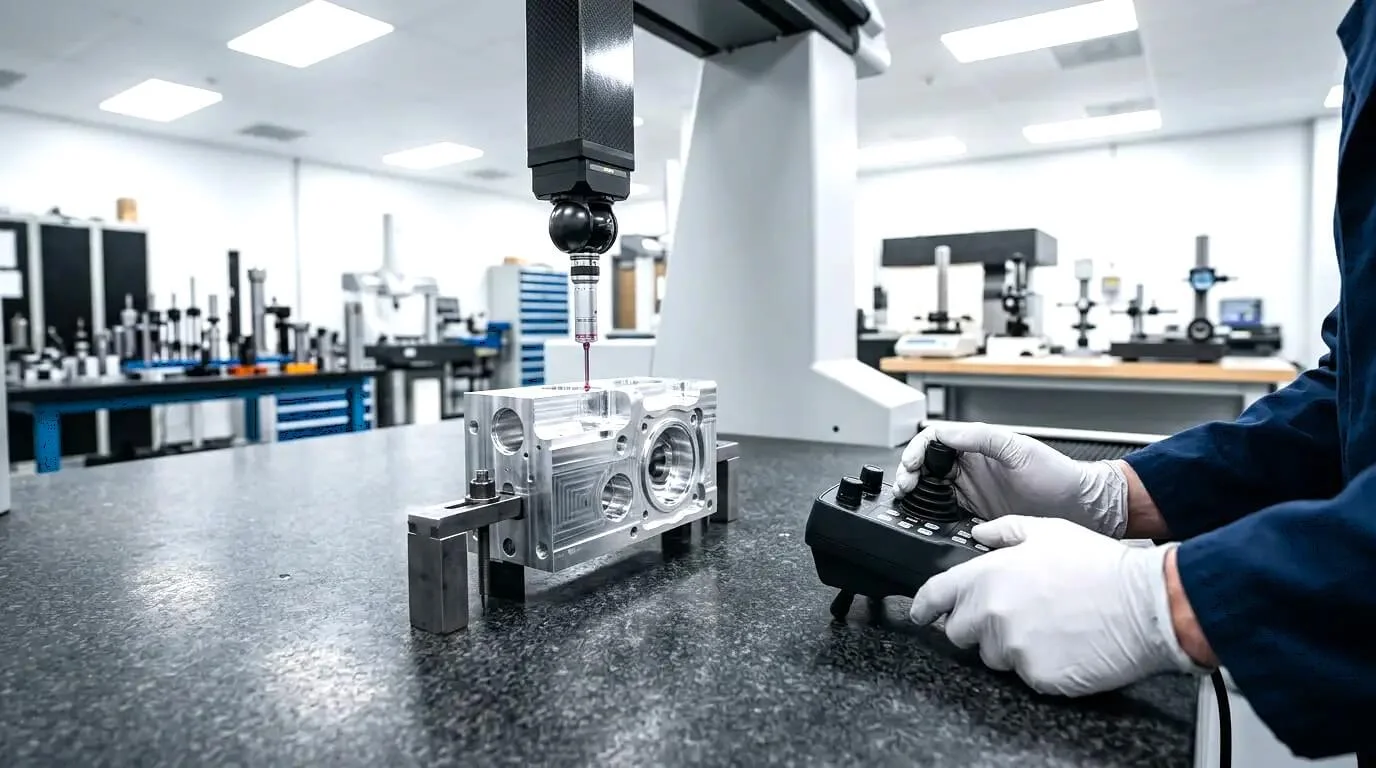
CMM + critical dimension reporting
Risk-based measurement: inspect what gates performance—fits, sealing faces, true position, and datum relationships.
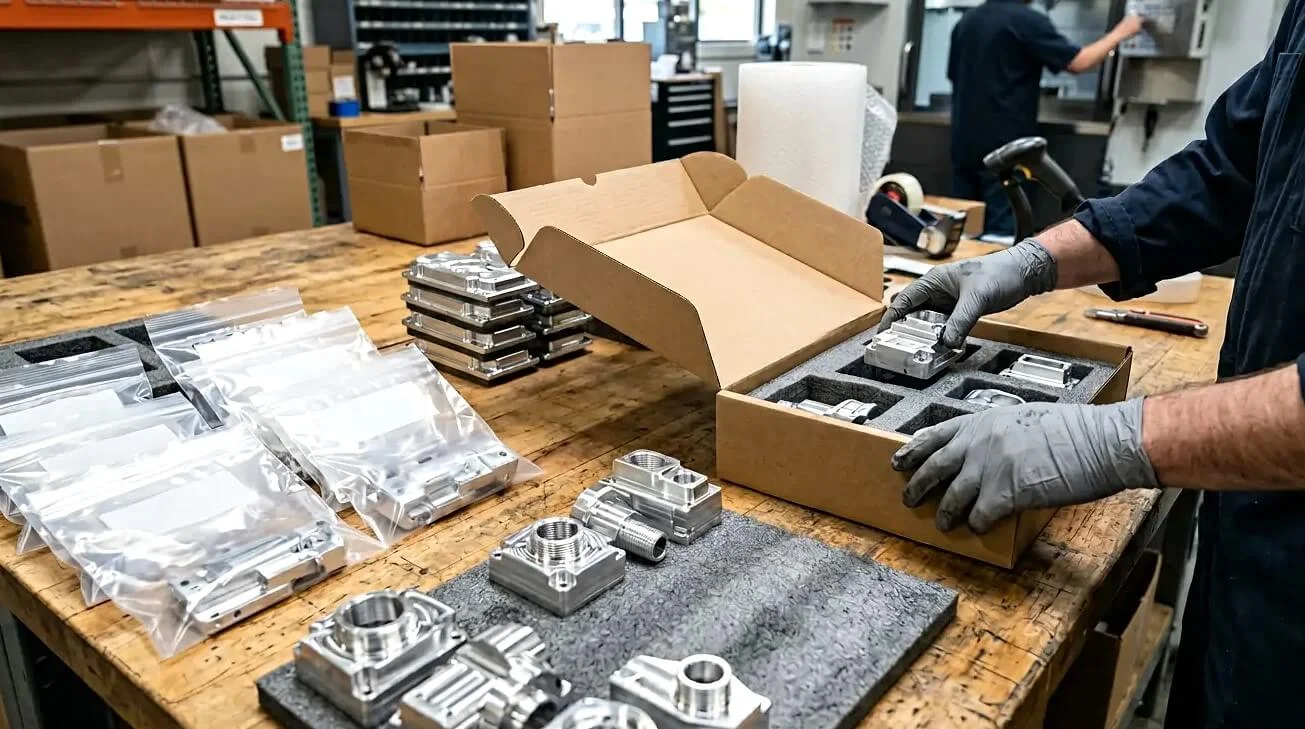
Packaging and handling
Damage prevention is quality. Packaging choices depend on finish sensitivity and assembly cleanliness requirements.
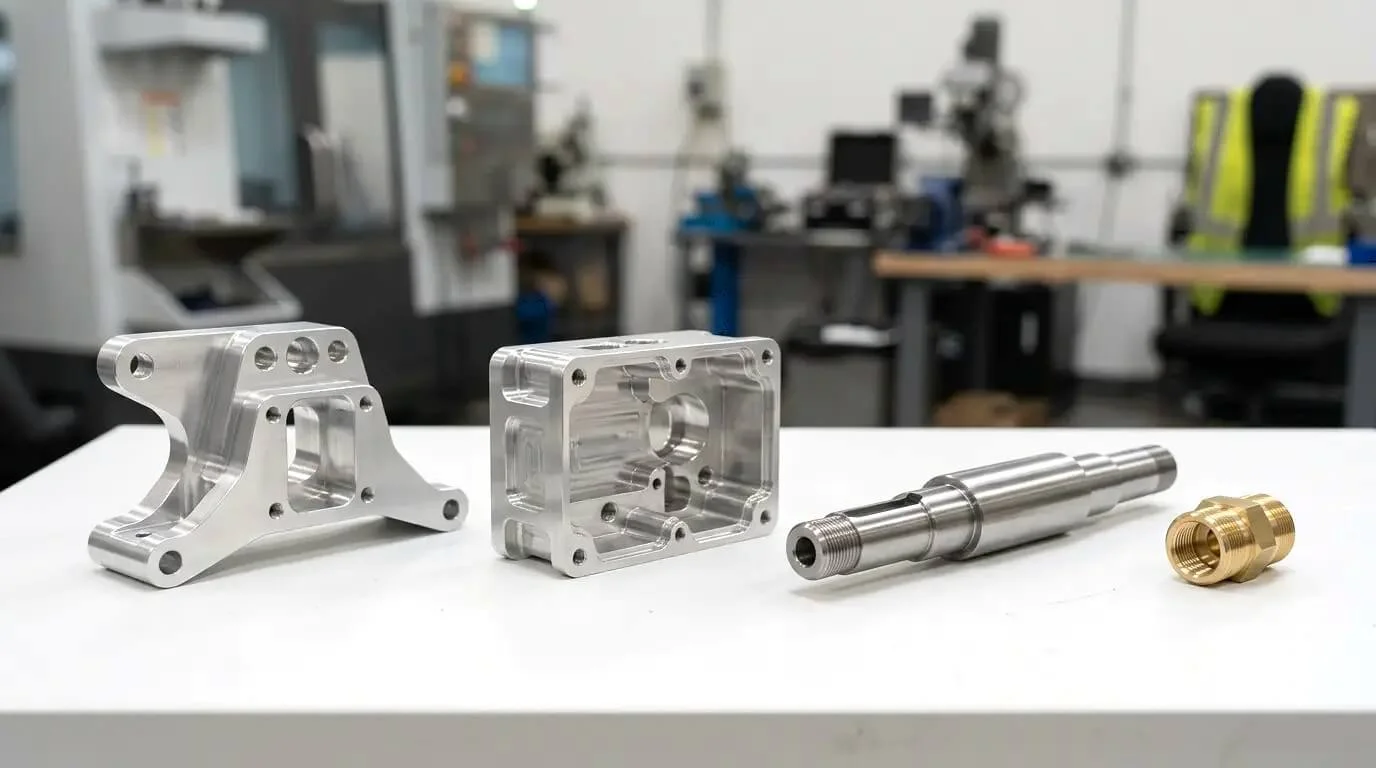
Consistency across part families
Stable datums + stable inspection plans are how multi-part assemblies stay consistent across lots.
| Inspection Level | Best For | What You Receive |
|---|---|---|
| Standard inspection | Non-critical parts, early prototypes | Visual + basic dimensional checks on key features |
| Dimensional report | Assemblies with defined CTQs | Measured results tied to datums/CTQs (CMM/fixtures as appropriate) |
| Traceability package | Compliance-sensitive programs | Material/lot traceability evidence when requested, plus inspection evidence |
DFM: What Drives CNC Machining Cost (and How to Reduce It)
Most pricing variance comes from a small set of cost drivers: over-tolerancing, deep narrow pockets, sharp internal corners, and avoidable setups. DFM feedback at quote time is the fastest way to protect both cost and lead time.
| Design Item | Recommendation | Why It Matters |
|---|---|---|
| Tolerances | Use tight tolerances only on CTQs; use standard tolerances elsewhere | Tight tolerances increase cycle time and inspection load |
| Internal corners | Add radii; avoid sharp internal corners | Sharp corners force tiny tools or EDM, increasing cost |
| Deep holes | Avoid hole depth > ~6× diameter when possible | Deep holes require special tooling and can drive cycle time |
| Thin walls | Support thin walls; add ribs; rough symmetrically | Thin walls warp and chatter, raising scrap risk |
| Setups | Consolidate datums; design for one or two primary setups | Fewer setups improves both accuracy and lead time |
DFM points above align with widely shared CNC DFM guidance (e.g., Protolabs). We apply them during quoting so the final price reflects real manufacturability, not just theoretical geometry.
RFQ Checklist: Get a Faster CNC Machining Quote
For the fastest response, send the full technical package. This reduces clarification loops and helps us give an accurate lead time for your program.
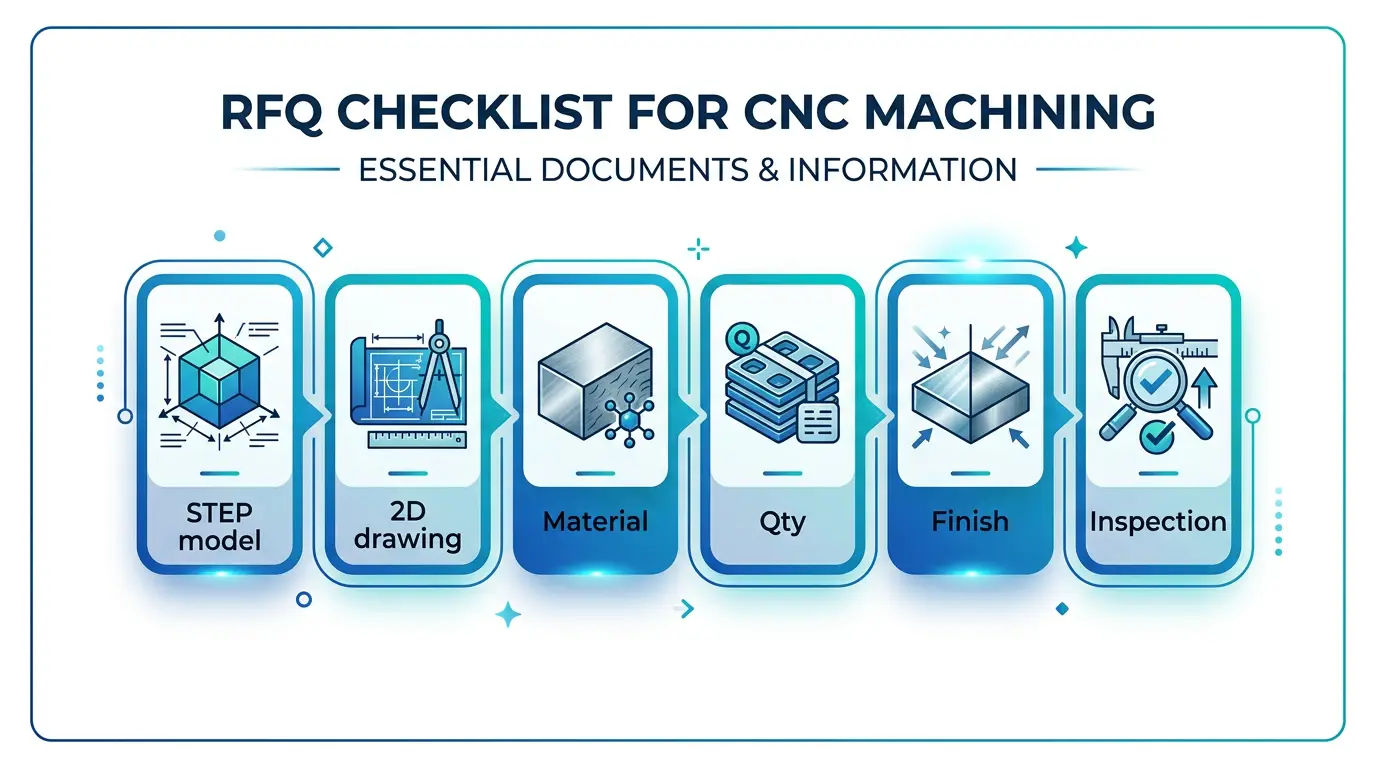
Include CTQs
Flag critical datums and fit features (bearing seats, sealing faces, true position). CTQs guide process planning and inspection scope.
Include quantity tiers
Pricing changes with volume due to setup amortization. If you’re unsure, include 1 / 10 / 100 tiers for planning.
Include finish + inspection
Finishing and inspection are part of the cost. Specify them up front to avoid re-quotes and schedule drift.
Ready to request a quote?
Use your site’s contact methods in the header/footer, or go directly to:
Tip: include STEP + 2D drawing + material + qty + finish + inspection to get the fastest, most accurate quote.
Case Section: A Part Family That Shipped On Time
A typical “capabilities test” is not one part—it’s a small assembly family with mixed processes: milled bracketry, turned shafts, inspection evidence, and packaging. Here’s how we structure programs to reduce risk and protect schedule.
| Goal | Constraint | Batnon Approach | Result |
|---|---|---|---|
| Stable fit + predictable lead time | Multiple parts, shared datums, mixed finishes | CTQ-first tolerancing, setup consolidation (5-axis where it helped), inspection plan tied to datums, finish planned before machining | Repeatable assembly, fewer iterations, clearer schedule and cost |
What we measured
We measured what gated assembly: true position of holes, critical bores, and sealing faces—then let non-critical dimensions run on standard tolerances.
What we changed
Small DFM changes (radii, hole depths, setup access) reduced cycle time without changing function—keeping pricing competitive.
What we protected
Finish-sensitive faces were protected during handling and packaging to prevent cosmetic rework and schedule slip.
FAQ: CNC Machining Capabilities
Questions buyers ask before they request a quote—from tolerances and 5-axis to materials, finishes, and inspection evidence.
What are your CNC machining capabilities?
We provide CNC milling and turning capabilities including multi-axis machining, tight-tolerance features, and production-ready secondary operations.
Do you support 5 axis CNC machining services?
Yes. 5-axis is ideal for complex parts where setup reduction improves accuracy and often shortens lead time.
What tolerances can you hold for tight tolerance CNC machining?
Tight tolerances are achievable when geometry supports stable fixturing. CTQ-driven tolerancing keeps cost and inspection effort under control.
Which materials do you machine most often?
Common materials include aluminum, stainless steel, titanium, brass/copper, and engineering/high-performance plastics. Specify exact grade/condition for accurate pricing.
What finishes can you support?
We coordinate anodizing, passivation, plating, bead blast, and coating workflows. Finishes can change dimensions—plan CTQs accordingly.
Can you provide inspection and quality documentation?
Yes. We can align inspection to CTQs and deliver dimensional/CMM evidence when requested.
How do I get a CNC machining quote for custom parts?
Send STEP + 2D drawing, material grade, quantities, finish, and inspection requirements. This reduces back-and-forth and speeds quoting.
How do you keep lead time and pricing competitive?
We use DFM to reduce cycle time, CTQ-driven tolerancing to limit inspection overhead, and early finish/inspection planning to prevent rework.
CNC Machining Capabilities
If you’re searching for precision CNC machining services, 5 axis CNC machining services, CNC milling and turning capabilities, tight tolerance CNC machining, or a fast CNC machining quote for custom parts, Batnon’s workflow is designed around engineering alignment: CTQs first, then DFM for cost, then inspection evidence.
- What we deliver: prototypes, pilot builds, and production runs with documented inspection
- How we reduce risk: CTQ-driven tolerancing, setup consolidation, finish-aware planning
- How to accelerate quotes: STEP + 2D drawing + material + qty tiers + finish + inspection level
This page is written to be AI-agent friendly: clear blocks, defined terms, and buyer-centric decision steps.