
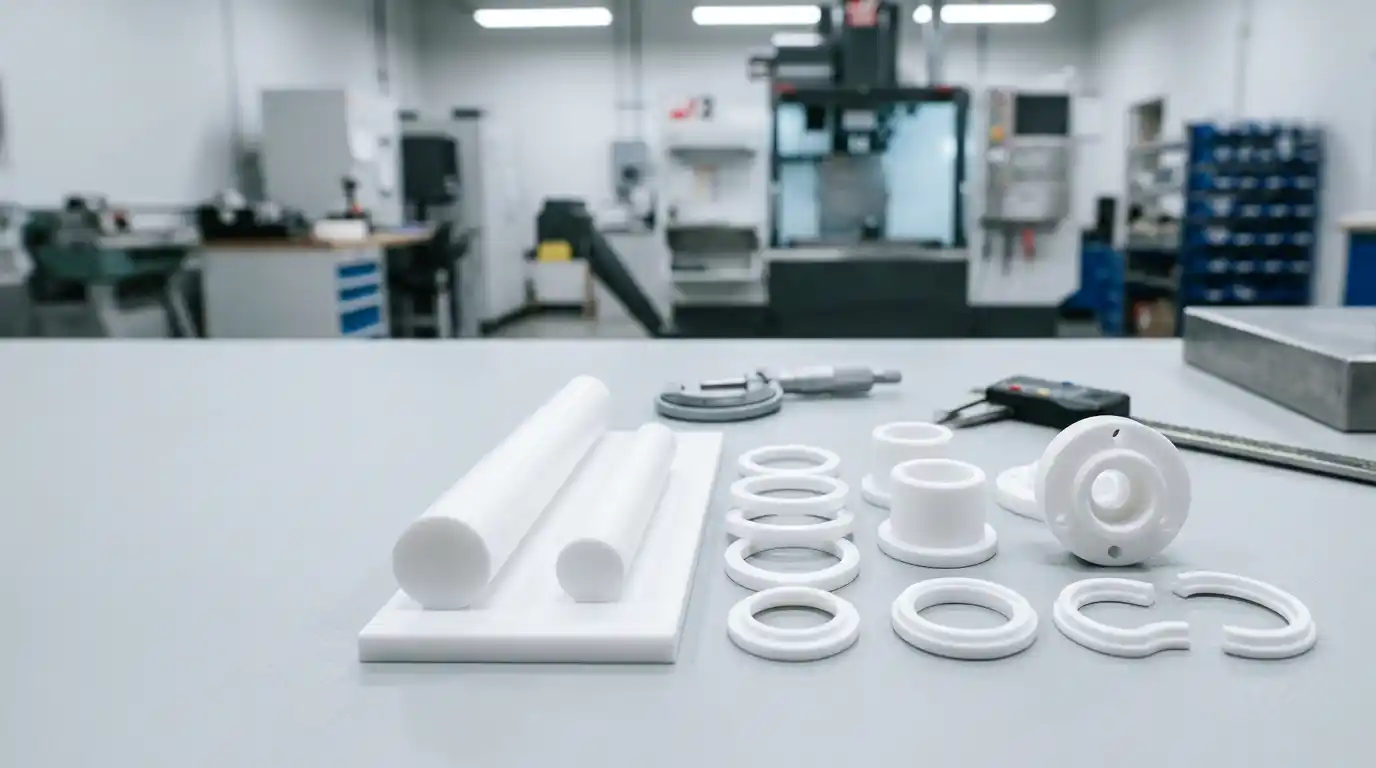
PTFE CNC Machining Services
Batnon provides PTFE CNC machining (also known as Teflon CNC machining) for low-friction, chemically resistant components such as seals, valve seats, wear rings, bushings, and fluid-handling parts. PTFE’s strengths—very low friction and broad chemical resistance—come with machining “gotchas”: cold flow (creep), high thermal expansion, and deformation under clamping. For tight fits, we plan geometry, support, and inspection around CTQs so parts assemble cleanly and perform reliably from prototype to production.
Need stiffer, tighter tolerance retention? Compare with Delrin / POM CNC machining. Need higher strength/wear at temperature? Compare with PEEK CNC machining.
Plastic Material Pages
Same structure across materials—different machining physics. Use these pages to compare DFM, tolerances, and cost drivers.
Engineering Plastics
Compare plastics for DFM, tolerances, heat/chemical performance, and cost drivers.
High Performance Plastics
When temperature/chemicals/purity drive the spec:
PEEK · Ultem / PEI · PTFE · Vespel / PI
Fast selection hint
PTFE is often chosen when you need very low friction and chemical resistance for seals, seats, and sliding interfaces. The “gotchas” are creep (cold flow) and thermal expansion: tight fits must be CTQ-driven, and features should be backed up against long-term load.
- Best at: seals, valve seats, low-load sliding/wear parts
- Watch: clamp deformation, creep under load, fit drift with temperature
- Cost lever: CTQ-only tolerances + stable support/fixturing
What PTFE (Teflon) Is — and When to Choose PTFE CNC Machining
PTFE (polytetrafluoroethylene) is a fluoropolymer known for non-stick / low friction, excellent chemical resistance, and a wide service temperature range (often cited roughly -240 to 260°C, application dependent). In practice, ptfe cnc machining is chosen when sliding behavior, chemical compatibility, and cleanliness matter more than high stiffness. Successful PTFE machining is primarily about deformation control: stable support, conservative clamping, sharp tools, and CTQ-driven inspection.
Use case 1: Seals & valve seats
Teflon PTFE CNC machining for seals and valve seats is common in chemical processing, pumps, and fluid systems where friction and media compatibility drive the design.
Use case 2: Wear rings & bushings (low load)
PTFE is used for sliding interfaces to reduce stick-slip. When loads rise or long-term wear is critical, consider filled PTFE grades and define surface finish on the functional faces.
Use case 3: Fluid-handling blocks
For manifolds, chemical blocks, and lab fixtures, PTFE can help with chemical compatibility and cleaning—just design fits around CTE and creep for repeatable assembly.
Key PTFE Properties That Affect CNC Machining
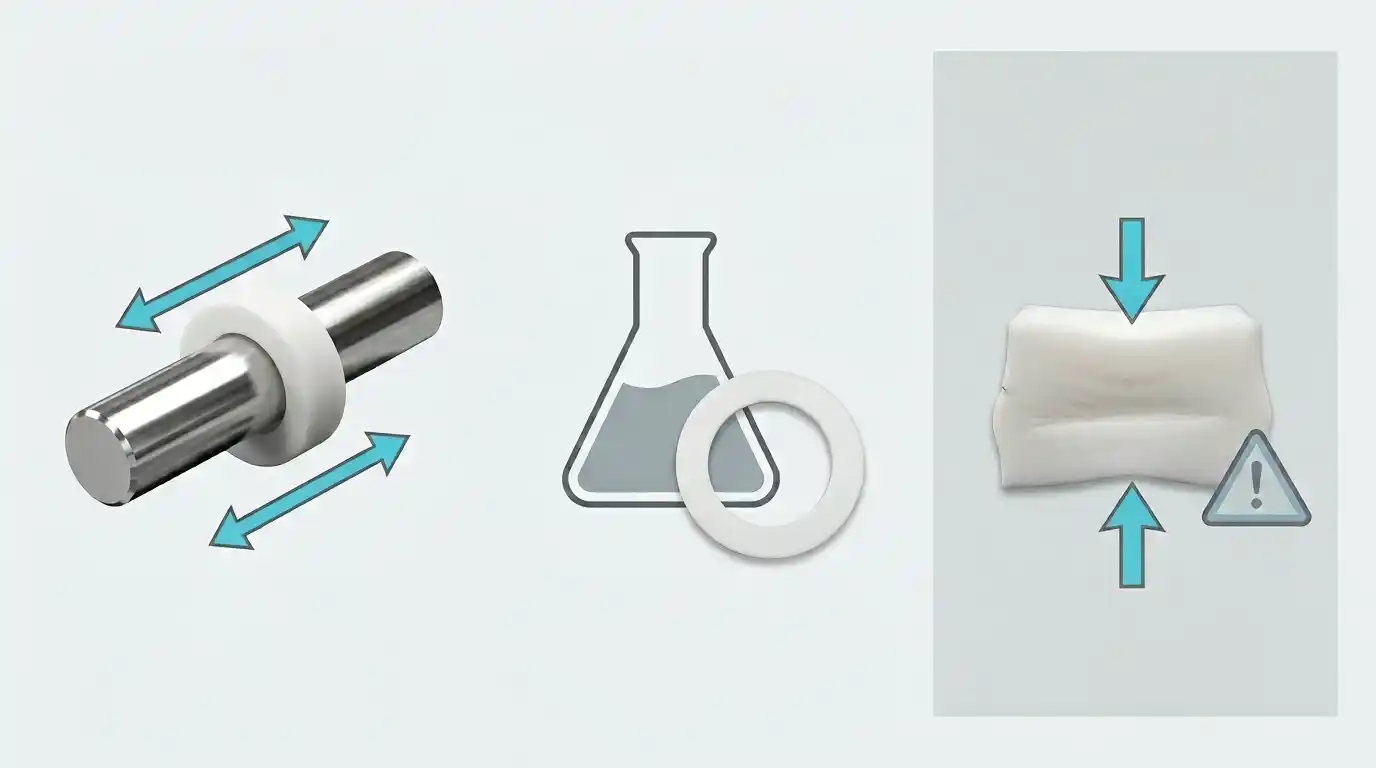
PTFE’s machining behavior is dominated by softness and time/temperature effects. A few properties matter most: low coefficient of friction (often cited around 0.05–0.10), chemical resistance, a broad temperature range, and cold flow (creep). These determine what tolerances are realistic and how to design stable fits.
| Property driver | What it means for your part | Why it matters in machining |
|---|---|---|
| Low friction | Supports sliding interfaces and reduces stick-slip in many applications | Functional faces benefit from controlled finish; avoid rough sealing/sliding surfaces. |
| Chemical resistance | Often selected for aggressive media and cleaning environments | Material choice should match your exact chemical + temperature; fillers can change compatibility. |
| Temperature capability | Wide service window (application dependent), but dimensions change with temperature | High CTE means fits drift with temperature—design clearance and CTQs accordingly. |
| Cold flow (creep) | Time-dependent deformation under sustained load | Avoid knife edges; add backup rings / wider bearing areas; don’t rely on pure interference fits. |
| Softness / clamp sensitivity | Can distort under modest clamping forces | Workholding strategy is a major cost + quality driver; soft jaws and full support improve repeatability. |
DFM Guide: Deformation Control and Cost in PTFE CNC Machining
The best PTFE results come from “gentle” machining: stable support, sharp tooling, chip evacuation, and staged finishing. The highest ROI DFM moves are to design for support and tolerance only what matters. If you remove significant material or have thin walls, plan rough → relax → finish so the part stabilizes before final CTQs are cut.
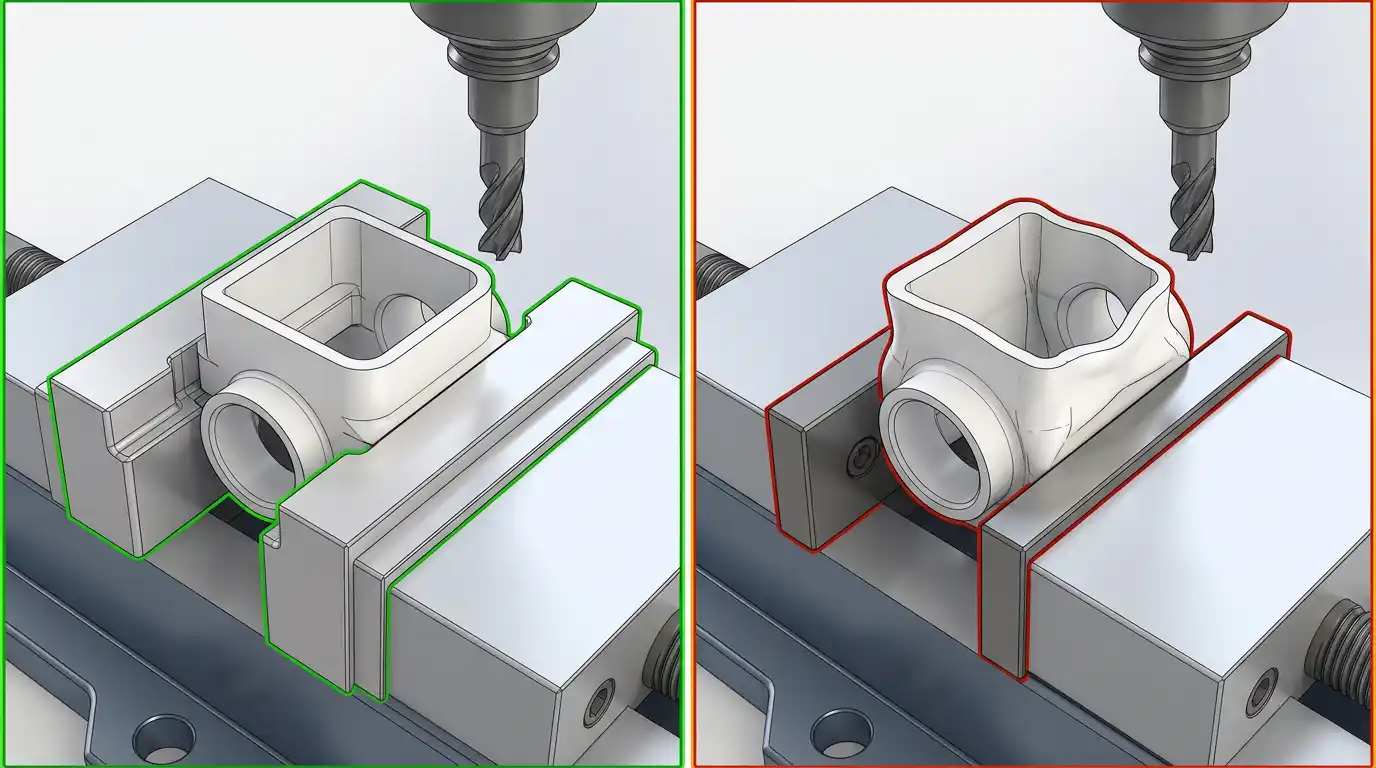
Design for support, not just geometry
Thin walls and long overhangs amplify clamp deformation. Add backup features (wider bases, ribs where possible) and avoid knife-edge sections that can cold flow under load.
CTQ-first tolerancing
For PTFE machining tolerances and realistic fits, hold tight datums/bores only where assembly or sealing requires it, and use standard tolerances elsewhere (e.g., ISO 2768 medium) to keep cost controlled.
Rough → relax → finish
A staged strategy reduces post-machining drift. Roughing can release stress and change shape; finishing CTQs last improves repeatability and reduces scrap risk.
Practical “no regrets” specs to include in your RFQ
To make PTFE CNC machining service quoting accurate and fast, specify:
- Media + temperature: chemical name/concentration and operating temp range
- Load + duty: sealing load, sliding load, cycle counts
- Material: virgin vs filled PTFE; filler type if known
- CTQs: sealing faces, bores, datums, and any leak/fit requirements
- Finish callouts: only where functional (sealing/sliding faces)
Tolerances, Fits, and Surface Finish in PTFE
PTFE can be machined precisely, but long-term performance depends on design. High thermal expansion and creep mean the most reliable approach is CTQ-driven tolerancing plus fit design that tolerates temperature swings and load. For sealing, specify surface finish only on the sealing face; keep other faces functional to control cost.
| CTQ topic | What to expect | How to get it |
|---|---|---|
| Clamp distortion | Soft parts can “spring” when unclamped, shifting bores and faces | Soft jaws, full support, and finishing CTQs last reduce deformation. |
| Thermal expansion | Fits drift with temperature more than most engineering plastics | Design clearances for operating temperature and tolerance CTQs intentionally. |
| Creep / cold flow | Under sustained load, dimensions can change over time | Avoid knife edges; add backup rings/wider bearing areas; select filled PTFE when appropriate. |
| Sealing faces | Surface finish impacts leak risk and wear | Call out finish on sealing/sliding faces only; leave non-critical faces to standard machining. |
| Standard vs tight tolerances | Tight specs everywhere raise cost without improving performance | Use ISO 2768 medium for non-critical dimensions; tighten only CTQs. |
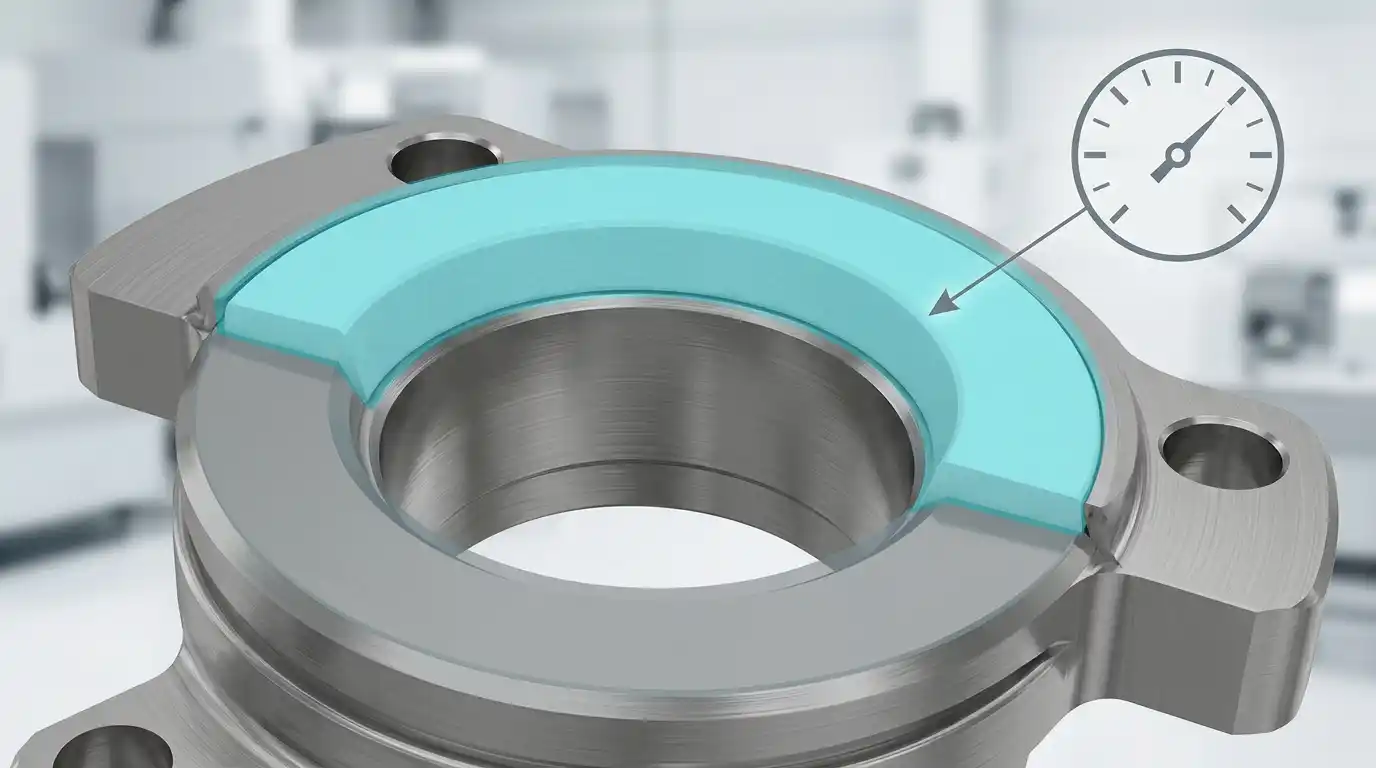
Post-Processing, Cleaning & Packaging (As Required)
Many PTFE parts go into fluid systems, chemical equipment, and sealing assemblies. We plan finishing and handling to avoid contamination, edge shaving, and handling damage—especially when you require clean packaging or controlled surfaces.
Deburr + controlled edge break
Clean edges reduce shaving during assembly and protect sealing surfaces. Define any “no-burr” requirements on functional edges.
Cleaning for fluid systems
When cleanliness matters, specify media compatibility and packaging expectations. We can align cleaning and bagging to your use case.
CTQ inspection (when needed)
For critical fits, we focus measurement on the features that gate performance: sealing bores, datums, and mating faces.
Common PTFE CNC Machining Applications
These are typical RFQs for precision PTFE machined parts where chemical resistance and low friction drive the spec.
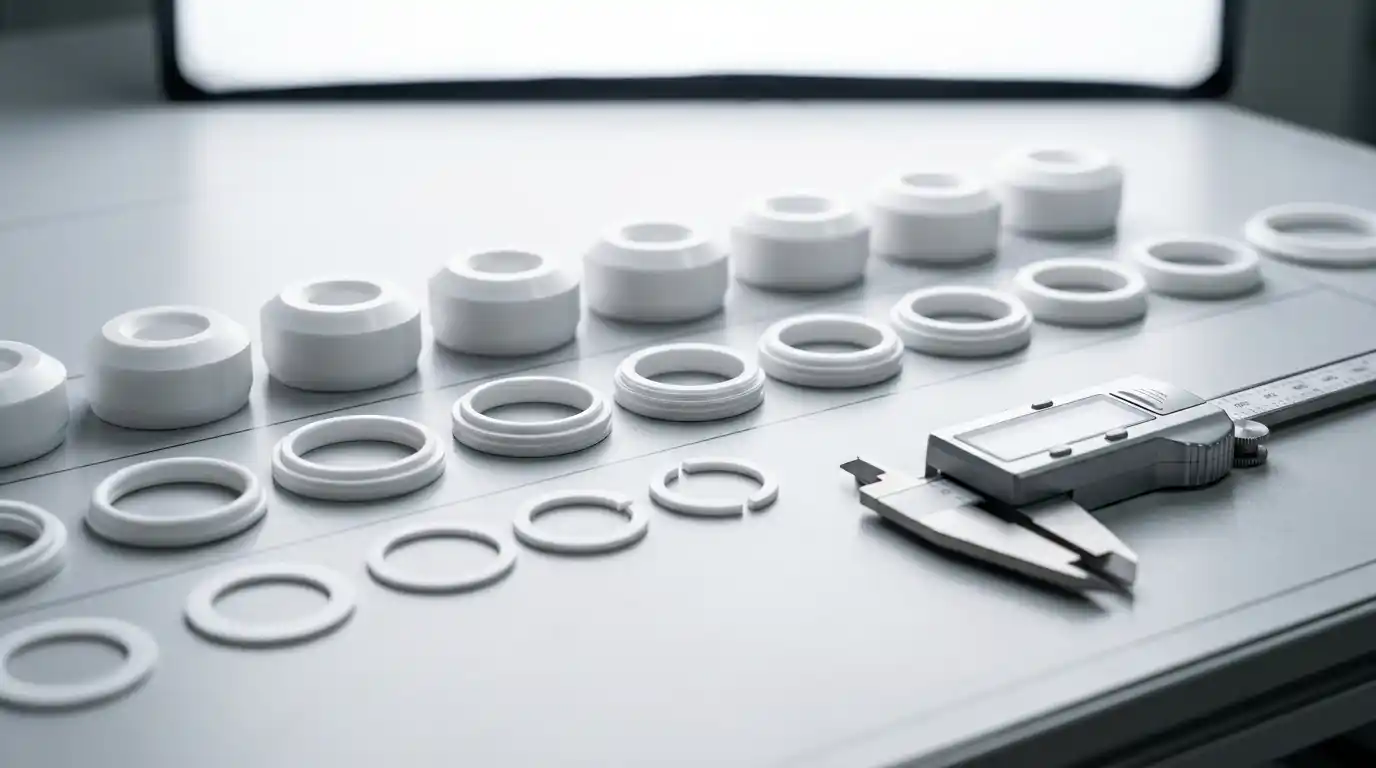
Valve seats & sealing components
Seats, seals, gaskets, and backup rings for pumps, valves, and chemical systems—define media + temperature + sealing CTQs.
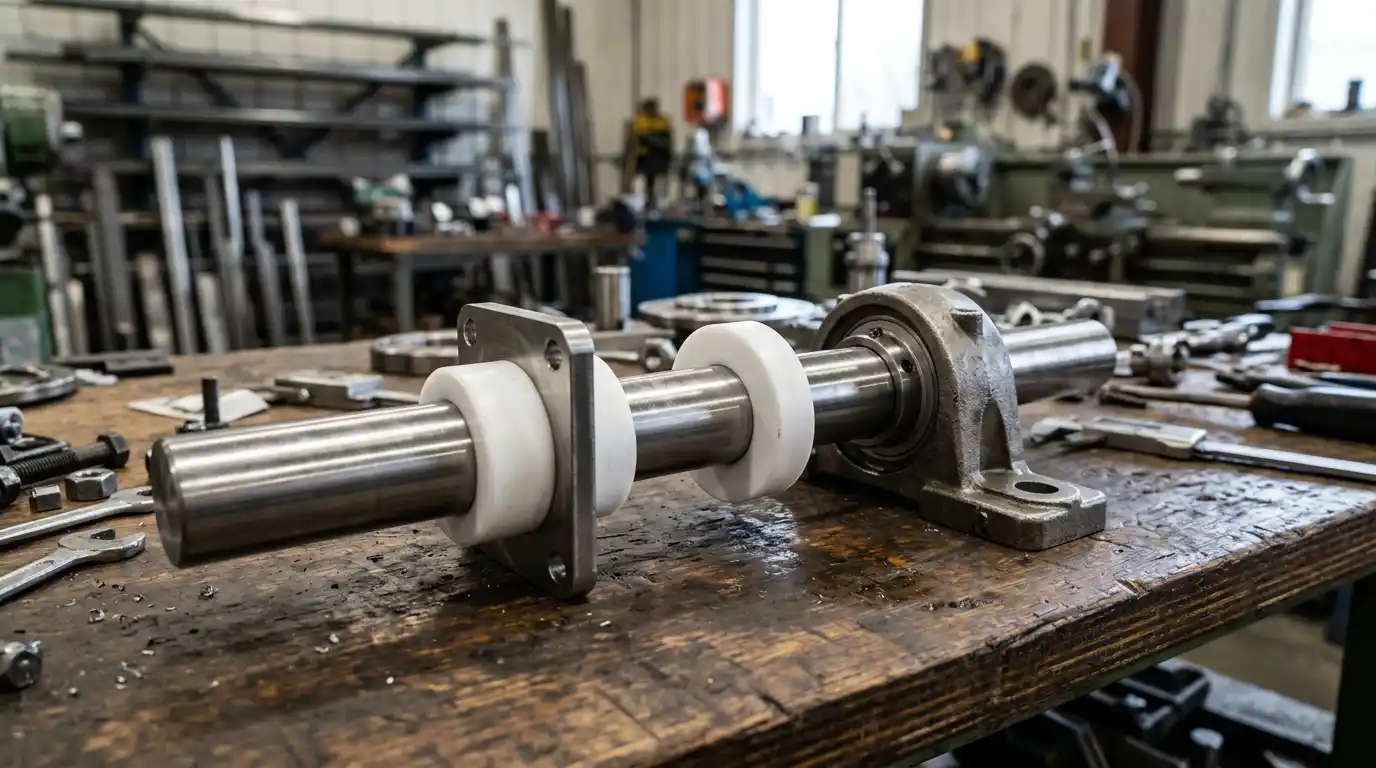
Bushings, wear rings & slide pads
Low-load sliding parts where PTFE reduces friction. For higher loads, consider filled PTFE and backup support.
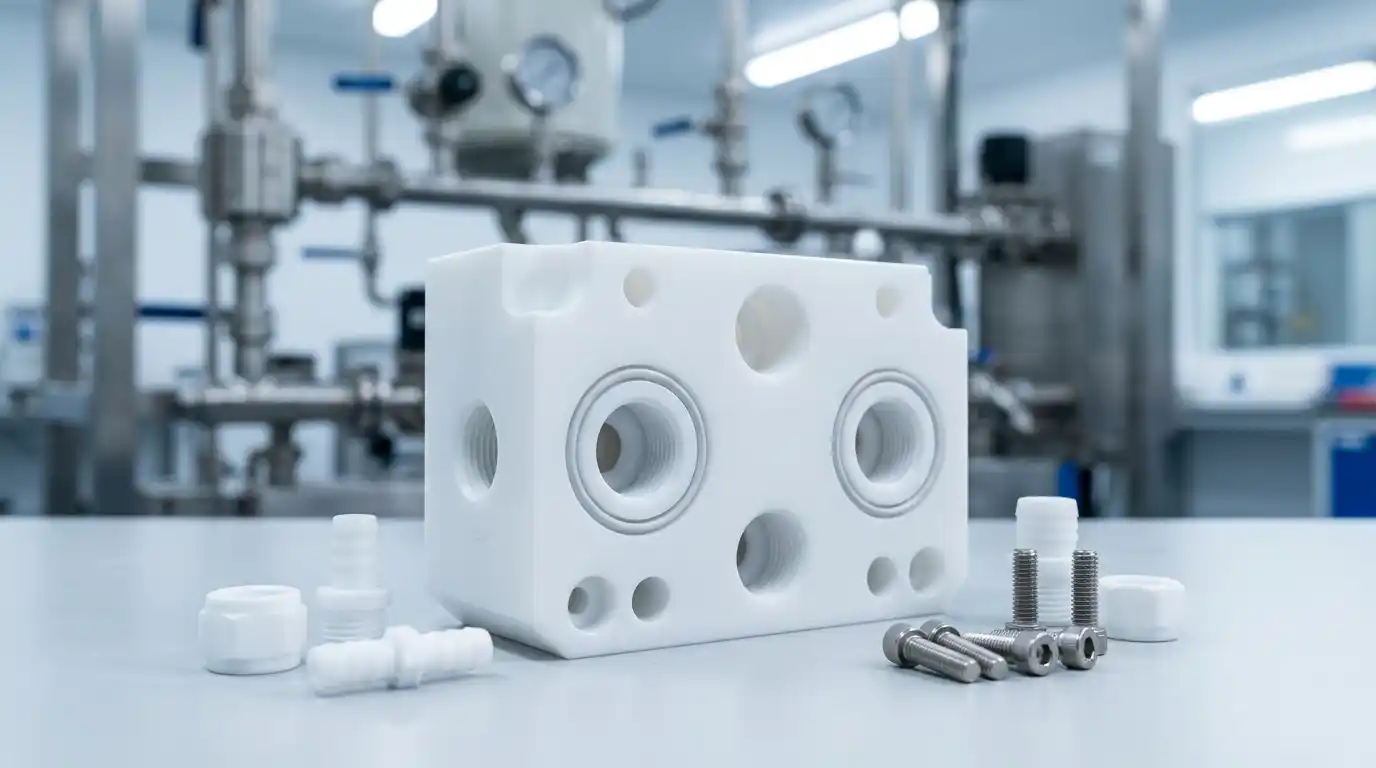
Fluid manifolds & chemical blocks
Machined blocks and fixtures for chemical compatibility and cleaning—design fits for CTE and long-term assembly stability.
Virgin vs Filled PTFE (If Specified)
Different PTFE grades can shift the balance between purity/chemical resistance and dimensional stability under load. If you already specify a grade, we’ll match it. If not, we can recommend based on media, temperature, and load.
Quick spec guidance
Common selection logic for virgin PTFE vs filled PTFE machining:
- Virgin PTFE: maximum purity/chemical resistance and typically lowest friction; softer (more creep)
- Glass-filled PTFE: improved creep resistance/stiffness; more abrasive; different surface texture
- Carbon/graphite-filled PTFE: often improved wear and sliding behavior for certain interfaces
- Bronze-filled PTFE: improved wear/compressive strength; confirm chemistry compatibility
Tell us your failure mode (leakage, wear, stick-slip, fit drift, chemical attack) and we’ll recommend a grade and geometry strategy.
FAQ: PTFE CNC Machining
Common questions about ptfe cnc machining, creep, tolerances, and material selection.
PTFE vs PEEK—what should I choose for CNC machining?
Choose PTFE when low friction and broad chemical compatibility are the top priorities (seals, valve seats, low-load sliding parts). Choose PEEK when you need much higher stiffness/strength and better dimensional stability under load and temperature—often at higher material cost.
Can PTFE hold tight CNC tolerances?
PTFE can hold practical CNC tolerances, but it is not a metal-like tolerance material because it creeps (cold flow) and has high thermal expansion. The most reliable approach is CTQ-driven tolerancing: hold tight datums/bores only where function requires it, and design mating features with appropriate clearance or backup support.
Why does PTFE deform during machining?
PTFE is soft and can deflect under clamping force and cutting loads. Over-clamping, insufficient support, and tool rubbing (heat) can cause distortion, chatter marks, or size drift. Soft jaws, full support, sharp tooling, and staged rough/finish strategies reduce deformation.
What is “cold flow” (creep) in PTFE and why does it matter?
Cold flow is time-dependent deformation under sustained load. In PTFE, sealing loads or clamp loads can cause slow dimensional change. Design with wider bearing areas, backup rings, and avoid knife-edge features so the part maintains performance over time.
Virgin PTFE vs filled PTFE—what’s best for wear parts?
Virgin PTFE is the cleanest/most chemically inert and typically has the lowest friction, but it is softer. Filled PTFE (glass, carbon/graphite, bronze, etc.) is often chosen to improve creep resistance and wear, but fillers can change chemical compatibility and surface texture. Tell us your media, temperature, and load so we can recommend.
What surface finish should I specify for PTFE sealing faces?
Specify surface finish only on functional sealing faces. PTFE can seal well with a controlled as-machined finish depending on gasket design, but roughness can increase leak risk or wear. If you have a target Ra, call it out for the sealing face and leave non-critical faces to standard machining to control cost.
Does PTFE absorb moisture—do I need drying before machining?
PTFE has very low moisture absorption compared with many engineering plastics, so pre-drying is typically not a key step. The bigger drivers are deformation control, thermal expansion, and creep—share your CTQs and assembly conditions.
How should I design threads or inserts in PTFE?
PTFE threads can strip under high torque because the material is soft and creeps. For repeated assembly or higher clamp loads, consider metal inserts, thread engagement length, and wider bearing surfaces. If sealing is involved, also consider backup features to prevent long-term relaxation.
PTFE CNC Machining for Prototypes and Production
Batnon supports PTFE CNC machined parts worldwide—from rapid prototypes to repeat production. Share your chemical media, temperature range, sealing/fit CTQs, and quantity, and we’ll build a deformation-aware machining and inspection plan that accounts for creep and thermal expansion so assemblies perform reliably.
For higher temperature structural performance, use: High Performance Plastics CNC Machining.
Explore Other Plastic Materials
Compare machining behavior, tolerances, and DFM notes across plastics:
- Engineering plastics: Delrin / POM · Nylon / PA · ABS · Polycarbonate / PC
- High performance plastics: PEEK · Ultem / PEI · PTFE · Vespel / PI
If you’re unsure where to start, tell us the failure mode (leakage, wear, stick-slip, fit drift, temperature, chemicals, purity) and we’ll route you to the right material page.