
BROUSE THE ARCHISE
Case Studies
Real Parts, Clear process. Measureable confidence.
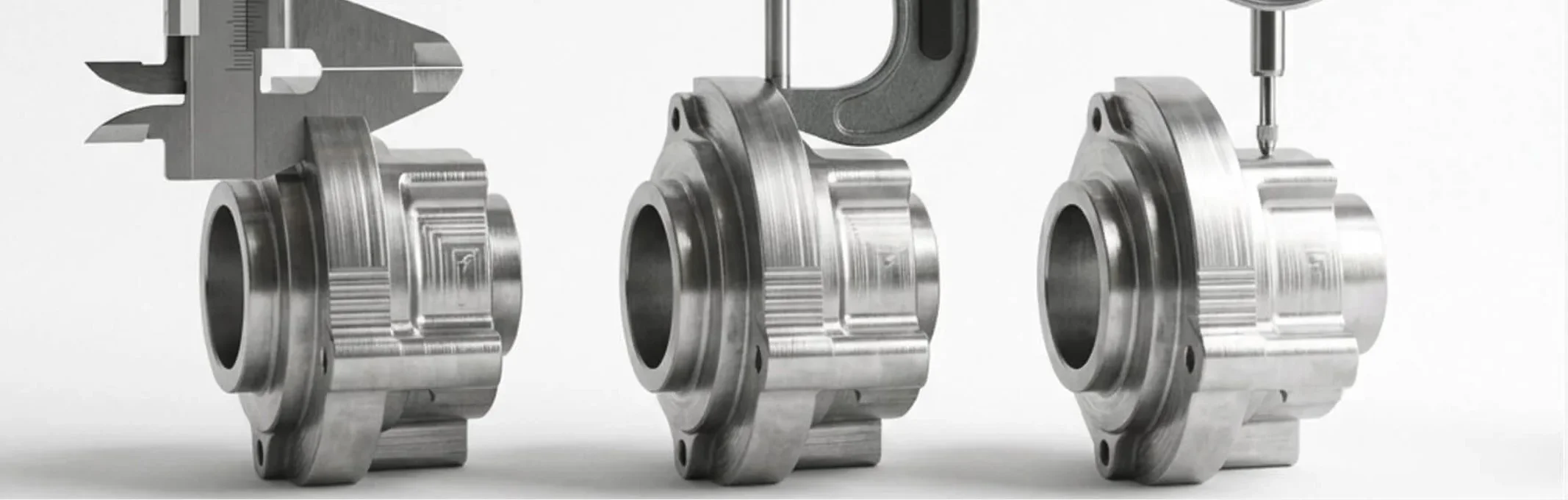
From Drawing Risk to Controlled Production.
The strongest case study is not only a finished part. It shows how critical features were identified, how the manufacturing route was built, how results were verified, and how repeat production was stabilized.
Identify the CTQs
Review datums, tolerance chains, mating features, cosmetic surfaces, material condition, finishing allowance, and inspection requirements.
Build the Manufacturing Route
Define setups, fixtures, machining sequence, stress-control strategy, secondary operations, and finishing sequence.
Verify the Result
Apply dimensional inspection, CMM, gauges, surface checks, assembly verification, FAI, and supporting records as required.
Stabilize Production
Control revision status, approved samples, inspection points, packaging, repeat-order consistency, and supplier communication.
Claims matter less than the proof behind them.
Each published case should show the evidence that supports the technical conclusion, while protecting confidential customer information.
Drawings & CTQ Callouts
Critical dimensions, datum structures, tolerance relationships, and revision requirements.
Process Planning
Setup strategy, fixture logic, tool access, deformation control, and secondary-operation sequence.
Inspection Records
CMM reports, FAI data, dimensional records, gauges, and functional-fit verification.
Material Traceability
Material certificates, heat-treatment records, and certificates of conformance when required.
Before / After Comparisons
Rejected versus corrected parts, design revisions, assembly improvements, and finish corrections.
Production Outcomes
Lead-time improvement, scrap reduction, tolerance stability, assembly performance, and repeat-order results.
Start with the problem you recognize.
Articles are loaded automatically from the Challenge taxonomy assigned to published Case Studies.
Know what happens before you send the drawing.
Can you review a design before quotation?+
Yes. A pre-quotation review can identify missing tolerances, unclear datum logic, finishing allowances, tool-access constraints, and inspection requirements that affect price or feasibility.
Do all projects require a complete engineering drawing?+
A 3D model may be enough for an initial discussion, but production normally requires the dimensions, tolerances, material, finish, revision status, and inspection expectations that define acceptance.
Can you support prototypes and repeat production?+
Yes. The manufacturing and inspection route can be adjusted as a project moves from initial validation to bridge quantities and repeat production.
What inspection documents can be provided?+
Depending on the project, support may include dimensional reports, CMM data, FAI, material certificates, certificates of conformance, and other agreed records.
How is confidential information protected?+
Customer drawings and proprietary information are handled as confidential. Public case studies may anonymize the customer, crop imagery, remove dimensions, or use representative visuals.
Can you take over a project from an existing supplier?+
Yes, provided the approved specification, sample condition, revision history, acceptance criteria, and known quality issues can be reviewed before transfer.
What should I send for a useful review?+
Send the CAD model, drawing, target quantity, material, finish, required documents, delivery expectation, and the feature or failure risk that matters most.
Bring the next difficult part.
Share the drawing, target quantity, material, finish, and the feature that creates the most risk. We will review the manufacturing path and identify the information needed for a reliable quotation.