
Prototype CNC Machining Services
Prototype speed is rarely “just spindle time.” The real delays come from unclear drawings, non-stock material, extra setups, and late-stage inspection or finishing surprises. This page is a practical, engineer-first guide to prototype CNC machining services: how to plan a fast build, what changes lead time, and how to structure an RFQ that gets you to parts in days—not weeks.
- Rapid CNC milling + CNC turning prototypes
- Multi-axis capability for fewer setups
- DFM feedback to reduce rework loops
- Optional inspection deliverables (CoC / FAI / DIR)
STEP / IGES / SLDPRT / PDF accepted
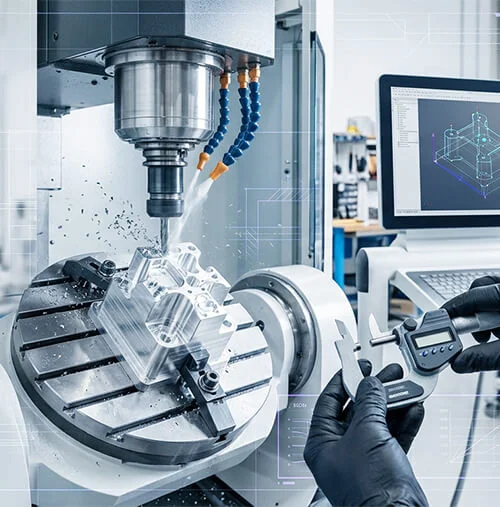
Built for engineering teams
Use-case aligned: Use-case aligned: medical devices, robotics & automation, battery and energy, quality and metrology, semiconductor, and consumer electronics.

ISO 9001

Material traceability
CMM reporting

Revision Control
Prototype Lead-Time Benchmarks (Plan in Days)
Public references show that prototype CNC timelines vary widely by part complexity, finishing, and inspection scope. Use this table to set realistic expectations and identify what to clarify early.
Typical timeline drivers
Fast prototypes are made possible when your RFQ answers four questions up front: (1) What is CTQ? (2) What is cosmetic? (3) What is datum intent? (4) What can be simplified for speed?
- Material availability: in-stock 6061/7075 moves faster than specialty alloys.
- Tolerances & inspection: tighter CTQ features and larger measurement scope can add days.
- Setups: more orientations = more fixturing + more risk + more cycle time.
- Finishing: anodizing/plating are often vendor steps; plan additions separately.
Public lead-time reference points
| Reference | Prototype CNC lead time (public) | Notes |
| Protolabs Help Center | Standard: 3 days; expedites: same-day / 1 day / 2 days (as available) | Lists lead-time additions for anodizing and inspection reports. [1] |
| Fictiv Service Page | Claims CNC parts as fast as 1 day (varies by option) | Also publishes material-specific “as fast as” milling lead times. [2] |
| Protolabs Network (Hubs) Blog | Offers five-day CNC lead times (specific constraints) | Limited line items/qty + specified materials/finishes. [3] |
| RivCut Guide | Simple prototype (1–5 pcs): 5–7 business days; rush: 3 business days | Includes a timeline breakdown and common delay causes. [4] |
Practical takeaway: if you need prototypes quickly, focus on reducing uncertainty (complete drawings, clear CTQ, in-stock materials) and reducing setups (geometry/tool access).
Prototype CNC Machining Workflow (RFQ → Parts)
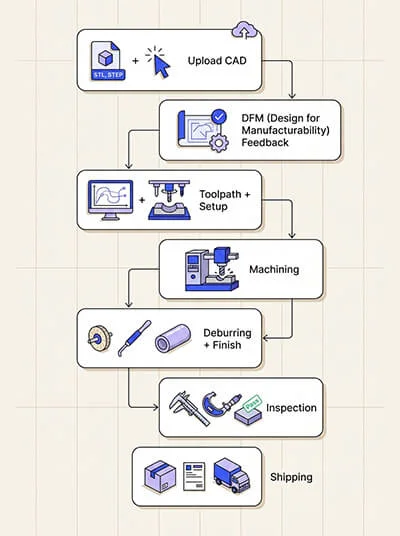
A fast prototype loop is a communication loop. The fastest shops eliminate questions before programming starts, and only tighten what’s truly CTQ.
Where speed is won
“Rapid CNC machining” isn’t a single feature—it’s a set of decisions that reduce queue time and rework. If your goal is iteration velocity, design and RFQ packaging should make the first run as close to final intent as possible.
- DFM feedback early: avoid a remake loop after chips are cut.
- Toolpath + setup clarity: fewer re-clamps reduces both time and risk.
- Right-sized inspection: use targeted FAI for CTQ instead of measuring everything.
- Finish planning: ship as-machined first when possible, finish later if timing is tight.
Inspection Deliverables
Inspection is a dial, not a switch. For prototypes, match inspection scope to risk: CTQ features and fit surfaces first.
| Deliverable | What it proves | When to request it (prototype context) |
| Certificate of Conformance (CoC) | Material/process conformance to order requirements | Default for procurement traceability, especially when you’re validating suppliers. |
| CTQ Partial FAI | Targeted first-article checks on critical features | Use when assembly fit is uncertain (bearings, sealing, alignment holes). Good speed/assurance balance. |
| Dimensional Inspection Report (DIR) | Broader dimensional verification (scope varies) | Use when failure cost is high, or you need documented evidence for internal sign-off. Can add time depending on measurement count. [1] |
| Finish certs (as applicable) | Verification of anodize/plating/heat treat | Critical when surface treatment is functional (corrosion, wear, electrical). Plan added days for vendor steps. |
If you’re unsure, ask for a targeted FAI on the handful of CTQ dimensions that determine assembly success—and leave the rest to standard tolerance bands.
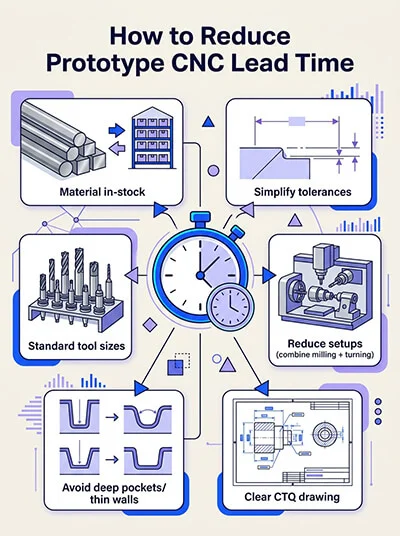
DFM Micro-Guide: How to Reduce Prototype CNC Lead Time
DFM checklist (RFQ-ready)
Use this checklist before you submit a CNC machining RFQ. It prevents the top avoidable cost drivers.
Loosen what isn’t CTQ
Prototype parts often only need tight tolerance where they affect fit, alignment, or sealing. Loosening non-critical dims can reduce machining time and inspection time, and prevent avoidable scrap.
Avoid deep pockets & thin walls
Deep pockets drive long tool stick-out, chatter risk, and slower feeds. Thin walls require conservative toolpaths and may distort. If you need the shape, add ribs or use thicker walls for prototypes.
Reduce setups (design for tool access)
Each re-orientation adds fixture time and risk. Simplify undercuts, use larger internal radii, and consider multi-axis where it removes a re-clamp.
Pick in-stock materials for iteration speed
Common prototype materials like 6061 and 7075 are frequently stocked by shops. Specialty alloys can add sourcing time. RivCut’s lead-time guide explicitly calls out material availability as a major delay driver.
Separate “finish later” from “finish now”
If your schedule is critical, request parts as-machined first for fit checks. Add anodize/plating later if functional requirements allow. Public lead-time tables show finishing can add several business days.
Industry Lanes
Prototype CNC is usually a “time-to-first-fit” problem. These lanes describe common prototype part types and what to prioritize in the RFQ.
Robotics & automation
Robotics prototype machining, cnc prototype machining
Jigs, end-effectors, linkages, actuator brackets. Prioritize CTQ alignment features and bearing seats; keep cosmetic finishes optional during early iterations.
Medical devices
Medical device cnc machining, precision component machining
Surgical housings, instrument handles, implant prototypes, fluid connectors.
Prioritize surface finish, biocompatible materials, and burr-free edges; maintain consistency for mating and sealing features.
Battery & metrology automation
Battery equipment prototype machining, quick turn cnc machining
Prototypes for process equipment, brackets, manifolds, sensor mounts. Prioritize leak paths, thread specs, and clear callouts for any sealing surfaces.
Quality Inspection & Metrology
Metrology fixture machining, precision inspection tooling
Inspection fixtures, gauge blocks, optical mounts, calibration bases.
Prioritize dimensional stability, flatness, and repeatable datum structures for accurate measurement.
Semiconductor equipment
Semiconductor equipment cnc machining, precision component machining
Vacuum components, wafer handling parts, brackets, precision plates.
Prioritize tight tolerances, clean edges, and controlled surface finishes; avoid distortion in thin or complex geometries.
Consumer Electronics
Consumer electronics cnc machining, custom housing machining
Aluminum enclosures, frames, heat sinks, structural brackets.
Balance cosmetic finish and functional tolerance; ensure consistency across batches for assembly and appearance.
Request a Custom CNC Machining Quote
If you searched “upload CAD for CNC quote”, this is the shortest path. The more intent you include, the faster and cleaner the quote.
RFQ inputs (what we need)
- Files: STEP/STP preferred; include native CAD if available.
- 2D drawing: tolerances/GD&T, CTQ marks, cosmetic surfaces.
- Material: alloy/grade + temper; note if substitutions allowed.
- Finish: as-machined vs anodize/bead blast; note masking/critical surfaces.
- Quantity: prototype qty (1–5, 10, etc.) + expected iteration count.
- Target date: required-by date and whether partial shipment is OK.
- Inspection: CoC, CTQ FAI, or DIR (scope/count).
Tip: If speed is critical, explicitly state which dimensions can follow ISO 2768 general tolerances and which are CTQ. That reduces manual review cycles.
🗣️ What Our Customers Say
Real feedback from engineers and operations leaders who made the switch to Batnon.
“We needed prototype CNC machining services to validate a new enclosure design under tight deadlines. Batnon turned our CAD into functional parts quickly, which helped us confirm fit and make design revisions without delay.”
Hardware Engineer at Nova Devices
“Our prototype included complex geometry that wasn’t easy to machine with standard setups. Batnon handled the part well and delivered consistent results, allowing us to move forward with confidence in the design.”
Product Development Lead at Vector Motion Labs
“We started with prototype CNC machining for a small batch, but consistency became critical as we prepared for launch. Batnon maintained part quality across iterations, which made the transition much smoother.”
Mechanical Designer at Axis Robotics
Stabilizing Assembly in Custom CNC Machined Linear Housing
., Product Design Lead at Apex Motion Systems
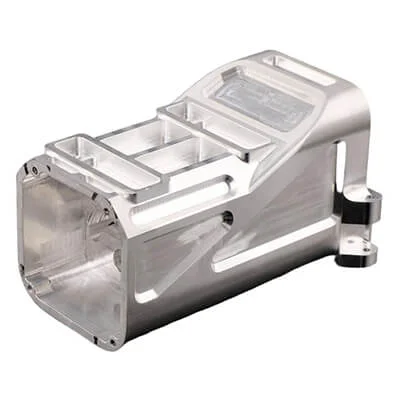
Challenge:
Custom CNC machined housing had bore misalignment
→ bearing binding during assembly
→ ~25% scrap rate
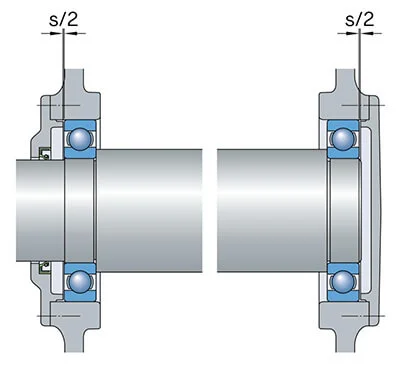
Our Solution:
Switched to 5-axis CNC machining
- optimized datum strategy
- reduced multi-setups
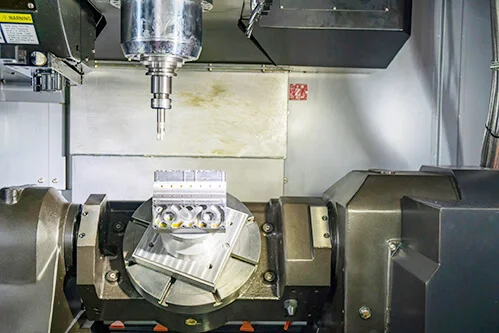
Results:
- Scrap: 25% → 3%
- Concentricity: 0.008 mm
- 500 parts in 15 days
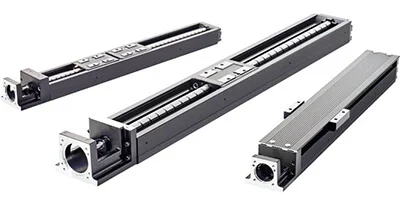
Impact:
- Smooth assembly fit
- No field failures
- On-time product launch
Your CNC Machining Questions, Answered
Answers to common questions before starting your prototype CNC machining project
How fast can you deliver prototype CNC machined parts?
Lead time depends on geometry and quantity, but prototype CNC machining is optimized for speed. We prioritize quick setup and efficient machining to deliver parts as fast as possible.
My design is not finalized — can I still request a quote?
Yes. Many prototype projects start before design is fully fixed. We can review your CAD and provide feedback to improve manufacturability before machining.
Can you machine prototype parts with complex geometry?
Yes. Prototype CNC machining supports multi-face features, internal cavities, and detailed geometries. We adjust machining strategy based on part complexity.
Do you accept low quantity or single prototype orders?
Yes. Prototype CNC machining is suitable for one-off parts, small batches, and early-stage validation builds.
Can I test different materials for my prototype?
Yes. We support common metals and engineering plastics, allowing you to evaluate performance before moving to production.
Do prototype parts need full finishing?
Not always. For early iterations, we recommend focusing on functional features first. Cosmetic finishes can be added in later stages.
Do I need tight tolerances for prototype parts?
Only where function requires it. We can help identify critical features and avoid unnecessary tight tolerances that increase cost and lead time.
Can prototype CNC machining be scaled to production later?
Yes. We structure machining processes to support a smooth transition from prototype to low-volume production.
Turn Your Design Into Reality — Fast & Accurately
Upload your CAD. Get a fast online quote in 12h.
STEP / IGES / SLDPRT / PDF accepted
Prototype CNC Machining Services at Batnon
Batnon provides prototype CNC machining services for engineering teams who need fast iteration cycles—supporting CNC milling, CNC turning, and multi-axis CNC machining for prototype parts used in robotics, semiconductor tooling, electronics, and industrial automation.
Prototype lead time is driven by DFM (Design for Manufacturability), material availability (e.g., in-stock 6061/7075), setup count, and the scope of inspection deliverables such as CoC, CTQ partial FAI, or a Dimensional Inspection Report (DIR).
Public benchmark references show prototype CNC lead times can range from expedited one-day options for simple parts to several business days for standard prototype runs, with additional days for surface finishing and detailed inspection documentation. For example, Protolabs publishes CNC machining lead times (standard 3 days; expedited options same-day/1 day/2 days as available) and documents lead-time additions for anodizing and inspection reports. [1]
When evaluating prototype machining suppliers, engineers often optimize for: CTQ tolerance control, repeatable datum strategy, reduced setups via multi-axis tool access, and a quote workflow that minimizes back-and-forth questions.
Core entities & terms: Prototype CNC Machining, Rapid Machining, CNC Milling, CNC Turning, 5-Axis CNC, DFM Feedback, CTQ, FAI, CoC, Dimensional Inspection Report (DIR), ISO 2768, Surface Finish (Ra), Anodizing, Bead Blasting.