





Why Titanium for CNC Machined Components
Titanium is specified when your design needs high strength-to-weight, corrosion resistance, and stable performance in harsh environments. Compared with aluminum, titanium delivers higher mechanical strength at low density; compared with many steels, it offers excellent corrosion behavior and a strong fatigue profile. If you’re evaluating titanium CNC machining services for critical assemblies, the key to success is aligning grade selection, surface integrity, and inspection strategy to your real functional risk.
Strength-to-Weight Advantage
For aerospace brackets, robotics joints, and motorsport parts, Grade 5 titanium machining (Ti-6Al-4V) can unlock stiffness and strength without the mass penalty of steel—helping you hit performance targets in dynamic assemblies.
Corrosion + Environment Stability
Grade 2 titanium CNC parts are widely used in chemical handling and marine exposure because titanium forms a protective oxide film. This is why titanium is common in valve bodies, fittings, and manifolds.
Engineering Control (Not Just “Hard”)
Titanium’s low thermal conductivity concentrates heat at the cutting edge. Great results come from process control—tooling, coolant delivery, engagement strategy, and inspection—so you get repeatable dimensions and surface integrity at competitive pricing.
Titanium at a Glance (Useful Numbers)
To help early material selection, here are typical reference values for the most common CNC titanium alloy, Ti-6Al-4V. (Values vary by condition and specification; we confirm with material certs when traceability is required.)
- Density: ~4.43 g/cm³ (lightweight compared to steels)
- Thermal conductivity: ~6.7 W/m·K (heat stays near the tool edge)
- Tensile strength (annealed): ~950 MPa; yield: ~880 MPa
- Elastic modulus: ~114 GPa
These typical values are consistent with published Ti-6Al-4V material data sheets (e.g., MatWeb / ASM).
Titanium Grades We Machine
In custom titanium CNC machined parts, grade choice drives everything: strength, corrosion behavior, ductility, and machining strategy. Start with your operating environment (salt / chemicals / temperature), load case (static vs fatigue), and regulatory constraints (medical traceability). Then we tune the process to protect surface integrity and keep lead time predictable.
| Best For | Strength / Cost | Machining Notes | Typical Parts |
|---|---|---|---|
| Corrosion-resistant industrial parts | Cost-effective titanium; moderate strength; excellent ductility | Good for stable machining and clean edges; ideal when corrosion drives the design | Valve bodies, fittings, marine hardware, manifolds, chemical processing components |
| Best For | Strength / Weight | Machining Notes | Typical Parts |
|---|---|---|---|
| High-load, weight-sensitive structures | Very high strength-to-weight; premium alloy cost | Heat concentrates at the tool edge—process must control tool wear and surface integrity for tight tolerances | Aerospace brackets, motorsport components, robotics joints, high-performance fasteners |
| Best For | Medical Use | Machining Notes | Typical Parts |
|---|---|---|---|
| Medical & implantable components where chemistry is controlled | Often chosen for biocompatibility + controlled interstitials (ELI) | Plan traceability and inspection documentation early; surface finish and edge break can be performance-critical | Device components, surgical instruments, precision housings and connectors |
| Best For | Form + Weld | Machining Notes | Typical Parts |
|---|---|---|---|
| Thin-wall tubes or parts balancing strength and formability | Good compromise between CP titanium and Grade 5 | Often specified when tubing/forming and weldability matter; machining strategy depends on geometry stiffness | Aerospace tubing components, bicycle/motorsport parts, brackets and frames |
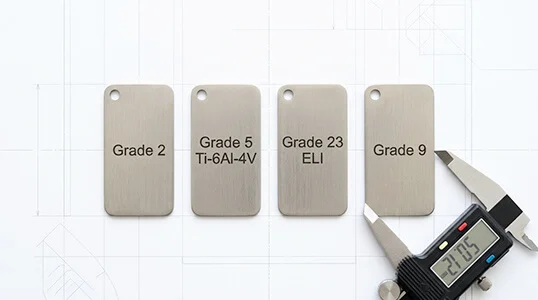
Titanium Grade Selection Snapshot
Pick the grade by function: corrosion resistance (Grade 2), strength-to-weight (Grade 5), regulated/medical chemistry (Grade 23 ELI), or balanced tubing/formability (Grade 9).
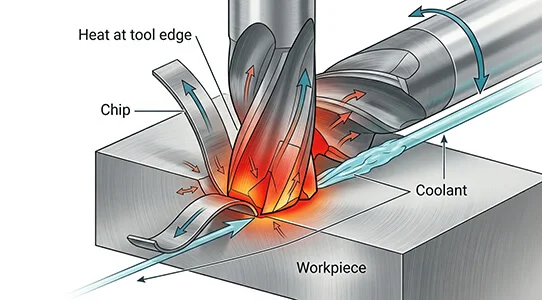
Why Titanium Needs Process Control
Low thermal conductivity keeps heat at the cutting edge. Tooling choice, engagement strategy, and coolant delivery are the difference between stable surface integrity and premature tool wear.

Finish Options (Function First)
From Ra targets to bead blast, polishing, passivation, and cosmetic anodizing—choose finishes that match wear, corrosion exposure, friction, and appearance needs.
Grade 2 vs Grade 5 (Quick Rule)
If your main goal is corrosion resistance and reliable titanium performance at cost-conscious pricing, start with Grade 2. If your design is load- or weight-limited, consider Ti-6Al-4V and validate tolerance strategy and surface integrity requirements early.
- Grade 2: corrosion-resistant valve bodies, fittings, industrial components
- Grade 5 (Ti 6-4): aerospace/motorsport/robotics structures and fasteners
- Grade 23 ELI: medical titanium machining and controlled chemistry parts
- Grade 9: balanced strength + formability for tubing and frames
Our Capabilities for Titanium CNC Machining
Batnon supports precision titanium milling and turning across prototypes and production. We focus on stable datums, heat management, and inspection planning so you receive tight-tolerance titanium parts with predictable lead times and competitive pricing.
3/4/5-Axis Milling
Complex pockets, multi-face datums, and contoured surfaces—optimized toolpaths to control heat, protect edges, and maintain surface integrity.
Turning / Swiss Turning
Shafts, bushings, fittings, and fasteners—built around chip control, runout control, and finishing strategies for consistent diameter and surface finish.
Secondary Ops
Deburr/edge break, bead blast, polishing, passivation, selective cosmetic anodizing, and assembly support for production-ready deliveries.
DFM Guide: Precision, Surface Integrity, and Cost in Titanium
Titanium rewards smart design choices. The fastest route to cost-effective, tight-tolerance titanium machining is to reduce heat concentration, maintain geometry stiffness, and only tighten tolerances where they gate assembly and performance.
| Design Item | Recommendation | Why It Matters |
|---|---|---|
| Deep narrow pockets | Avoid extreme depth-to-width ratios; open access; use larger corner radii | Long tools increase deflection and heat—forcing slower feeds/speeds and raising tool wear |
| Thin walls | Add ribs; keep support during machining; define which walls are cosmetic | Titanium can spring and vibrate; stiffness is essential for surface finish and dimensional stability |
| Critical fits | Call out only the features that truly gate function (bores, bearing seats, sealing faces) | Over-spec tolerances multiply cycle time and inspection cost; risk-based tolerancing keeps pricing competitive |
| Edge break / burr control | Specify edge break intent (e.g., “break sharp edges” vs controlled chamfer) | Titanium edges can be sensitive for assembly and handling; clear requirements reduce handwork and variability |
| Surface finish targets | Use Ra targets only where needed; avoid cosmetic polishing everywhere | Finishing can dominate cost. Focus polishing/blast only on truly visible or functional faces |
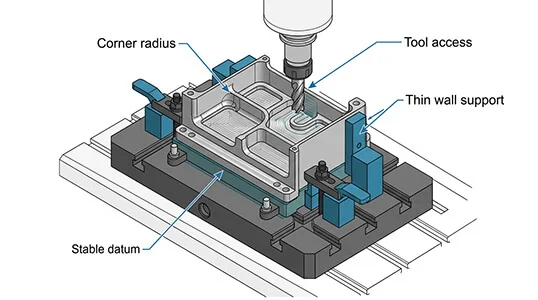
Cost Lever 1: Reduce Setups
Consolidate datums so most features are reachable in one or two setups. Fewer setups improves both accuracy and cost, especially for multi-face titanium parts.
Cost Lever 2: Avoid “Tight Everywhere”
Tight tolerance titanium machining is very achievable—when applied deliberately. Identify the real functional features, then let non-critical dimensions float to standard tolerances.
Cost Lever 3: Finish Only What Matters
Bead blast for uniform matte surfaces, polish only on critical cosmetic faces, and use passivation when corrosion performance is the primary goal. This keeps pricing competitive.
Surface Finishes for Titanium CNC Parts
Finishes affect more than appearance: they influence corrosion behavior, friction, wear, and cleaning requirements. For titanium, finish strategy should be chosen around the use environment (salt/chemical exposure), contact conditions (sliding vs static), and whether the surface is cosmetic or functional.
| Finish | What It Does | Best For | Notes |
|---|---|---|---|
| As-machined (Ra target) | Controlled toolpath texture | Functional parts, internal features, precision fits | Lowest added cost; define cosmetic vs functional faces early |
| Bead blasted (matte) | Uniform, non-glare surface | Housings, brackets, visible industrial parts | Good at hiding minor tool marks; can soften sharp edges slightly |
| Polished | Smooth reflective surface | Consumer-visible parts, cleanability needs | Higher cost; specify which faces require polish |
| Passivation | Enhances surface cleanliness and corrosion resistance behavior | Medical, chemical, and corrosion-prone environments | Often specified alongside traceability documentation |
| Color anodize (cosmetic) | Creates controlled oxide thickness for color | Branding, identification, consumer parts | Color consistency depends on alloy and surface prep; validate with samples if critical |
Quality Documents for Titanium Parts
For titanium programs—especially aerospace and medical—quality evidence is part of performance. We can align documentation to your supplier quality plan and drawing revision to support reliable production and downstream assembly.
Material Traceability (ASTM B348 / AMS as required)
Material certifications, heat/lot tracking, and grade verification for titanium bar, billet, or plate when required by your procurement and quality workflow.
Inspection Evidence
FAI packages, dimensional reports, and CMM/fixture-based measurement strategies tied to GD&T and critical datums for tight tolerance titanium machining.
Finish / Process Certifications
Passivation or special-process documentation where requested, plus lot tracking and inspection checkpoints for repeatable surface quality.
Case Study: Multi-Industry Titanium CNC Program (Performance + Cost)
A customer needed a family of titanium CNC machined parts spanning high-load brackets (Grade 5), corrosion-resistant flow components (Grade 2), and a medical device subassembly (Grade 23 ELI). The project succeeded by mapping grade + finish to function, then controlling cost with setup consolidation, heat-aware toolpaths, and risk-based inspection.
| Program Goal | Constraint | Batnon Approach | Outcome |
|---|---|---|---|
| Best part performance at competitive pricing | Mixed grades + tight datums + different surface needs | Grade-by-function selection, DFM to reduce setups, heat-managed machining strategy, inspection tied to risk | Stable fits, consistent finishes, predictable lead time, scalable production |
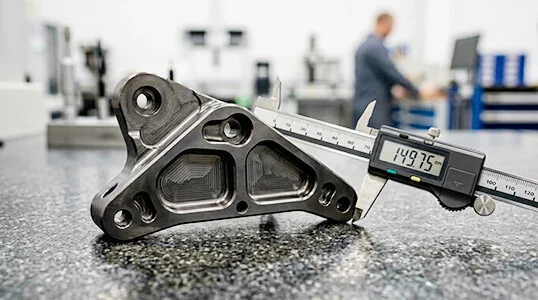
Grade 5 Structural Bracket
Weight-sensitive geometry with pocketing and fillets. We protected critical datums, controlled heat at the cutting edge, and validated surface integrity on high-stress features.
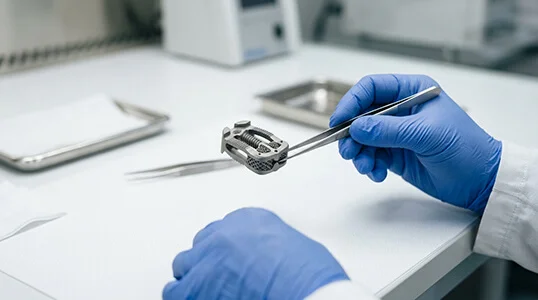
Grade 23 ELI Medical Component
Edges and surface finish were performance-critical for assembly and handling. Traceability and inspection deliverables were defined early to avoid late-stage rework.
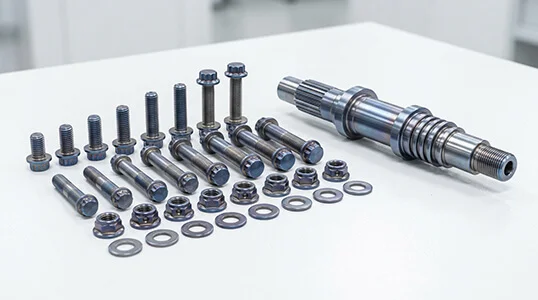
Motorsport Titanium Fasteners
Turned and milled features with controlled runout. We used standard tool radii and consistent datum strategy to keep cycle time and pricing competitive.
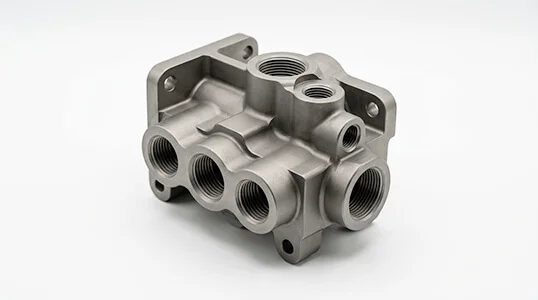
Grade 2 Corrosion-Resistant Valve Body
Bead blasted matte finish and controlled threads/ports for sealing reliability. Material choice reduced corrosion risk while maintaining tight tolerance on functional interfaces.
What Made It Work (Transferable Lessons)
Titanium pricing becomes competitive when engineering choices remove wasted machining time: selecting Grade 2 where it meets requirements, using Grade 5 only where strength-to-weight is truly gating, and applying tight tolerances only to functional interfaces. Heat management and stable fixturing protected surface integrity and reduced scrap risk.
- Grade-by-function: don’t overpay for Grade 5 when Grade 2 meets the environment
- Heat-aware toolpaths: stable engagement + coolant strategy extends tool life
- Setup consolidation: fewer setups improves cost and dimensional stability
- Risk-based inspection: measure what gates assembly and performance
FAQ: Titanium CNC Machining
Common questions about titanium grade selection, machinability, surface finishes, tolerances, and how to keep titanium CNC machining cost-competitive.
Which titanium grade is best for CNC machining—Grade 2 or Grade 5 (Ti-6Al-4V)?
Choose Grade 2 when corrosion resistance and cost are priorities (chemical, marine, industrial). Choose Grade 5 when strength-to-weight is the gating requirement for aerospace and performance mechanical parts. If you need help selecting, tell us the environment and load case and we’ll recommend.
Why is titanium CNC machining more expensive than aluminum or steel?
Titanium doesn’t dissipate heat well, so heat concentrates at the tool edge. That increases tool wear and forces conservative cutting strategies. The good news: the right DFM and process plan (setups, tool access, finish scope) often reduces cost significantly without compromising performance.
Can you support medical titanium machining like Grade 23 (ELI)?
Yes. Grade 23 (ELI) is commonly used when controlled chemistry is required. For regulated applications, we align traceability, inspection evidence, and finishing documentation during quoting so your downstream validation is smoother.
What surface finishes are common for titanium CNC machined parts?
As-machined (Ra targets), bead blasted matte, polished surfaces, passivation, and selective color anodizing are common. The best finish depends on wear/friction, corrosion exposure, cleanability, and whether a surface is cosmetic or functional.
What tolerances are realistic for tight tolerance titanium machining?
With stable geometry and fixturing, titanium can hold precision tolerances similar to other metals. The key is to call out critical features on the drawing (bores, bearing seats, sealing faces) and allow standard tolerances elsewhere—this controls cost while protecting assembly performance.
How do you reduce galling and improve surface integrity on titanium?
We use sharp carbide tooling, stable engagement, effective coolant delivery, and controlled edge break/deburr to avoid built-up edge and surface tearing. On the design side, generous corner radii and avoiding unsupported thin walls significantly improve finish consistency.
What titanium parts are a good fit for CNC machining?
Aerospace brackets, motorsport fasteners, medical device components, valve bodies, fittings, corrosion-resistant manifolds, and high-performance housings are all good fits—especially when tight tolerances and part performance are required.
How do you keep titanium CNC machining services cost-competitive?
We keep pricing competitive by reducing setups, avoiding deep narrow pockets, matching tolerances to function, and limiting high-cost finishes to the surfaces that truly need them. Early DFM alignment is usually the fastest path to lower cost and shorter lead time.
Titanium CNC Machining (Global Supply, Local Expectations)
Batnon supports titanium CNC machining services for engineering teams across North America, Europe, and Asia—shipping prototypes and production parts worldwide. If you’re searching for Ti-6Al-4V CNC machining, Grade 5 titanium machining, Grade 2 titanium CNC parts, medical titanium machining, aerospace titanium machining, or precision titanium milling and turning, our quoting workflow is designed to be engineering-first: grade selection, DFM feedback, tolerance review, finish planning, and QA documentation.
- Typical applications: aerospace brackets, robotics joints, valve bodies, medical device components, motorsport fasteners
- Industries served: aerospace & defense supply chain, medical devices, energy/chemical, robotics & automation, motorsport
- Common grades: Grade 2 (CP), Grade 5 (Ti 6-4), Grade 23 ELI, Grade 9
- Finishing options: as-machined Ra targets, bead blast, polish, passivation, selective cosmetic anodize
- Engineering handoff: DFM for cycle time, datum strategy, inspection plan, material certs (traceable when needed)
Tip for fast quoting: include your target titanium grade/spec, finish requirement, quantity, critical datums, and any mating part information (bearing seats, seals, threads).