
Engineering Plastics CNC Machining Services
Batnon provides cnc plastic machining for engineering teams who need predictable fit, clean cosmetics, and fast iteration. From plastic cnc machining prototypes to repeatable production runs, we deliver machined plastic parts with the right resin, the right process plan, and the right inspection—without overpaying for unnecessary tolerances.
Need higher temperature or aggressive chemistry? Jump to High Performance Plastics CNC Machining.
Go Direct to Material Pages
This hub owns cnc plastic machining (broad intent). For deep resin-specific intent, use the material pages below.
Polycarbonate / PC
High impact strength; clear parts and guards; heat-aware machining.
Not sure yet?
Use the decision guide + comparison table below, then request a quote with the resin you’re leaning toward. We’ll confirm resin + process with DFM.
- Primary keyword intent: cnc plastic machining
- Secondary intent: plastic cnc machining, cnc machining plastics, machined plastic parts
- Engineering intent: engineering plastic machining (DFM + stability)
What “Engineering Plastics” Means in CNC Machining
Engineering plastics are the resins you pick when the part must do real work: hold a tolerance, take impact, slide with low friction, resist wear, or stay stable in a warm enclosure. In practice, cnc machining plastics is a balance of resin selection and process physics: plastics expand more with temperature than metals and can move if internal stress is released. That’s why professional engineering plastic machining focuses on heat control, balanced material removal, and choosing the resin that matches how the part actually fails (wear, impact, creep, or cracking).
Choose Resin by Failure Mode
Low friction and crisp threads? Start with Delrin/POM. Need toughness and wear? Nylon/PA. Need cost-effective housings? ABS. Need high impact or clear parts? Polycarbonate/PC.
Heat Management = Finish Quality
Plastics soften when overheated. Sharp tools, stable workholding, correct chip load, and air/coolant strategy prevent melting, fuzz, and stress marks.
Stability Planning Saves Money
Warp usually comes from stress and uneven machining. Balanced machining and smart DFM reduce scrap and rework—key to keeping plastic CNC machining cost-competitive.
Quick Routing (Keep Hub Broad)
This hub is intentionally broad. For resin-specific deep dives, use the material pages:
- Delrin / POM CNC Machining — low friction, stable, crisp machining
- Nylon / PA CNC Machining — tough, wear; moisture planning matters
- ABS CNC Machining — cost-effective housings/prototypes
- Polycarbonate / PC CNC Machining — high impact, clear parts
- Need higher temp/chemistry? — high-performance plastics hub
Engineering Plastics We Machine (Hub Summary)
This section gives a fast summary to guide selection without over-optimizing the hub for each resin keyword. For detailed resin guidance (grades, tolerances, finishes), use the dedicated resin pages linked above.
| Best For | Strengths | Watch Outs | Typical Parts |
|---|---|---|---|
| Low-friction precision components | Crisp machining, stable dimensions, good wear/sliding behavior | Avoid sharp internal corners; plan threads/inserts for assembly torque | Bushings, gears, fixtures, manifolds, wear pads |
| Best For | Strengths | Watch Outs | Typical Parts |
|---|---|---|---|
| Tough wear parts and impact-prone components | Toughness + abrasion resistance; good for sliding wear | Moisture absorption can change size—plan conditioning/tolerances | Wear strips, rollers, guides, impact parts, covers |
| Best For | Strengths | Watch Outs | Typical Parts |
|---|---|---|---|
| Cost-effective housings and prototypes | Easy to prototype, good impact resistance, good machinability | Heat can soften edges; design for ribs and uniform wall thickness | Enclosures, brackets, fixtures, prototype shells |
| Best For | Strengths | Watch Outs | Typical Parts |
|---|---|---|---|
| High impact, clear guards, transparent parts | High impact strength; can be clear with proper finishing | Heat/stress can cause marks—use heat-aware machining and edge polishing strategy | Guards, covers, lenses, inspection windows, housings |
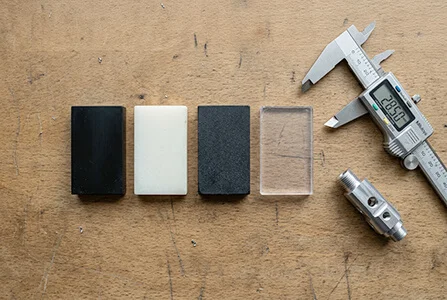
Resin Overview Snapshot
A fast way to think about plastics: POM for low friction and crisp machining, Nylon for toughness (but moisture planning), ABS for cost-effective prototypes, PC for impact and clarity.
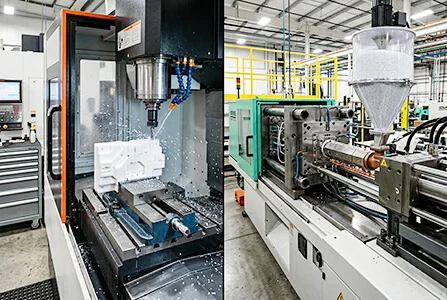
Process Choice Matters
The best part isn’t just material—it’s process. Below is a practical decision guide for CNC vs injection molding in plastics.
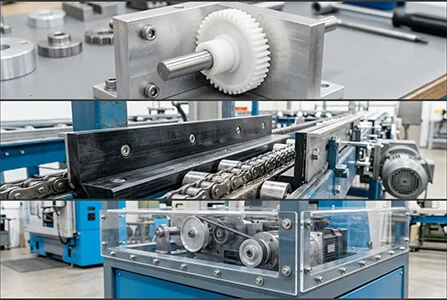
Common Applications
Engineering plastics are popular for wear parts, insulators, fixtures, and clear guards—when you match the resin to the real failure mode (wear, impact, clarity, or stability).
Plastic CNC Machining vs Injection Molding (Decision Guide)
If you’re deciding between plastic cnc machining and injection molding, the key is matching economics to uncertainty. CNC is typically best when the design is still evolving, volumes are low-to-medium, or you need fast lead time and tight control on functional features. Injection molding wins when the design is stable and you can amortize tooling across high volume.
| Decision Factor | Choose CNC Plastic Machining | Choose Injection Molding |
|---|---|---|
| Volume | Prototype to low/medium volumes; bridge production | High volumes where tooling cost is spread out |
| Design changes | Frequent iteration; engineering change orders expected | Design is frozen; change cost is high |
| Lead time | Fast start—no mold build phase | Longer upfront to build and validate tooling |
| Tolerances / CTQs | Great control on bores, datums, and fits (with proper DFM) | Excellent repeatability at scale; parting lines and draft apply |
| Geometry constraints | No draft required; undercuts possible with machining access | Draft angles, uniform walls, and moldability rules apply |
| Surface and aesthetics | Machined texture; bead blast or polishing as needed | Molded textures; high cosmetic consistency at volume |
Bridge Strategy (Common Best Practice)
Many teams use CNC to de-risk design and assemblies (fit, sealing, fasteners), then transition to injection molding once the design is stable. The resin choice often stays the same; the design rules change (draft, gates, uniform walls).
- Start CNC: validate fit/stack-up, refine functional surfaces, confirm material
- Then mold: add draft, optimize wall thickness, design for mold flow and ejection
- Keep CTQs: define what must remain tight (bores, sealing faces, alignment datums)
Our Capabilities for CNC Plastic Machining
We support cnc machining plastics across common engineering resins for prototypes and production. Process planning is tuned for heat control, burr/fuzz reduction, and dimensional stability—so you receive machined plastic parts that assemble cleanly and stay cost-competitive.
3/4/5-Axis Milling
Pocketed housings, plates, manifolds, and fixtures with stable datums and controlled surface finish.
Turning + Boring
Round parts, bushings, rollers, and tight bores—planned to reduce chatter and avoid heat marks.
Secondary Ops
Threaded inserts, edge break, bead blast/matte, polishing for clear PC edges, and assemblies—scoped to functional faces.
DFM Guide: Heat, Warpage, and Cost in Engineering Plastics
Plastics cut differently than metals: they’re more elastic, expand more with temperature, and can move if internal stress is released. A professional DFM plan keeps the part stable by balancing material removal, controlling heat, and choosing geometry that reduces finishing and rework.
| Design Item | Recommendation | Why It Matters |
|---|---|---|
| Internal corners | Use radii; avoid sharp internal corners | Reduces stress concentration and improves toolpath stability. |
| Thin walls | Add ribs/bosses; keep walls uniform where possible | Improves rigidity; reduces chatter and warpage on pocketed parts. |
| Balanced machining | Remove material symmetrically; use intermediate steps on deep pockets | Reduces stress release and post-machining movement. |
| Heat management | Sharp tools + correct chip load; avoid rubbing; use air/coolant strategy as needed | Prevents melting, fuzz, and stress marks—especially in ABS/PC. |
| Threads in plastic | Use inserts for repeated assembly; design boss geometry for torque | Improves durability and avoids stripped threads or creep. |
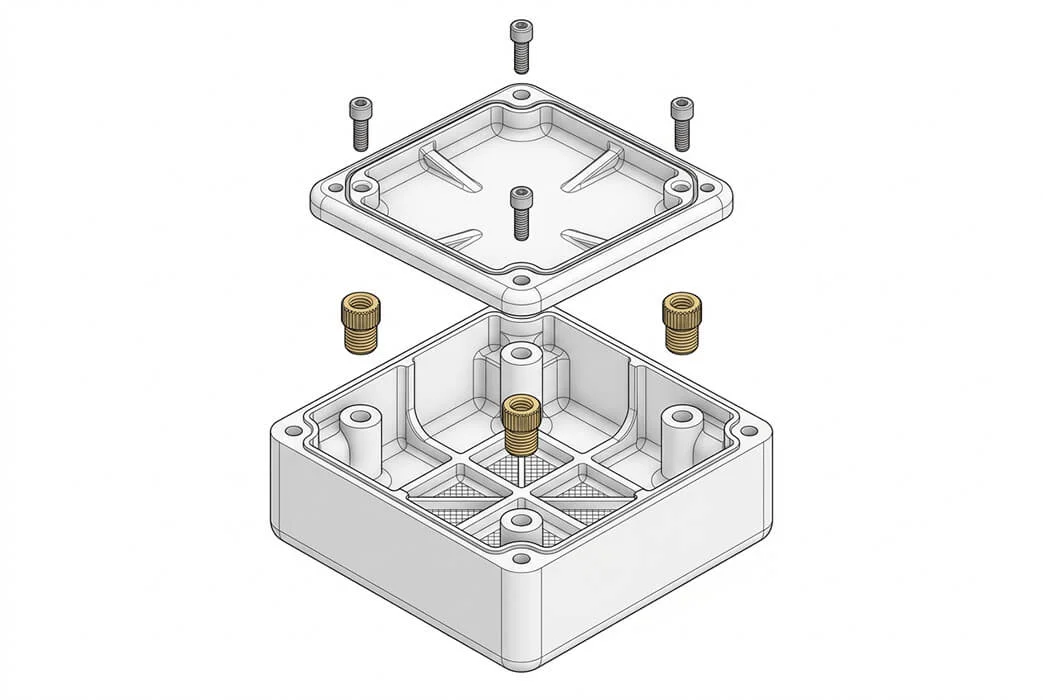
Machining Practice Snapshot (What Pros Do)
Industrial machining guides emphasize: keep tools sharp, avoid localized overheating, ensure swarf removal, and use process steps that prevent warpage on large pocketed parts.
- Sharp tooling: reduces heat and improves finish
- Heat control: air blast or suitable coolant strategy to avoid melting/softening
- Stability: rough + rest (when needed) for large sections; balanced machining
- Reinforced plastics: use appropriate tooling (e.g., diamond tooling) when glass/carbon filled
Reference basis: industrial machining guidance for plastics (e.g., Mitsubishi Chemical Group machinist toolkit highlights on sharp tools, overheating avoidance, swarf removal, and balanced machining).
Surface Finishes for Machined Plastic Parts
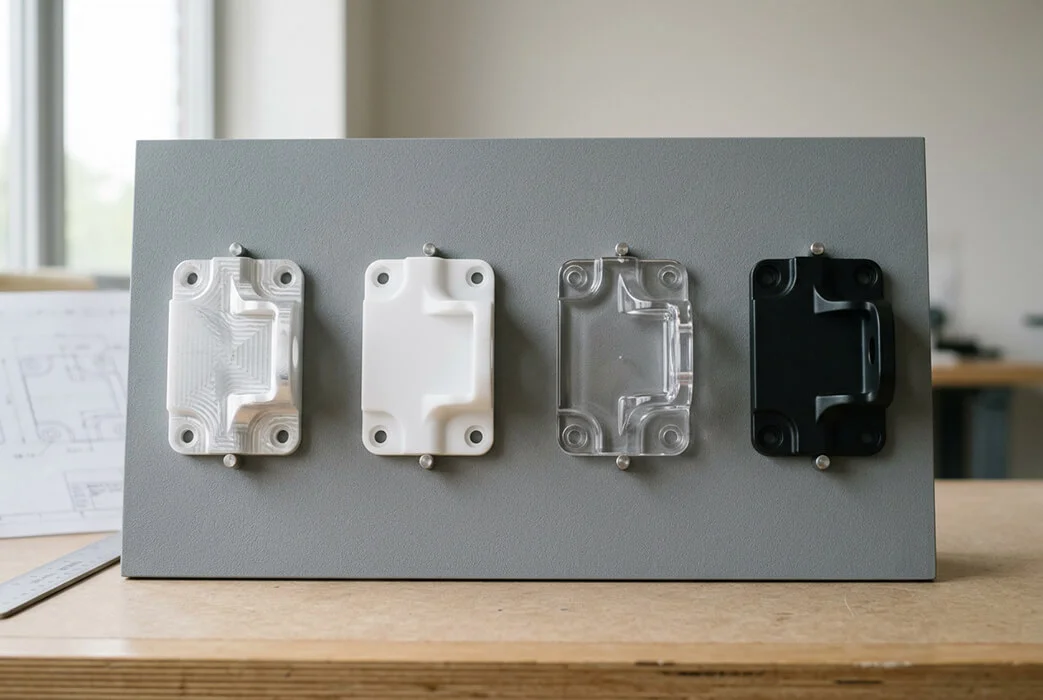
Finish affects both cosmetics and function. For housings, matte finishes reduce fingerprints; for PC guards, edge polishing improves clarity; for sliding parts, leaving a controlled as-machined texture can be better than aggressive polishing.
| Finish | What It Does | Best For | Notes |
|---|---|---|---|
| As-machined (Ra target) | Functional toolpath texture | Most engineering parts | Cost-effective; define cosmetic faces if needed. |
| Bead blast / matte | Uniform low-glare look | Housings, covers | Great for ABS/POM/PA aesthetics; confirm fit-critical surfaces. |
| Edge polish (PC) | Improves clarity on edges | Guards, windows, covers | Requires heat-aware process to avoid stress marks. |
| Paint / coating coordination | Barrier + cosmetics | Consumer-facing enclosures | Define masking and functional surfaces. |
| Deburr + edge break | Safer handling and assembly | All parts | Specify edge intent to avoid overwork. |
Quality Documents for CNC Machined Plastics
For engineering plastic parts, quality is usually gated by assembly fit, flatness, and hole patterns—plus resin traceability when the application is regulated. We align evidence to your CTQs so you don’t pay for inspection that doesn’t reduce risk.
Material Traceability
Stock material certifications and lot traceability when required—especially for regulated assemblies or customer-specific procurement rules.
Inspection Evidence
FAI packages, dimensional reports, and CMM/fixture measurement tied to datums, bores, and assembly-critical hole patterns.
Finish Documentation
Coating/paint documentation from approved processors when requested, including masking notes for fit-critical surfaces.
Case Study: CNC Machining Plastics for Fit, Clarity, and Fast Iteration
A product team needed a set of engineering plastic parts: a wear/insulator component (POM/PA family), a clear safety guard (PC), and an enclosure prototype (ABS). The key was selecting the resin by function, then controlling heat and stress so parts stayed in spec after machining and during assembly.
| Program Goal | Constraint | Batnon Approach | Outcome |
|---|---|---|---|
| Best performance at competitive cost | Fit-critical holes, optical clarity edges, cosmetic housing faces | Resin-by-function selection, heat-aware toolpaths, balanced machining, insert strategy, risk-based inspection | Stable assembly, predictable finish, faster iteration without tooling delays |
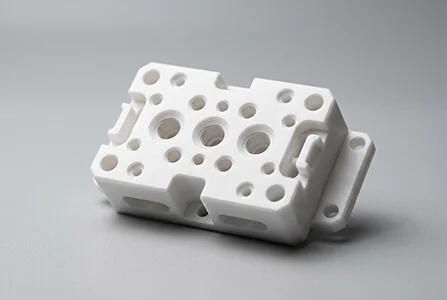
Insulator / Wear Part
Selected for wear + stability. CTQs were bores and mounting pattern; non-critical faces were optimized for cost.
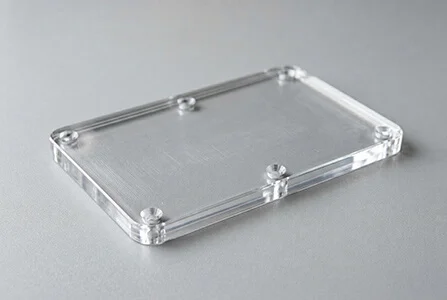
Clear Polycarbonate Guard
Heat-aware machining and edge polishing strategy protected clarity without stress marks.
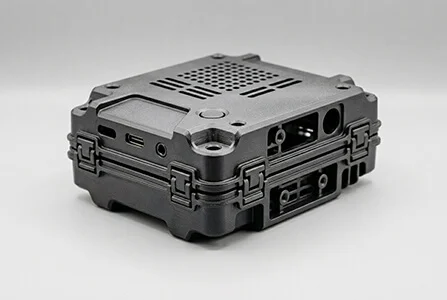
ABS Prototype Housing
Optimized for fast iteration and cosmetic consistency. DFM controlled ribs, bosses, and edge break.
Transferable Lessons
Most “plastic problems” are actually heat-and-stress problems. The winning approach is to design and machine plastics like they want to move—then engineer that movement out.
- Resin-by-function: pick the resin that matches failure mode
- Heat-aware machining: avoid melting/fuzz and stress marks
- Balanced removal: reduces warp and improves repeatability
- Inserts for assembly: durability for repeated fastening
FAQ: CNC Plastic Machining
Common questions about resin selection (Delrin/POM, Nylon/PA, ABS, PC), CNC vs injection molding, warpage, and cost control.
What is the best plastic for CNC machining—Delrin, Nylon, ABS, or Polycarbonate?
Choose by the real requirement. Delrin/POM is a strong default for low friction, stable dimensions, and crisp machining. Nylon/PA is chosen for toughness and wear but needs moisture planning. ABS is cost-effective for housings and prototypes. Polycarbonate/PC is used when you need high impact strength and often clarity—machining must be heat-aware to avoid marks.
Plastic CNC machining vs injection molding—when should I choose CNC?
CNC plastic machining is typically best when the design may still change, volumes are low-to-medium, you need fast lead time, or you need precise control of functional features. Injection molding wins when volumes are high and the design is frozen.
Why do machined plastic parts warp or change size after machining?
Plastics have higher thermal expansion than metals and can carry internal stress from stock. Uneven machining and localized heat can release stress and cause movement. Balanced machining, heat control, and (when needed) roughing + rest steps help keep parts stable.
Do you provide threaded inserts for plastic parts?
Yes. Inserts are often the best route for repeated assembly torque without stripping threads. We can recommend insert type and boss geometry as part of DFM.
How do you keep CNC machining plastics cost-competitive?
We keep costs down by selecting the right resin grade, reducing setups, using DFM to avoid fragile features and chatter, applying tight tolerances only to CTQs, and limiting finishing to the surfaces that truly need it.
Engineering Plastics CNC Machining (Global Supply, Local Expectations)
Batnon supports cnc plastic machining for engineering teams across North America, Europe, and Asia—shipping prototypes and production parts worldwide. If you’re searching for plastic cnc machining, cnc machining plastics, machined plastic parts, or a partner for engineering plastic machining, our workflow is designed for fast alignment: resin selection, DFM for heat and stability, finish planning, and inspection evidence tied to CTQs.
- Common resins: Delrin/POM, Nylon/PA, ABS, Polycarbonate/PC (see resin pages above)
- Typical applications: housings, fixtures, wear parts, insulators, guards, covers
- Process planning: heat control, balanced machining, insert strategy, finish-aware tolerancing
- Need higher performance? High performance plastics hub
Tip for fast quoting: include resin preference, quantity, CTQs (bores/holes/flatness), cosmetic faces, and any post-processing (matte finish, edge polish for PC, paint/coating).