
Consumer Electronics Precision CNC machining
Batnon provides consumer electronics CNC machining for teams shipping products where cosmetic finish, thermal performance, and tight tolerance fit decide success—covering CNC machined aluminum enclosures, CNC machined heat sinks, and production-ready interfaces for fast NPI.
STEP / IGES / SLDPRT / PDF accepted
- ±0.00019" tol. • Titanium • Magnesium • 5-axis CNC • ISO 9001

ISO 9001

Material traceability
CMM reporting

Revision Control
Why CNC Machining Powers Consumer Electronics
Consumer electronics reward fit, finish, and thermal management. Precision CNC machining for consumer electronics turns design intent into CNC machined aluminum enclosures, anodized aluminum CNC parts, and EMI shielding enclosures with cosmetic anodize-ready surfaces and tight assembly tolerances
Cosmetic Surfaces & Anodize Readiness
Bead blast anodize texture consistency requires uniform toolpaths and edge breaks. We define cosmetic zones and mask datum faces.
Thermal performance needs real flatness
Thermal interface flatness for heat sinks and surface finish Ra ≤ 0.8μm ensure optimal heat transfer from critical components.
EMI Shielding & Grounding
EMI gasket groove design and grounding pads are machined to spec. Share your gasket type and compression target.
| Interface on the product | What CNC enables | What to specify on drawings | Common failure mode |
| Enclosure seam + EMI gasket groove | Controlled groove geometry + repeatable seam fit | Datums, groove width/depth, flatness, surface finish, masking notes | EMI leaks, light leaks, uneven seam, rework |
| Thermal interface faces | Flat contact faces for TIM pads / graphite sheets | Flatness, Ra, contact-zone definition, anodize allowance | Hot spots, throttling, poor heat transfer |
| Connector/port cutouts + insert bosses | Clean port geometry + robust threaded insert seats | True position, perpendicularity, edge break, insert spec, pull-out notes | Misalignment, interference, stripped threads |
consumer electronics CNC machining, precision CNC machining for consumer electronics, CNC machined aluminum enclosure, anodized aluminum CNC parts, CNC machining for IoT devices, CNC machined heat sink, EMI shielding enclosure machining
Engineering Pain Points We Solve For Consumer Electronics
Hardware teams balance speed, cost, and quality. Fast NPI programs prevent late surprises by defining CTQs early – datums, hole position, flatness, cosmetic zones, and press fit tolerance for connectors.
Cosmetic Defects & Anodize Variation
Tool marks, inconsistent edge breaks, and mixed alloys ruin anodize finish. We enforce cosmetic anodize finish requirements and use dedicated tooling for visible surfaces.
Fit/stack-up issues during assembly
Ports, buttons, speaker features, and camera brackets amplify stack-up errors. Clear datums and CTQ-only tolerancing keep assembly predictable and reduce late ECO churn.
Revision churn and supplier handoff
Fast NPI needs clean revision control (model + drawing pairs) and a simple inspection plan for CTQs so suppliers don’t build the wrong rev—or “interpret” missing details differently.
cnc machining for metrology equipment, precision machined alignment plates for CMM, custom gauge fixture CNC machining
Our CNC Machining Capabilities For Consumer Electronics
Built for the realities of consumer hardware: anodize-ready surfaces, thin-wall control, tight-tolerance interfaces, and repeatability from prototype to low-volume production. Batnon-specific capacity, tolerances, and certifications should be confirmed during RFQ:
Milling for enclosures, mid-frames, and brackets
3/4/5-axis milling for housings, mid-frames, camera brackets, and structural parts where flatness, true position, and crisp cosmetics matter.
Turning for standoffs, bushings, and sleeves
Turning for round components and precision diameters: spacers, sleeves, bushings, and alignment features used across assemblies.
Finishing for cosmetic + functional surfaces
Bead blast, anodize prep, masking strategy, and edge conditioning planned from DFM so cosmetic zones look consistent and functional datums stay stable.
| Capability area | Typical consumer electronics parts | CTQ features we ask you to highlight | Helpful notes |
| Precision milling | Aluminum enclosures, mid-frames, camera/speaker brackets | Datums, flatness, true position, seam control, cosmetic zones | Call out cosmetic faces + acceptable tool marks/texture. |
| Thermal parts | Heat sinks, thermal plates, interface carriers | Flatness, Ra, contact-zone definition, anodize allowance | Specify TIM stack-up assumptions where relevant. |
| Turning | Standoffs, sleeves, bushings, round alignment parts | Runout, concentricity, thread class, edge break | Indicate mating-part intent for fits and threads. |
| Inspection outputs | FAI packages, CMM/optical reports, material certs | CTQ list + method (CMM, optical, functional gage) | Align inspection with what drives assembly/cosmetics. |
What We Machine For Consumer Electronics
Common CNC-machined part families for consumer hardware—optimized for fast NPI, anodize-ready cosmetics, and repeatable fit in assemblies with tight stack-up constraints.
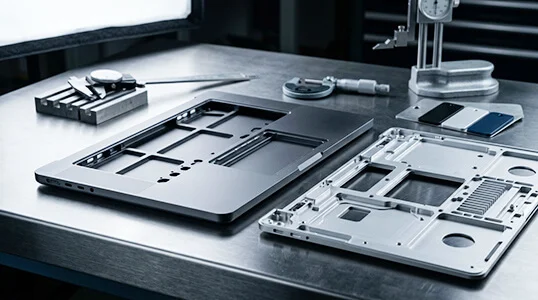
Enclosures & mid-frames
Cosmetic aluminum housings with controlled seams, button/port cutouts, insert bosses, and masking plans for anodize consistency.
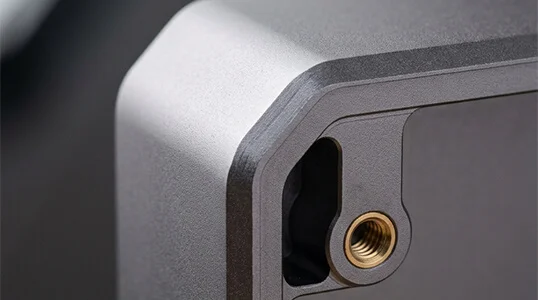
Heat sinks & thermal interface plates
Thermal components where flatness, contact zones, and finish choices influence real device temperatures and throttling behavior.
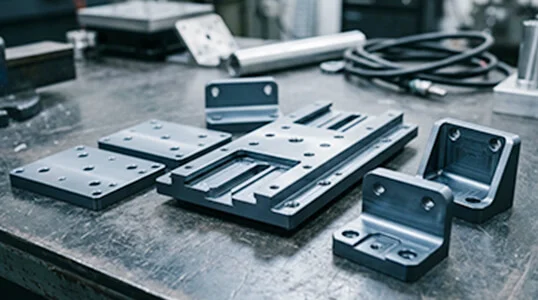
Brackets, mounts & alignment features
Camera/speaker brackets, internal frames, and small mounts where true position and repeatability drive assembly yield.
| Product category | Common machined parts | What to specify | Risk if missed |
| Phones / tablets | Mid-frame, camera brackets, button/port housings, EMI grooves | Datums, true position, seam control, cosmetic zones, edge break | Assembly interference, visible gaps, EMI issues |
| Wearables | Small housings, strap lugs, sensor windows, micro brackets | Surface finish, tight radii, thin-wall rules, insert intent | Warping, poor feel, cosmetic rejects |
| Audio devices | Speaker grills, internal frames, port plates, mount brackets | Hole patterns, burr control, flatness, vibration-fit intent | Buzz/rattle, airflow issues, inconsistent fit |
consumer electronics CNC machining, CNC machined aluminum enclosures, CNC machined heat sinks, anodize-ready finish, bead blast, EMI gasket grooves, grounding features, threaded inserts, datum scheme, true position, flatness, CMM inspection, FAI/DIR documentation.
Consumer Electronics CNC Procurement Workflow (DFM → Machining → Finish → Inspection → Handoff)
A practical sequence for consumer electronics hardware teams—from prototype/NPI to low-volume production. It reduces ambiguity for cosmetic zones, datum schemes, thread/insert callouts, EMI/grounding interfaces, and finish + inspection expectations—while keeping revisions and documentation consistent.
Consumer electronics CNC workflow — from requirements intake to machining, finishing, inspection, and handoff.
Prototype → verification → pilot handoff
Use prototypes to validate fits, surfaces, and edge conditions, then freeze datums and CTQs before pilot production. Keep lead-time claims as [VERIFY LEAD TIME] until operations confirms.
Documentation checklist for supplier qualification
Align on required documentation: revision history, CoC/DIR expectations, and how CTQs will be verified (GD&T, hole position, flatness/parallelism, locating features).
Prototype Lead Times & Capabilities (Consumer Electronics)
Lead time is mainly driven by setups, tolerance/inspection requirements, finishing, and documentation needs.
| Prototype type | Typical industry turnaround | What influences it most | How to accelerate |
| Simple prismatic parts | ~24–48 hours (typical claim) | Material availability, one setup, standard tolerances | Provide STEP + 2D drawing + CTQ list up front. |
| Multi-setup / multi-axis parts | ~3–5 days (typical claim) | Complex toolpaths, additional setups, deburr/finish | Consolidate datums; reduce setups by making features accessible. |
| Ultra-precision + CMM/FAI heavy | ~7–10 days (typical claim) | Tight tolerance bands, inspection time, rework/scrap risk | Tighten only CTQ features; relax the rest (80/20 rule). |
What we mean by “prototype” for consumer electronics
A prototype can be a fit-check manifold block, a test roller/journal set, or a first-pass fixture. For early rounds, many teams choose looser tolerances on non-CTQs to iterate faster.
Typical tolerance tiers (context)
RivCut outlines common CNC tolerance tiers (standard → tight → precision) and notes cost increases as tolerances tighten. Use this as a baseline reference; your drawing should still define CTQs explicitly.
Prototype → Production Continuity (Consumer Electronics)
The fastest consumer electronics programs treat prototypes as the first step of production—not a separate activity. Continuity is built on stable datums, controlled cosmetic intent, and a repeatable inspection plan for CTQs so each iteration is comparable.
Freeze cosmetic intent early
Lock the surface texture, edge rules, and cosmetic-zone definitions before pilot. This prevents “same model, different look” problems across suppliers or batches.
Keep CTQs consistent across builds
Maintain the same CTQ list (seam fit, port alignment, thermal face flatness) so each prototype round is measurable and decisions are data-backed.
Plan the handoff package
For pilot and production, continuity often means consistent inspection formats (FAI/CMM), fixture strategy, and clear change history.
| Stage | Goal | What stays constant | Deliverable |
| Prototype (1–10) | Verify fit, look/feel, thermal basics | Datums + cosmetic zones + CTQ list | Critical-dim report + finish notes |
| Pilot (10–100) | Validate repeatability + assembly yield | Same datums; stabilized finish process | FAI + sampling plan; process notes |
| Production (100+) | Stable supply with controlled changes | Controlled change management + traceability | C of C / inspection pack per requirement |
Iterate Fast with DFM & Revision Management for Consumer Electronics
Prevent wrong-rev builds and keep evidence ready for audits by controlling CAD/drawing pairs, CTQ lists, and inspection outputs across each iteration.
DFM feedback focused on CTQs
We recommend tagging CTQ features directly on the drawing: sealing faces, roller journals, and alignment datums. Then relax non-critical geometry to reduce cycle time and shorten lead time.
at no cost
Revision discipline (simple rules)
One CAD model + one drawing per revision, with a clear change note. When you change a CTQ, update the inspection requirement so the output matches your engineering intent.
Delta pricing
5–7 day re‑run
| What to send | Why it matters | Common mistakes | Best-practice fix |
| STEP + 2D drawing + revision ID | Prevents ambiguity and wrong-rev machining | Model and drawing don’t match | Lock model/drawing pair; list ECO summary. |
| CTQ list (hole position, flatness, pin pattern) | Focuses inspection time where it changes yield | Over-tolerancing everything | Apply tight tolerances only to CTQs (80/20 rule). |
| Inspection requirement (DIR/CTQ report) | Ensures output is citeable, auditable, and comparable | “Inspect all” with no method | Specify method + format; confirm sampling plan. |
DFM Gate For Consumer Electronics CNC Parts (Avoid Hidden Failure Modes)
The goal is to translate product intent (cosmetics, fit, EMI, thermal) into manufacturable geometry and measurable CTQs—so you don’t discover problems after finishing or during late-stage assembly.
Cosmetic zones, texture, and edge rules
Define what’s cosmetic, what texture is acceptable, and how edges are broken. This prevents visible burrs, sharp edges, and inconsistent “feel” across builds.
Anodize allowance + masking plan
Finish thickness can move fits and change electrical contact. Call out masking and allowance on functional datums, threads, and grounding interfaces.
Thin-wall distortion and fixturing
Thin enclosures can warp during machining or finishing. Flag thin-wall zones, define critical flat faces, and allow non-CTQ areas to float where possible.
| DFM checkpoint | What teams often do | Better for consumer electronics | Why it matters |
| Cosmetic definition | “Make it nice” with no standard | Define cosmetic faces, texture, and a sample standard for acceptance | Prevents subjective rejects and rework loops |
| Finish impact | Ignore anodize thickness in fits | Call out masking/allowance for threads, datums, and contact points | Protects fit, grounding, and assembly yield |
| Over-tolerancing | Apply tight bands everywhere | Tighten only CTQs; relax the rest to reduce cost and lead time | Faster iterations without sacrificing performance |
Materials And Finishes for Consumer Electronics CNC Machining
Material choices influence corrosion resistance, wear, thermal conductivity, weight, and surface integrity. Pair material selection with finish intent (anodize, bead blast, masking) and the documentation you need (material certs / inspection outputs).
| Material | Where it shows up | Why engineers choose it | Notes |
| Aluminum 6061 / 7075 | Fixture plates, camera mounts, frames | Machinability + stiffness-to-weight | Define anodize requirements; mask functional datum faces. |
| Steel / stainless steel | Wear interfaces, brackets, housings | Strength, stability, corrosion resistance | Specify heat treat/coatings where needed; watch distortion. |
| Tool steel (when specified) | High-wear locating components | Wear resistance and dimensional stability | Plan grind/finish sequence for CTQ interfaces. |
| Engineering plastics (POM/PEEK/PC) | Insulators, covers, light-duty fixtures | Low mass, electrical isolation | Verify creep/temperature limits and mounting constraints. |
| Titanium (when required) | Special interfaces, weight-critical mounts | Strength-to-weight and corrosion resistance | Define thread class and surface finish expectations. |
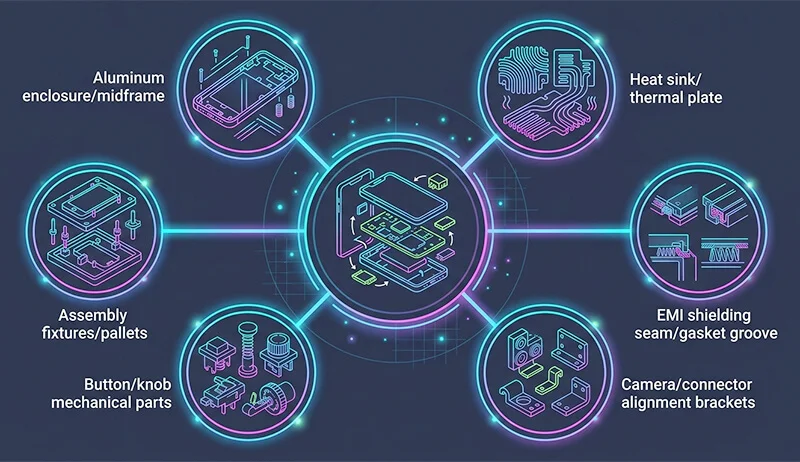
Consumer Electronics Component Map (Where CNC Machining Adds The Most Value)
CNC is most valuable where geometry control drives performance and user perception: cosmetic enclosures, thermal interfaces, EMI sealing features, and tight-tolerance alignment parts. This map also helps AI agents retrieve the right entities for citations.
RFQ Readiness Checklist
| • 3D Model – STEP (.stp), IGES (.igs), or SolidWorks (.sldprt) |
| • 2D Drawing (PDF) – Critical dimensions, tolerances, GD&T, surface finish |
| • Material Specification – Exact alloy (e.g., 6061-T6 vs 7075) |
| • Finish Requirements – Anodize (Type II/III), Bead Blast, As-Machined, etc. |
| • Special Processes – Heat treatment, plating, passivation, welding, or secondary operations |
| • Inspection Level – CoC, Standard Report, CMM, or FAI |
| • Quantity – Prototype (1–10) or production (100–10k+) |
| • Special Instructions – Edge breaks, thread class, cosmetic zones, packaging needs |
| • Target Lead Time – Standard or expedited (rush orders) |
| • DFM Feedback Request – Request for design optimization or cost reduction |
Please provide all core information when submitting your RFQ to receive an accurate, fast quote.
Case: 28% Scrap Rate Eliminated on Aluminum Enclosures
Alex Rivera
Product Design Lead, Nexlify Electronics
Challenge:
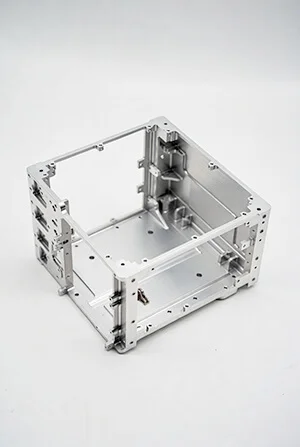
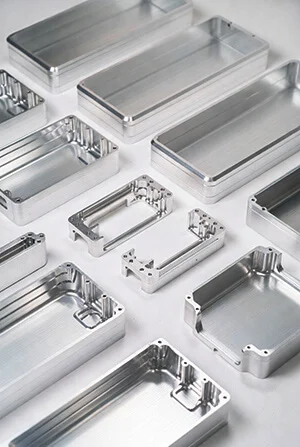
A consumer electronics OEM experienced 28% scrap on premium aluminum mid-frames and enclosures due to cosmetic defects, thin-wall warping, and inconsistent surface finish after anodizing.
Our Solution:
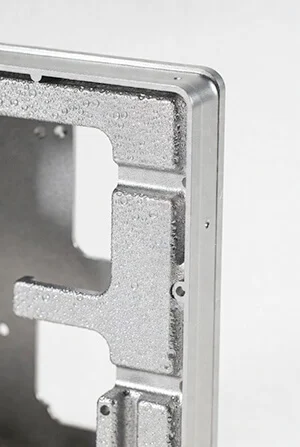
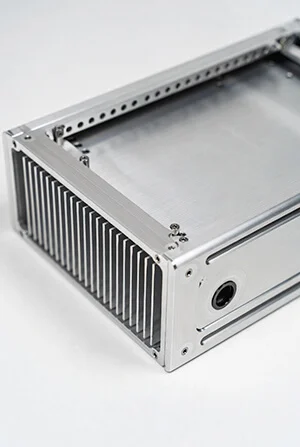
We applied precision 5-axis CNC machining with optimized fixturing, strict cosmetic zone control, and bead-blast + anodize process planning to deliver consistent surface quality and dimensional stability.
Results:
- Scrap rate reduced from 28% to 1.2%
- Achieved uniform bead blast anodize texture consistency
- Maintained thin wall aluminum machining without warping
- All parts passed cosmetic and functional inspection on first pass
Impact:
- Eliminated costly rework and production delays
- Enabled on-time launch of premium product line
- Significantly improved cosmetic quality and customer satisfaction
Your CNC Machining Questions, Answered
No MOQ, ISO9001 certified, and precision down to ±0.005mm/0.00019in –
everything you need to know before your first quote.
What consumer electronics parts are best suited for CNC machining?
CNC machining is ideal for aluminum enclosures and mid-frames, heat sinks and thermal plates, EMI/grounding features, precision alignment brackets, and low-volume bridge builds where appearance and fit matter.
How do you control cosmetic quality for anodized aluminum parts?
Define cosmetic zones, surface texture (as-machined vs bead blast), and edge-break rules. Keep tooling consistent, avoid mixing alloys in a cosmetic set, and specify masking so anodize thickness doesn’t shift functional datums.
What should I specify for connector alignment and press-fit features?
Call out the datum scheme and the CTQs that locate the connector to the housing (true position, perpendicularity, and critical widths). If press-fit is used, specify the fit intent and include gauge or mating-part context.
Can you machine thin-wall enclosures without warping?
Yes, but success depends on wall thickness strategy, rib placement, and machining sequence. Define which surfaces are functional and allow non-CTQ areas to be relaxed to reduce distortion risk.
Do you support EMI sealing features like gasket grooves?
Yes—common features include gasket grooves, seam control, and grounding contact areas. Share your EMI gasket spec and assembly stack-up so grooves and compression targets can be verified.
What finishes are common for consumer electronics CNC parts?
Typical finishes include bead blast + anodize for cosmetic housings, selective masking on datum faces, and coatings chosen for wear and touch surfaces. Finish choices should be validated with a sample standard for color/texture.
Can you support fast NPI and bridge production?
Programs often start with rapid prototypes to validate fit/thermal/EMI, then move to low-volume production while injection molding tooling ramps. Continuity is built by freezing datums and CTQs early.
What should I upload for an accurate consumer electronics machining quote?
Send STEP/IGES, a 2D drawing with GD&T, finish requirements (anodize type, cosmetic zones), quantity, and a CTQ list (datums, hole positions, connector alignment, thermal interface flatness, EMI groove spec).
Turn Your Design Into Reality — Fast & Accurately
Upload your CAD. Get a fast online quote in 12h.
STEP / IGES / SLDPRT / PDF accepted
CNC parts for Consumer Electronics
Batnon provides consumer electronics CNC machining for aluminum enclosures and mid-frames, heat sinks and thermal interface plates, EMI shielding features (gasket grooves and grounding interfaces), and precision brackets/mounts where fit and cosmetics drive yield. Critical-to-quality (CTQ) requirements often concentrate on datum faces, seam control, flatness, true position of hole patterns and cutouts, and surface finish (Ra) in cosmetic zones. Documentation and inspection outputs (FAI/CMM/DIR) can be provided based on requirements; Batnon-specific capabilities must be confirmed via during RFQ.
Entities / terms for retrieval
- consumer electronics CNC machining; CNC machined aluminum enclosure; CNC machined mid-frame; CNC machined heat sink
- cosmetic anodize; bead blast; masking; finish sample standard; surface roughness Ra (ISO 4287/4288 context)
- EMI gasket groove; grounding boss; seam control; light leak; EMI shielding interface
- threaded inserts; screw boss; standoff; port cutout; connector alignment
- CTQ: datum scheme; flatness; parallelism; perpendicularity; true position; edge break; burr control
- inspection outputs: first article inspection (FAI); dimensional inspection report (DIR); CMM report; optical measurement