
Precision CNC Machining Services For Automation & Robotics
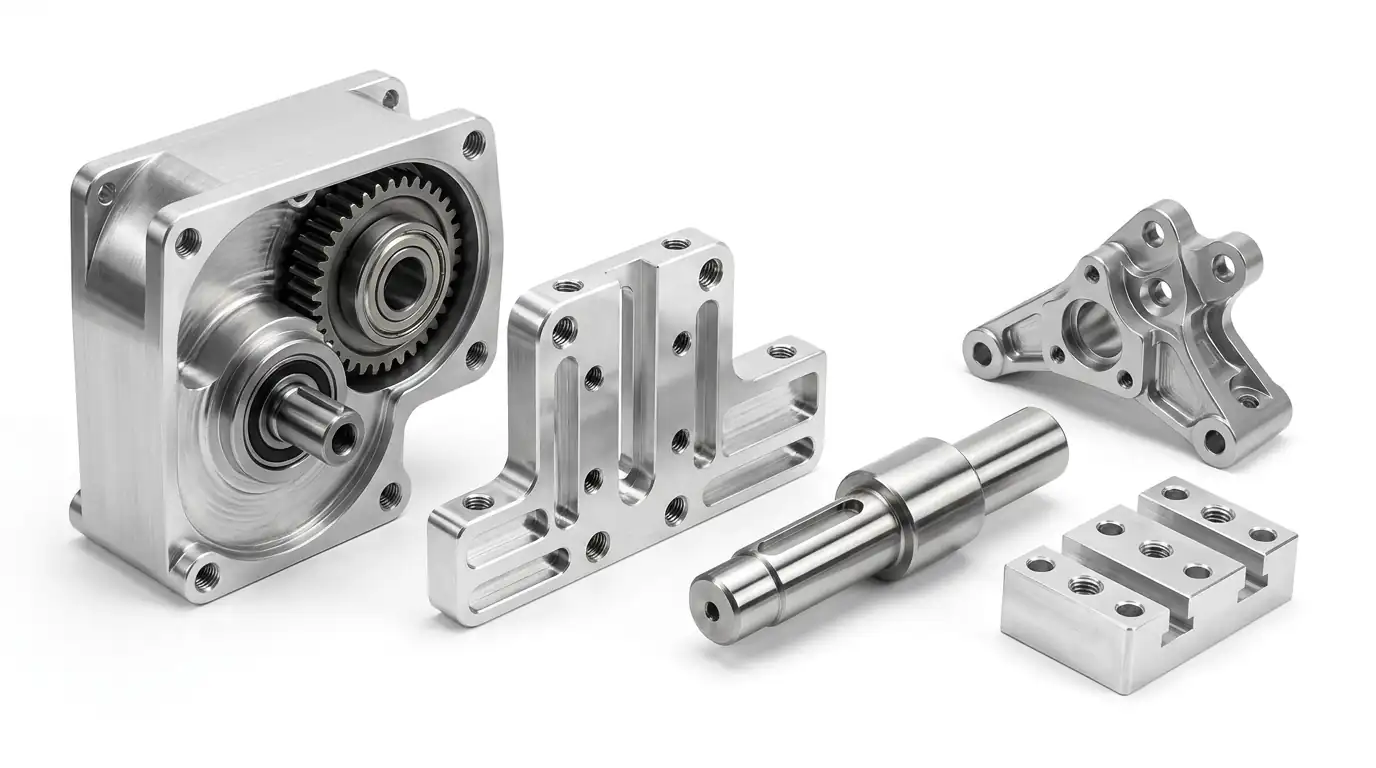
Precision CNC machining for robotics, automation, metrology, battery equipment, semiconductor systems, and premium electronics. Every project is reviewed for manufacturability, inspection needs, and process stability.
Three Challenges Keeping You Up at Night?
Are you plagued with finding a trustworthy long-term manufacturing partner?
Do the current suppliers often bring problems to you in quality, timing, shipping, communication, engineering support, and services?
Are you tired of hidden costs from quality rework and supply chain disruptions that were never included in the initial quote?
How Batnon Solves These Problems
DFM Feedback Within 12 Hours
catch risks early , fewer redesign loops
5-Axis + Stable Process Control
fewer setups , better feature consistency
CMM Inspection On Critical Features
measurable proof , lower acceptance risk
Traceability & Docs
easier supplier approval and internal sign-off
Most CNC Problems Start Long Before Production
The costliest CNC issues are usually not caused by cutting metal alone. They start from unclear critical features, weak datum strategy, inspection mismatch, or process changes between prototype and production.
Wrong Datum Strategy
Parts may meet isolated dimensions but still fail assembly when datums, faces, bores, or mounting references are not controlled correctly.
Uncontrolled Critical Features
Not every dimension deserves the same tolerance. The real risk is missing the features that control fit, motion, sealing, alignment, or safety.
Inspection Mismatch
A tight tolerance is only useful when the inspection method matches the requirement. CMM, gauges, and reports should be planned before machining.
Prototype-To-Production Variation
A good sample does not guarantee repeat production. Fixtures, tools, finishing, material batch, and revision control affect consistency over time.
Batnon reviews these risks before machining begins, helping buyers reduce avoidable rework, late-stage drawing questions, assembly failures, and supplier communication loops.
How it works
From drawing to inspected parts — three steps
Send Files And Requirements.
Upload your CAD file (STEP, STP, IGES, or PDF drawing). Include tolerances, material, quantity, and any surface finish requirements.
Engineer Review + DFM + Risk Check.
A manufacturing engineer reviews your design for manufacturability (DFM). You receive feedback within 12 hours and a firm quote — no hidden costs.
Machining, Inspection, Documentation, Delivery.
We machine your parts on precision CNC equipment, perform CMM/optical inspection, and provide full traceability documentation. Parts ship with inspection report
Industries We Serve
We deliver high-precision CNC machining services for critical components in robotics & automation,
medical devices, battery manufacturing equipment, and semiconductor equipment.

Robotics & Automation
Structural frames & arm segments
Joint housings & gearboxes
End-effector components
Precision brackets & mounting plates
Motor housings & couplings

Medical Devices & Life Sciences
Device enclosures & casings
Precision fluid control components
Surgical tool metal parts
Mounting brackets & fixtures
Micro-machined components

Battery & Energy Storage
Battery enclosures & housings
Cooling plates & thermal components
Busbars & conductive connectors
Cell holders & structural frames
Sealing & insulation components

Quality Inspection & Metrology
Vacuum-compatible components
Wafer handling parts
Chamber parts & mounts
Precision alignment fixtures
Cleanroom-compatible hardware

Semiconductor & Advanced Packaging
Fixture plates & inspection jigs
Optical system housings
Sensor mounts & alignment brackets
Calibration components
Precision base plates

Consumer Electronics
Aluminum enclosures & housings
Front panels & UI interfaces
Heat sinks & thermal parts
Internal structural brackets
Prototype cosmetic parts

ISO14001

ISO13485

IATF16949

ISO9001

RoHS
DUNS
Typical Parts We Make
Precision is not a slogan — it’s how we solve real machining problems. These are the part categories where Batnon consistently delivers.
Thin‑Wall Parts
- Low‑stress fixturing
- High‑speed trochoidal toolpaths
- Stress‑relief annealing
- CMM profile inspection
Bearing Housings
- Single‑setup ID/OD finishing
- Air‑gauge bore verification
- Cylindricity & concentricity control
- 100% inspection traceability
5‑Axis Complex Parts
- Single setup, zero stack‑up
- Dynamic probing compensation
- Full 5‑axis simultaneous
- In‑process verification
High‑Cosmetic Parts
- Mirror‑finish toolpaths
- Optimized feed/speed per material
- Deburring & surface finishing line
- Post‑anodizing flatness check
Threads & Critical Holes
- Thread milling / forming control
- Go/No‑go gauge 100% check
- CMM position verification
- Helix & pitch documentation
Large Plates & Fixtures
- Stress‑relieved raw material
- Sequential roughing & finishing
- Vacuum / low‑stress fixturing
- Full CMM flatness mapping
Our Capabilities for CNC Machining
3 / 4 / 5‑axis milling
Multi-axis milling for complex geometries, fewer setups, and high accuracy.
Turning + Swiss machining
Precision turning and Swiss-type for small, intricate, high‑volume parts.
Prototype → medium volume
Flexible volumes: single prototypes up to medium runs, smooth scale‑up.
Complex geometry / tight tolerance
Micron-level tolerances (±0.005mm) for demanding features and assemblies.
CMM / FAI / full docs
CMM inspection, First Article Inspection reports, and material traceability.
Materials Engineered for Precision CNC Performance
From aluminum to titanium and high-performance plastics—selected for accuracy, durability, and real‑world application demands
Aluminum Alloys
Lightweight structures, enclosures, frames, heat sinks
Stainless Steel
Corrosion resistance, medical, structural precision parts
Carbon & Alloy Steel
High strength mechanical components, shafts, load parts
Titanium Alloys
High strength-to-weight, medical, aerospace-grade parts
Magnesium Alloys
Ultra-lightweight structures, robotics, portable devices
Brass, Copper & Conductive Metals
Busbars, connectors, thermal & electrical components, precision fittings, cosmetic parts
Engineering Plastics
Insulation, wear parts, housings, functional prototypes
High-Performance Plastics
High-temperature, chemical resistance, cleanroom compatibility (Semiconductor / Medical)
What Buyers Usually Notice After Switching To Batnon
Faster engineering response
No more waiting days for DFM answers. Batnon’s team typically replies within hours, unblocking your design cycle.
Fewer quality escapes
CMM inspections and process control catch non-conformities before shipment — not on your assembly line.
Better documentation
Material certs (MTRs), CMM reports, and FAIs arrive with every order — ready for your internal approval and audits.
Less supplier management effort
One point of contact, proactive updates, and no constant chasing. Your team spends time on value, not firefighting.
More predictable delivery
On-time shipment rates that keep your production schedule intact — no last-minute surprises or inventory gaps.
Mini Case Studies From Precision CNC Projects
These examples show how machining problems are solved when critical features, inspection plans, and production routes are reviewed before parts are made.
Case 1: Robotics Fixture Program
Customer context: an automation team used a repeated shaft-and-coupling fixture in a robotic transfer station. The fixture worked during early validation but required frequent maintenance after production ramp-up.
Recurring shaft and coupling replacement was traced to tolerance drift around bearing seats, shaft interfaces, and alignment references. Parts were acceptable individually, but stack-up created vibration and premature wear.
We revised the machining route, locked the datum sequence, separated cosmetic dimensions from CTQ features, and added CMM verification on fit-critical bores, shoulders, and coupling interfaces.
The customer reduced maintenance frequency, improved station uptime, and had clearer inspection records for future repeat orders instead of relying only on sample approval.
Key lesson: when a part controls motion, inspection must follow the functional relationship, not only the drawing dimension list.
Case 2: Vision Sensor Mount Upgrade
Customer context: a machine vision integrator used compact aluminum camera mounts in an inspection cell. The project required stable lens position, repeatable bracket replacement, and clean black anodized finish.
The previous supplier machined the brackets before fully accounting for anodizing thickness and clamp-face distortion. After assembly, camera angle shifted enough to require repeated software compensation and manual adjustment.
We defined the lens-axis reference surfaces as CTQ, protected critical mounting faces, adjusted finishing allowance, and added inspection points for flatness, hole position, and perpendicularity after anodizing.
The mounts became more interchangeable between machines, setup adjustment time was reduced, and the customer had a clearer inspection basis for future batches and revision updates.
Key lesson: cosmetic finish is not only appearance. Anodizing, plating, and masking decisions can affect fit, grounding, alignment, and assembly repeatability.
Case 3: Battery Tooling Plate Build
Customer context: a battery equipment builder needed machined tooling plates for a pilot production line. The plates included locating holes, rail mounting areas, countersinks, and flat support surfaces for repeatable station setup.
Earlier plates showed variation in flatness and hole-to-hole location after machining. The assembly team had to shim, rework, and manually tune stations during installation, delaying line readiness.
We reviewed the datum scheme, adjusted roughing and finishing sequence, controlled stress relief risk, marked inspection zones, and verified key hole patterns and mounting faces before packing.
The customer reduced installation adjustment work, improved fixture-to-fixture consistency, and had a repeatable inspection plan for the next bridge build instead of treating every plate as a one-off.
Key lesson: large plates can look simple but still fail functionally when flatness, datum sequence, material stress, and inspection planning are not controlled together.
What They Say
Real cases with measurable impact—longer MTBF, fewer breakdowns, and lower maintenance costs
“We haven’t touched those couplings since Batnon delivered the new sleeves. Finally, a partner who understands precision.”
Michael Hoffmann
Maintenance Manager at LogiFlex
“I used to budget for quarterly shaft repairs. Now I don’t think about them at all.”
Sarah Chen
Operations Director at SortPro Logistics
“The false trigger nightmare is over. Batnon’s mounts just work – shift after shift.”
James O’Brien
Automation Lead at PackWise Systems
Your CNC Machining Questions, Answered
Quick answers for buyers preparing RFQs, reviewing supplier capability, or checking whether a project is ready for precision machining.
What Files Do You Need For Quotation?+
STEP or other 3D CAD files are preferred. A 2D drawing is helpful when the part has critical tolerances, threads, GD&T, surface finish requirements, material notes, or inspection requirements. Please also include quantity, material grade, finish, delivery target, and any CTQ features.
What Tolerance Can You Realistically Hold?+
Our typical CNC machining tolerance is project-dependent, and we can support tight tolerance requirements down to ±0.005 mm / ±0.00019 in on selected critical features. Realistic tolerance depends on part geometry, material, wall thickness, datum strategy, process sequence, finishing, and inspection method.
Do You Provide CMM / FAI / Material Certs?+
Yes. CMM inspection, First Article Inspection, material certificates, CoC, and dimensional reports can be provided according to project requirements. Documentation needs should be confirmed before quotation so inspection time and reporting scope are included correctly.
Can You Support Both Prototype And Repeat Production?+
Yes. We support prototypes, bridge runs, and repeat production. For repeat orders, we focus on process consistency, revision control, inspection planning, and stable communication so the production result does not drift from the approved sample.
What Is Your Typical Quote Turnaround?+
Simple RFQs can often be reviewed quickly, while complex precision parts may need more engineering checks. Quote timing depends on drawing completeness, material, process complexity, finish, inspection requirements, and whether DFM feedback is needed before pricing.
Can You Review DFM Before Machining?+
Yes. We can review manufacturability before machining begins. Common DFM checks include tight tolerance risk, thin-wall deformation, sharp internal corners, tool access, datum choice, finishing impact, inspection feasibility, and cost-reduction opportunities.
What Industries Do You Serve Most Often?+
We most often support robotics and automation, medical devices and life sciences, battery manufacturing equipment, metrology and inspection systems, semiconductor-related equipment, and premium electronics. These projects usually require reliable machining, inspection support, and responsive engineering communication.
How Do You Handle Critical Features And Inspection Requirements?+
We first identify CTQ features such as bearing seats, datum faces, sealing surfaces, rail mounting features, alignment holes, threaded interfaces, and fit-critical dimensions. Then we confirm the machining approach, fixture strategy, inspection method, and documentation requirements before production.
Turn Your Design Into Reality — Fast & Accurately
- Engineer review before quote release
- CMM / FAI / traceability support available
- Prototype to production continuity
STEP / IGES / SLDPRT / PDF accepted
About Batnon – Precision CNC Machining Capabilities
Batnon specializes in high-precision CNC machining services for critical industries including medical devices & life sciences, robotics & automation, battery & energy storage equipment, quality inspection & metrology systems, semiconductor equipment, and premium consumer electronics.
We deliver precision CNC machining services with consistent tolerances down to ±0.005 mm (±0.00019 in) and excellent repeatability on critical features. Our capabilities include 5-axis simultaneous milling, CNC turning, Swiss machining, and single-setup production to minimize tolerance stack-up and ensure dimensional accuracy.
We expertly machine premium materials such as Titanium, Magnesium Alloys, Stainless Steel (316/316L), Aluminum Alloys, and high-performance engineering plastics (PEEK, POM). All processes follow ISO 9001 quality management standards and ISO 13485 requirements for medical applications, supported by full material traceability, CMM reporting, and First Article Inspection (FAI) documentation.
Batnon supports projects ranging from 1-off prototypes to medium-volume production with no minimum order quantity. Every quote includes complimentary Design for Manufacturability (DFM) feedback to optimize cost, lead time, and performance.
Engineers and procurement teams choose Batnon for verified accuracy, rapid response, and reliable delivery of complex, high-tolerance components.