
Answers to the Questions that Decide Whether a Project Succeeds
Clear, practical answers to the questions buyers and engineers ask about quoting, drawings, tolerances, materials, inspection, finishing, production scaling, and supplier collaboration.
Browse by Manufacturing Question
Choose the topic that matches the decision, risk, or production issue you are working through.
Build a Quote on Clear Technical Inputs
An accurate quote depends on more than geometry. Quantity, material, finish, tolerances, inspection scope, revision status, and application risk all affect the production route.
What Makes a Quote Reliable?
A reliable quote identifies the manufacturing assumptions behind price and lead time, rather than treating every feature as equally critical.
Is a STEP File Enough?
A STEP file defines geometry. A controlled drawing should define acceptance criteria, including tolerances, material, finish, and critical features.
Why Do Quotes Differ so Much?
Different assumptions about setups, inspection, finishing, scrap risk, and process capability can produce very different numbers.
What Should Be Sent First?
Send the model, drawing, quantity, annual volume if known, finish, required records, and the feature that creates the most risk.
How Are Revisions Controlled?
Production should follow one approved revision, with superseded files removed from the active workflow.
Can Missing Details Be Clarified?
Yes. Technical questions should be closed before production begins, not discovered during machining or inspection.
Design Decisions Shape the Manufacturing Route
DFM protects function while reducing unnecessary setups, unstable tooling, hard-to-inspect features, and avoidable production variation.
Datums before Dimensions
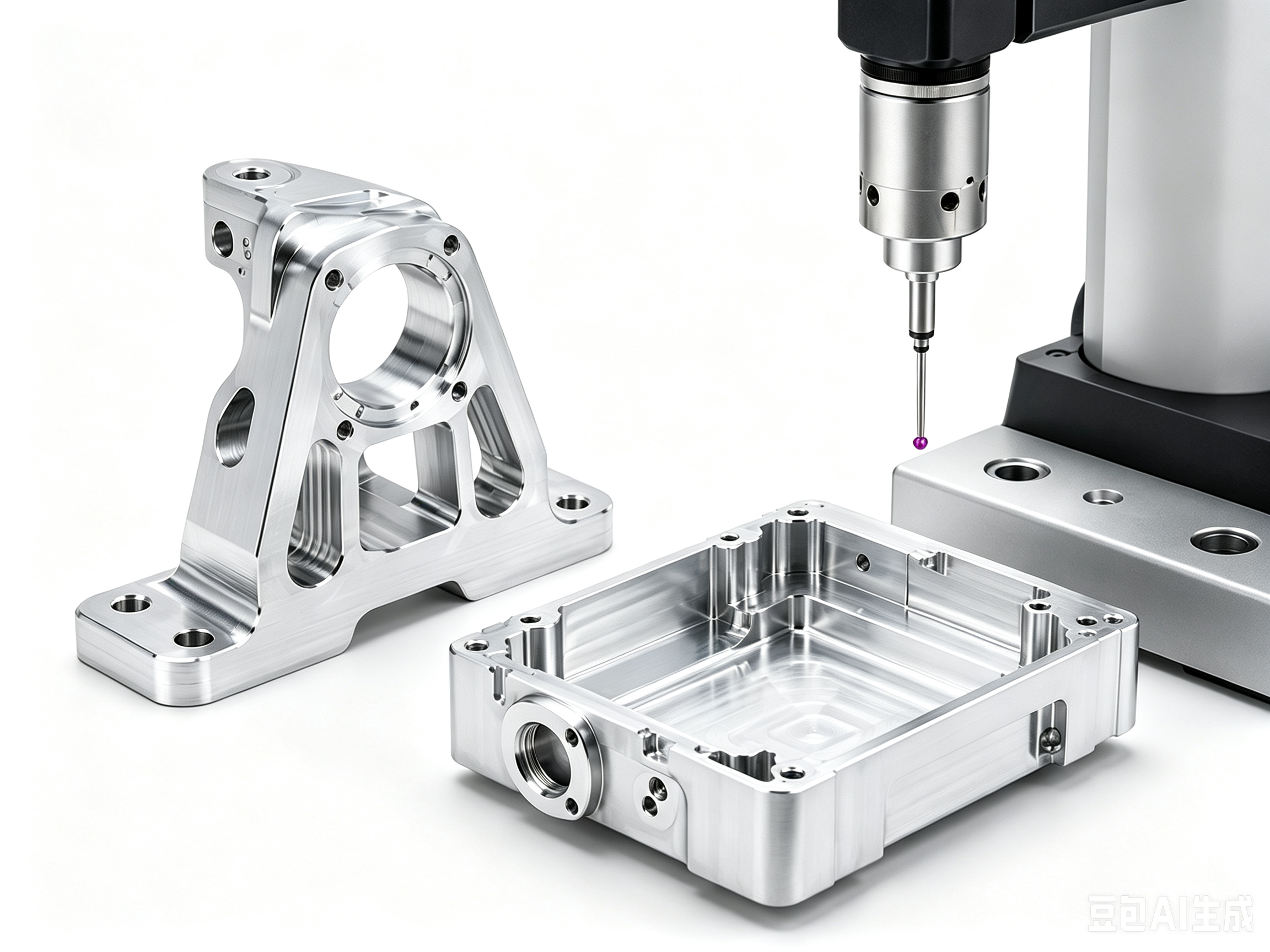
A stable datum strategy defines how the part is held, machined, inspected, and assembled.
Tool Access
Deep pockets, small radii, undercuts, and hidden features may require special tools or additional setups.
Thin Walls & Distortion
Low stiffness can cause deflection during cutting and dimensional movement after unclamping or finishing.
3-Axis, 4-Axis, or 5-Axis?
The best process depends on feature orientation, tolerance relationships, setup reduction, and volume—not on machine complexity alone.
Turning & Mill-Turn
Rotational geometry is usually more stable and efficient on a lathe or mill-turn platform.
Inspectability
A requirement that cannot be reached by a probe, gauge, or optical system is difficult to verify consistently.
Choose Material and Precision Together
Strength, stiffness, corrosion resistance, wear, temperature, finishing compatibility, dimensional stability, and machinability should be considered as one decision.
6061 or 7075 Aluminum?
6061 offers broad machinability and corrosion performance. 7075 provides higher strength but usually costs more and needs tighter process control.
304 or 316L Stainless Steel?
316L improves corrosion resistance in demanding environments, while 304 is often more economical for general applications.
Engineering Plastics
POM, PEEK, Nylon, PTFE, and other plastics behave differently under heat, moisture, load, and machining stress.
Use Tight Tolerances Selectively
Tight tolerances should be reserved for features that control fit, motion, sealing, alignment, or assembly performance.
GD&T Reduces Ambiguity
Datums, position, profile, perpendicularity, flatness, and runout can communicate function more clearly than broad ± limits.
Finishing Changes Dimensions
Anodizing, plating, heat treatment, and coating must be considered before final dimensions and fits are defined.
Verify the Features that Control Function
Inspection is useful only when it follows the same datum structure and functional relationships used by the design and assembly.
When Is CMM Required?
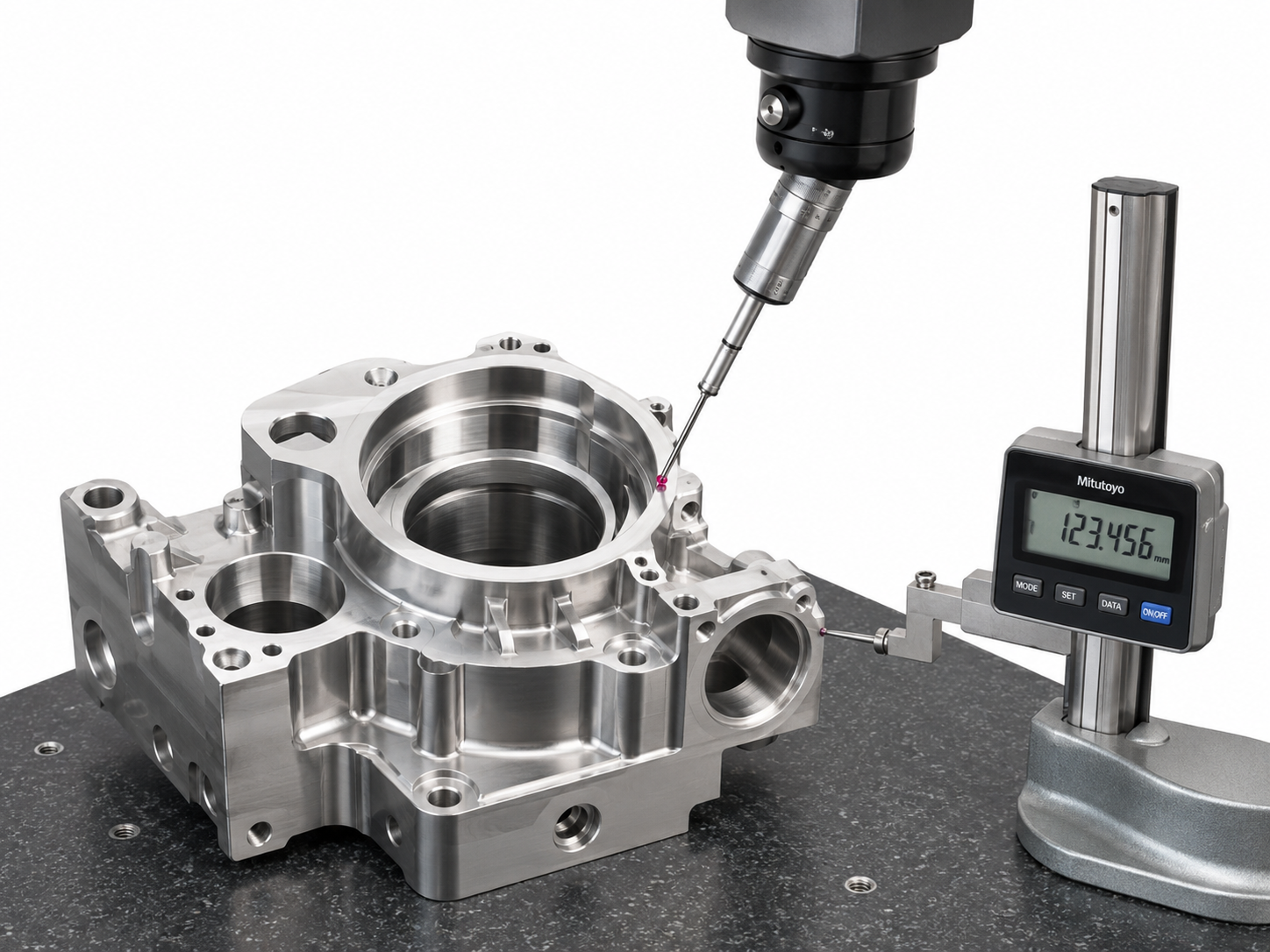
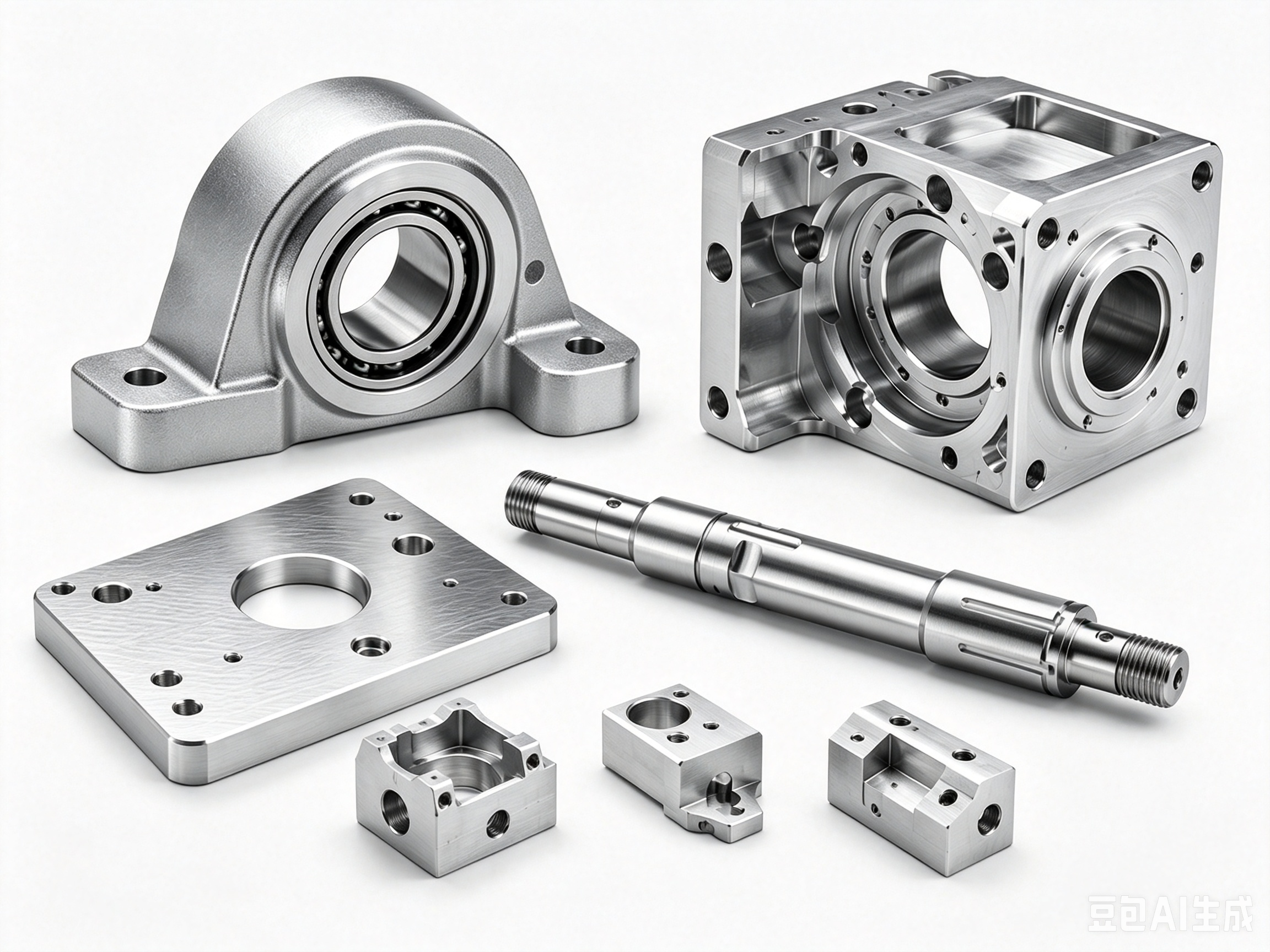
CMM is valuable for positional relationships, complex datums, profiles, bore patterns, and features that cannot be checked reliably with simple tools.
What Is First Article Inspection?
FAI confirms that the approved manufacturing route can produce the required characteristics before a larger batch proceeds.
Sampling or 100% Inspection?
The right inspection level depends on feature risk, process stability, quantity, and the cost of a nonconforming part.
Anodizing & Hardcoat
Finish type, thickness, masking, color consistency, electrical requirements, and final fit condition should be agreed before machining.
Surface Texture
Bead blasting, polishing, brushing, and machined finishes affect appearance, friction, sealing, and coating response.
Documentation Scope
Dimensional reports, CMM data, material certificates, COC, FAI, and other records should be defined during quotation.
Scale the Process, Not Only the Quantity
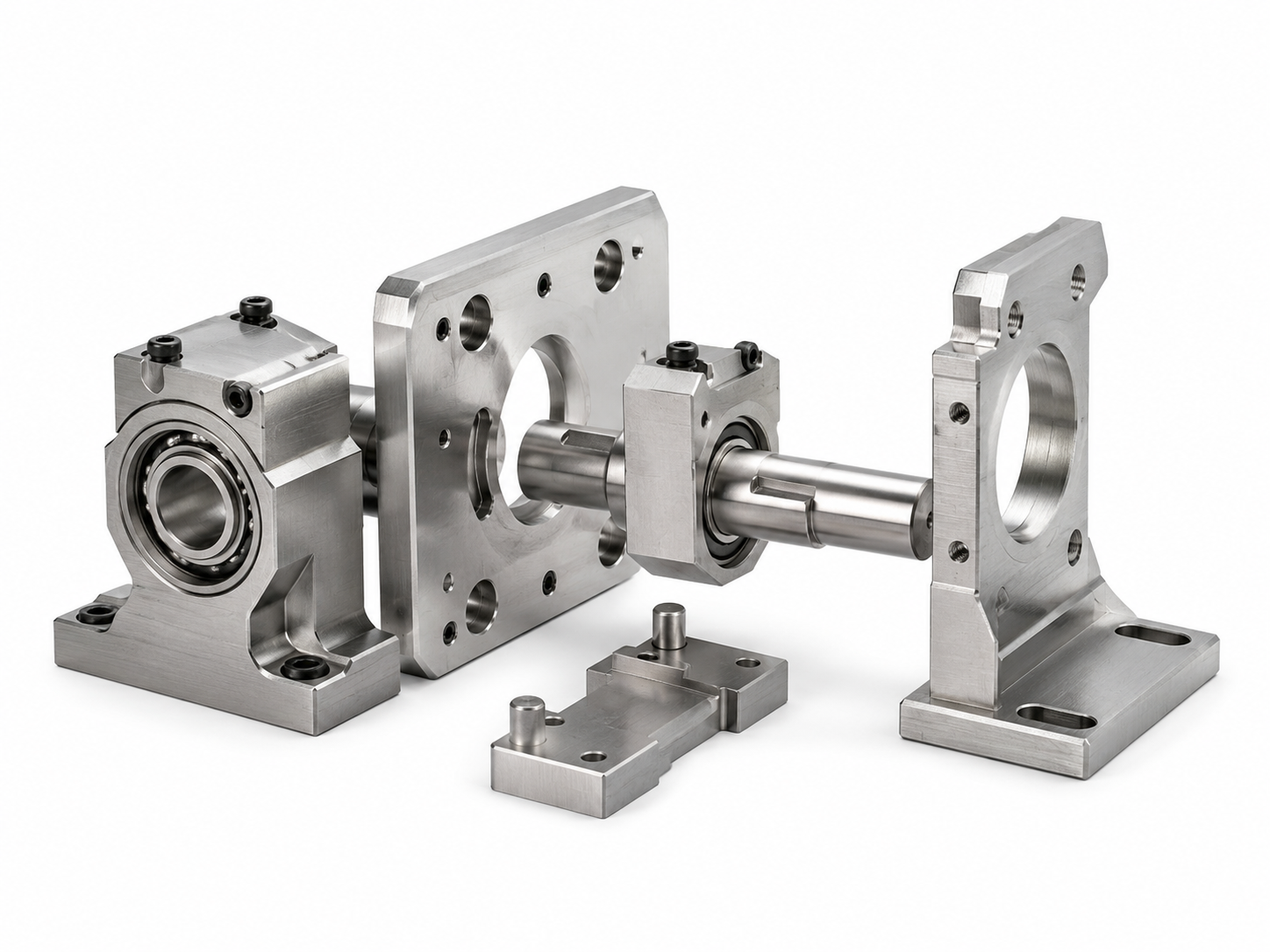
Moving from prototype to repeat production requires stable fixtures, controlled revisions, inspection points, finishing consistency, packaging, and communication.
Prototype Intent
A prototype should validate the functional and manufacturing risks that matter, rather than over-controlling every feature.
Bridge Production
Low-volume production can support testing, launch, and demand validation before dedicated tooling or higher-volume methods are justified.
Fixture Development
Repeatable workholding reduces setup variation, protects datums, and supports faster inspection and cycle time.
Approved Samples
Approved first articles and controlled revisions establish the reference for repeat production.
Mechanical Assembly
Bearings, bushings, inserts, dowels, press fits, and mating parts require clear fit, orientation, and verification requirements.
Packaging Control
Precision surfaces, cosmetic finishes, threads, and sealing faces should be protected according to their actual damage risk.

Recovering Assembly Accuracy Through Datum-Controlled Interfaces
Problem
Individual parts passed basic inspection, but the assembled mechanism missed its final positioning target.
Solution
The datum chain, locating features, and mating interfaces were reviewed as one system. Critical faces and hole patterns were machined and inspected against functional references.
Result
Assembly variation dropped, alignment became repeatable, and calibration no longer depended on manual adjustment.
Impact
Less rework, more predictable final QA, and a clearer path from first article to repeat production.

Technical Questions Need Context, Evidence, and a Practical Decision
Understand the Application
Clarify load, motion, sealing, temperature, appearance, service life, and assembly conditions.
Identify the CTQs
Separate the features that control function from the dimensions that can remain under standard process capability.
Review Manufacturing Risk
Evaluate setups, workholding, tool access, material behavior, finishing, and inspection strategy.
Recommend the Production Route
Propose the practical process, verification scope, and information needed to proceed with confidence.
Available Project Evidence
DFM feedback · Dimensional reports · CMM data · First article inspection · Material certificates · Certificates of conformance · Approved samples · Revision-controlled production
Eight Practical Answers before You Send the Drawing
Open any question to see the full answer.
What Information Is Required for an Accurate Quote?+
Send the 3D model, controlled drawing, material, finish, quantity, required documentation, delivery expectation, and the feature or failure risk that matters most.
Can Batnon Quote from a STEP File without a Drawing?+
A STEP file can support an initial review, but production usually needs the tolerances, material specification, finish, revision, and acceptance requirements normally carried by the drawing.
What Tolerances Can Be Achieved?+
Capability depends on material, geometry, feature size, setup strategy, finishing, inspection method, and production volume. Selected critical features may require tighter control than the rest of the part.
Does Batnon Provide DFM Feedback?+
Yes. The review can cover datums, setup count, tool access, thin walls, deep pockets, tolerances, finishing, inspection, and production risks.
What Inspection Documents Are Available?+
Depending on the project, support can include dimensional reports, CMM data, first article inspection, material certificates, certificates of conformance, and agreed supporting records.
Can Batnon Support Prototype and Repeat Production?+
Yes. The process can begin with prototypes or low-volume parts, then transition into controlled repeat production with approved revisions, fixtures, inspection points, and packaging.
How Are Surface Finishes Controlled?+
Finish type, masking, thickness, cosmetic expectations, dimensional impact, and packaging protection should be defined before production.
How Is Confidential Information Protected?+
Drawings, models, and proprietary details are handled as confidential project information. Public examples may be anonymized or generalized where necessary.
Use the Answer, Then Review the Supporting Guide or Case
DFM Complete Guide for CNC Machining
Review setup strategy, tool access, tolerances, cost drivers, and production impact.
Open Guide ↗ CasesManufacturing Problem and Solution Library
Browse practical examples by industry, process, material, and manufacturing challenge.
Browse Cases ↗ CapabilitiesProcesses, Inspection, Finishing, and Assembly
Review the production capabilities that can be combined for complex parts and assemblies.
View Capabilities ↗Send the Drawing. Mark the Risk. Review the Manufacturing Path.
Batnon supports precision CNC machining, prototype and repeat production, DFM review, material selection, tolerance planning, CMM and first article inspection, surface finishing, secondary operations, and mechanical assembly. Share the files and the requirement that matters most so the response can be based on the actual geometry, process, and application.