
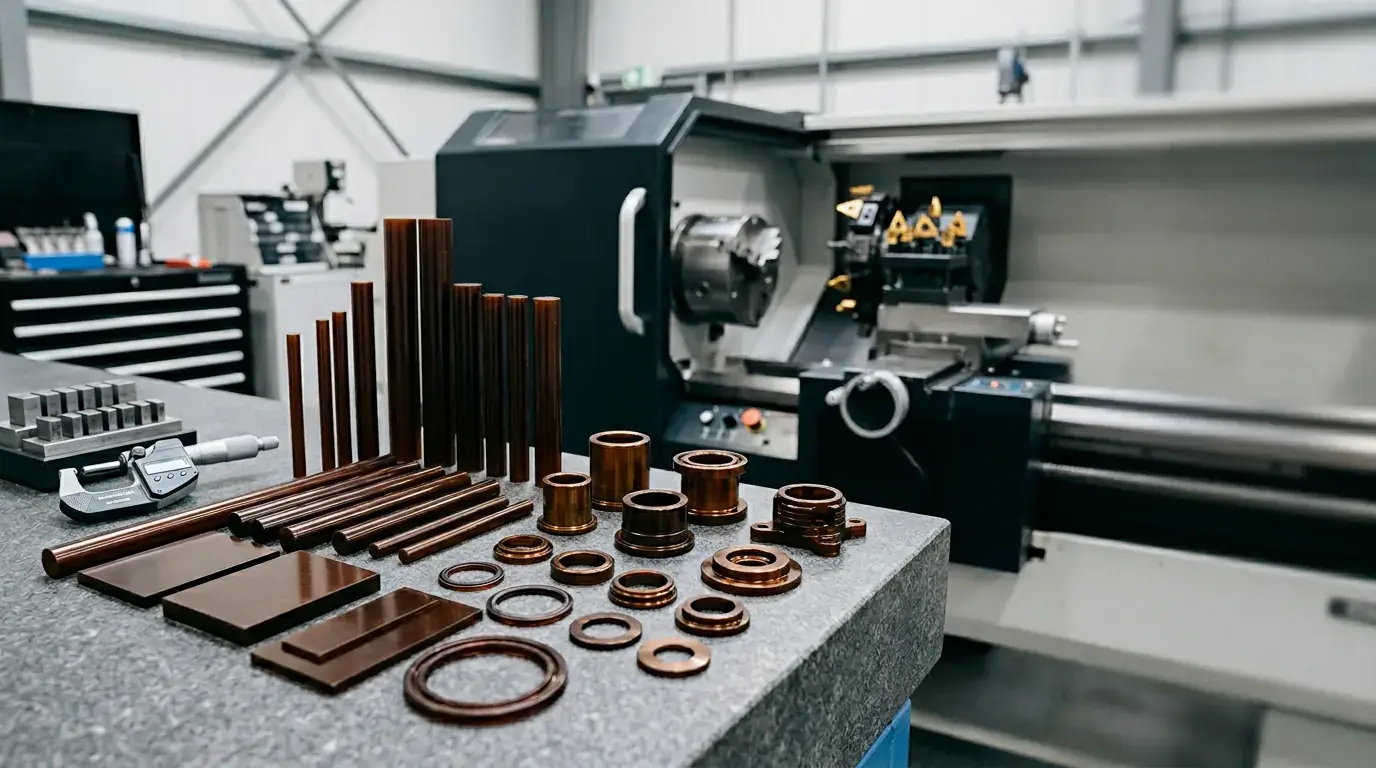
Vespel / PI CNC Machining
Batnon provides vespel cnc machining and polyimide cnc machining for components that must stay functional when heat, wear, and long-duration loads destroy ordinary plastics. This page is built for engineers sourcing seal rings, bushings, thrust washers, and vacuum/semiconductor parts—where the real differentiator is not just “can you cut it”, but how you control stability: rough-then-finish machining, conditioning, and CTQ-first inspection so assemblies stay predictable.
Also see: PEEK CNC machining · Ultem / PEI CNC machining · PTFE CNC machining.
Plastic Material Pages
Same structure across materials—different machining physics. Use these pages to compare DFM, tolerances, and cost drivers.
Engineering Plastics
Explore engineering plastics pages:
Fast selection hint
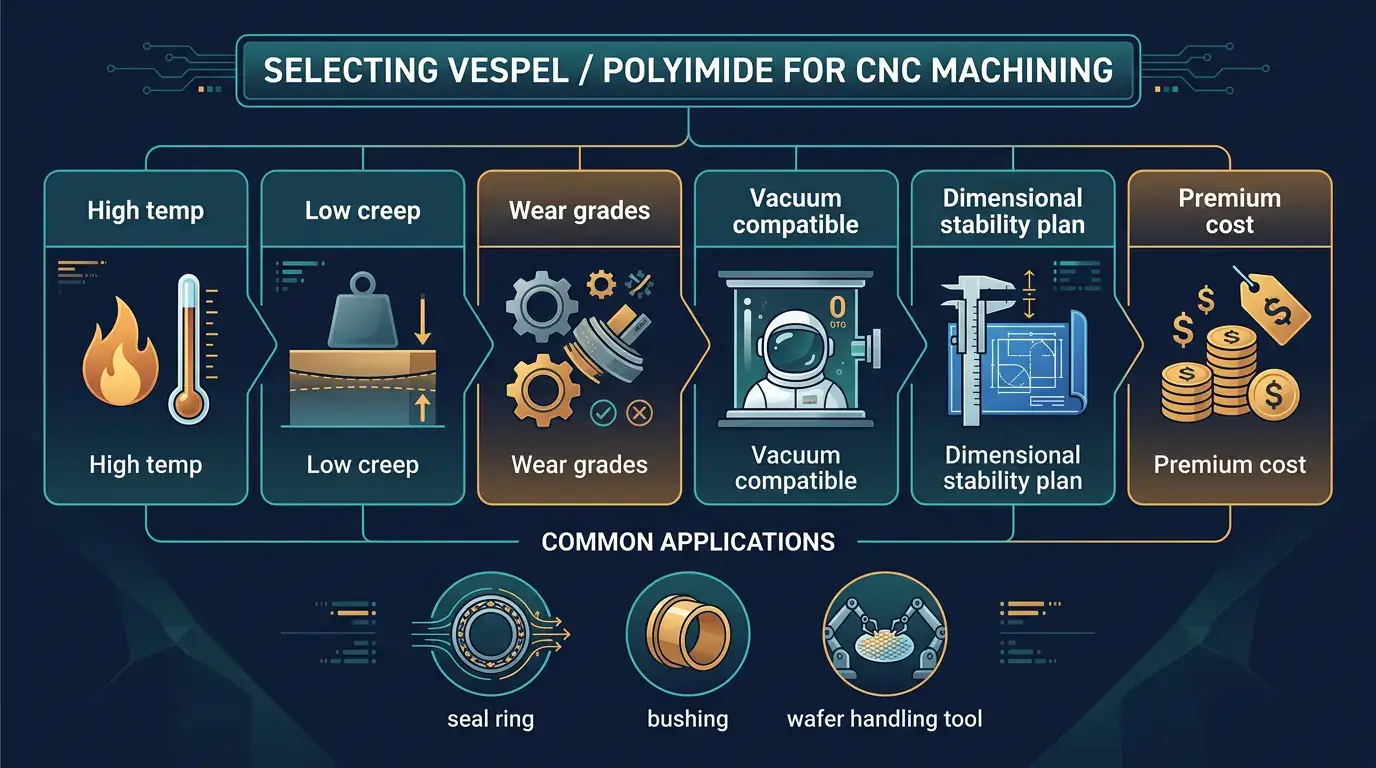
Polyimide (often referenced by Vespel® grades) is selected when you need low creep at temperature, wear-grade options, and stability where other polymers soften or relax. The tradeoff is cost and process discipline: the best results come from a staged machining plan and clear CTQ definition.
- Best at: seal rings, bearings, high-temp insulators
- Watch: cost, lead time, and drift on thin geometry without staging
- Cost lever: CTQ-driven tolerances + define grade intent (SP-1 vs wear grades)
What Vespel / Polyimide Is — and When to Choose It
Vespel® is a well-known family of polyimide materials used for extreme applications. Engineers choose vespel machining for high temperature parts when temperature + long-duration load + wear are the true CTQs. Industrial design handbooks for Vespel® describe continuous service up to 300°C (572°F) in air for many applications, and highlight extremely low creep compared with most plastics—exactly why polyimide is common in seals, bearings, and vacuum-adjacent hardware.
Use case 1: Seal rings & dynamic seals
Polyimide is commonly used for seal rings, backup rings, and wear elements where heat and friction exist together—especially when metal-on-metal is too risky.
Use case 2: Bushings & thrust washers
Vespel SP-21 machining for bushings and bearings is popular when you need a wear-grade material with lower friction—often preferred for long cycle life.
Use case 3: Vacuum / semiconductor components
Polyimide is selected for insulating spacers, handling tips, and hardware used near vacuum/clean environments—where temperature and stability dominate.
Key Polyimide Properties That Affect CNC Machining
For high-performance polymers, machining success is driven by stability under load and temperature—not just strength. This table focuses on what changes cost, tolerance risk, and real-world performance for tight tolerance vespel machining.
| Property driver | What it means for your part | Why it matters in machining |
|---|---|---|
| Low creep at temperature | Holds load-bearing geometry longer than most plastics | Supports stable fits in hot environments; choose CTQs and measure at a defined temperature state. |
| Wear-grade options | Graphite-filled grades can reduce friction and wear | Grade selection affects tool wear, finish, and application life (bearing/seal modes). |
| Thermal stability | Continuous service up to ~300°C in air (application-dependent) | Machining still requires heat control—avoid rubbing and keep tools sharp to maintain finish and size. |
| Moisture & conditioning | Absorbs small moisture compared with nylons, but can still shift | Large/thin parts often benefit from a staged process (rough → equilibrate → finish). |
| Cost & availability | Premium material; waste is expensive | DFM matters: reduce scrap risk via stable workholding, staged machining, and pragmatic tolerancing. |
DFM Guide: Stability, Heat Control, and Cost in Vespel / PI
High-performance machining is about process intent. DuPont’s published machining guidance for Vespel® notes a practical path for stability on large or thin parts: rough-machine within ~0.015–0.020 in (0.4–0.5 mm) of final size, equilibrate at ~70°F and 50% RH, then finish machine. We turn this into a repeatable workflow for custom vespel cnc machining service RFQs.
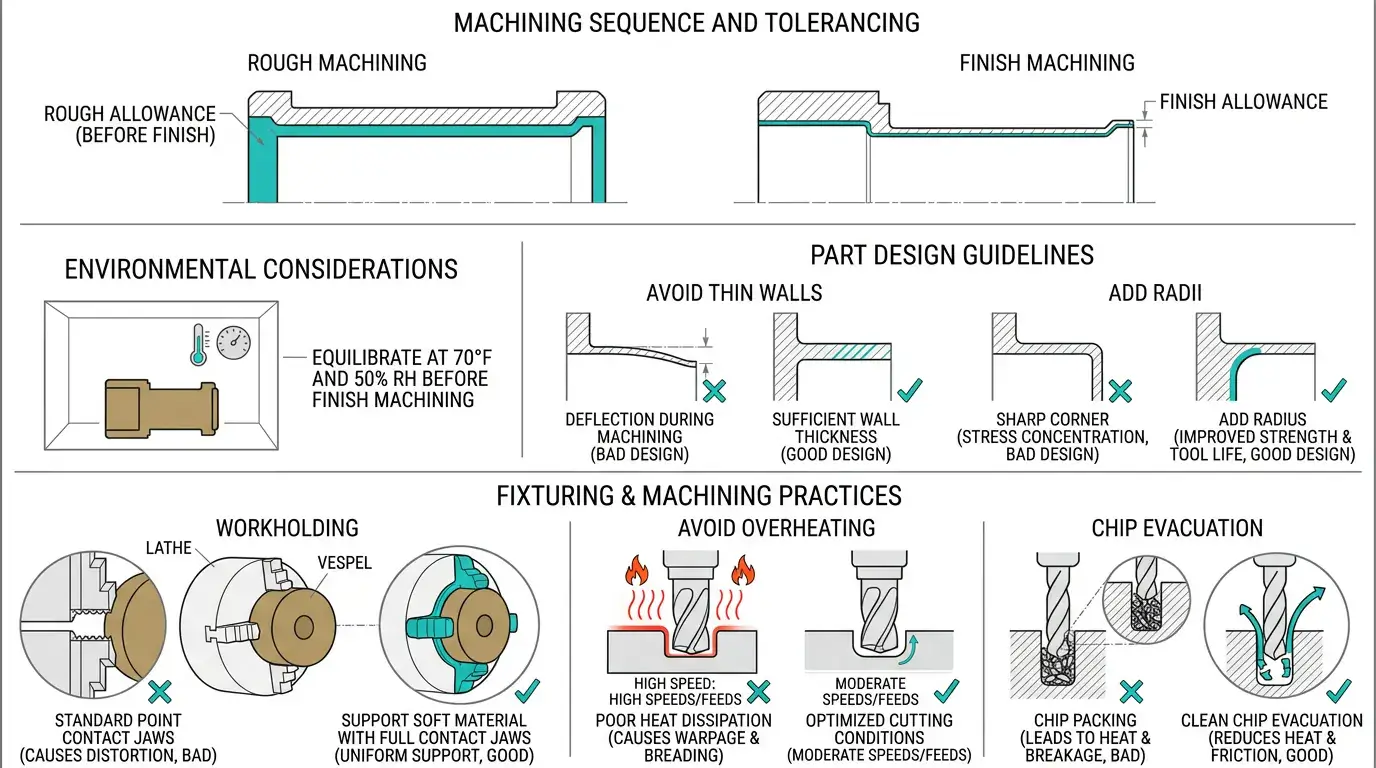
Rough → equilibrate → finish (when it matters)
Use staging for large (≥64 mm) or thin (≤3.2 mm) parts, or when your CTQs are tight. It’s the best “insurance” against drift and warp.
Heat control is non‑negotiable
Published guidance commonly prefers cold air blast and sharp carbide tooling (small positive rake) to reduce thermal effects and chatter. If parts feel hot, adjust—don’t force it.
Design radii + full support
Inside radii reduce stress. Full-contact jaws and stable support reduce deflection—critical for low creep polyimide parts cnc machining where fits must stay stable.
RFQ checklist (prevents rework)
To quote fast and protect your schedule, include:
- Grade: SP‑1 vs wear grades (e.g., graphite-filled) or your approved equivalent
- Environment: temperature, wear mode, vacuum/cleanliness requirements
- CTQs: list the fits/datum features and inspection state/temperature
- Quantity: prototype vs repeat production (affects fixturing strategy)
Tolerances, Flatness, and Functional Finish in Polyimide
Polyimide can be machined very precisely, but the best results come from intentional tolerancing. Use CTQ callouts where function requires it, and keep non-critical geometry to general tolerances (often ISO 2768 medium) to control cost. This is how you get repeatable vespel cnc turning for seal rings and tight fits without unnecessary scrap risk.
| Requirement | Engineering reality | How we protect it |
|---|---|---|
| CTQ fits (bores, sealing faces) | Achievable with stable geometry and staging | Finish critical faces last; use staged machining; measure after stabilization. |
| Flatness on washers/discs | Thin parts move if clamped poorly | Full support, light finishing passes, and appropriate workholding strategy. |
| Surface finish on functional faces | Finish drives friction and sealing behavior | Specify functional faces only; keep other surfaces to standard finish. |
| Cost control | Premium stock makes scrap expensive | CTQ-first tolerancing + DFM review reduces risk and lead time. |
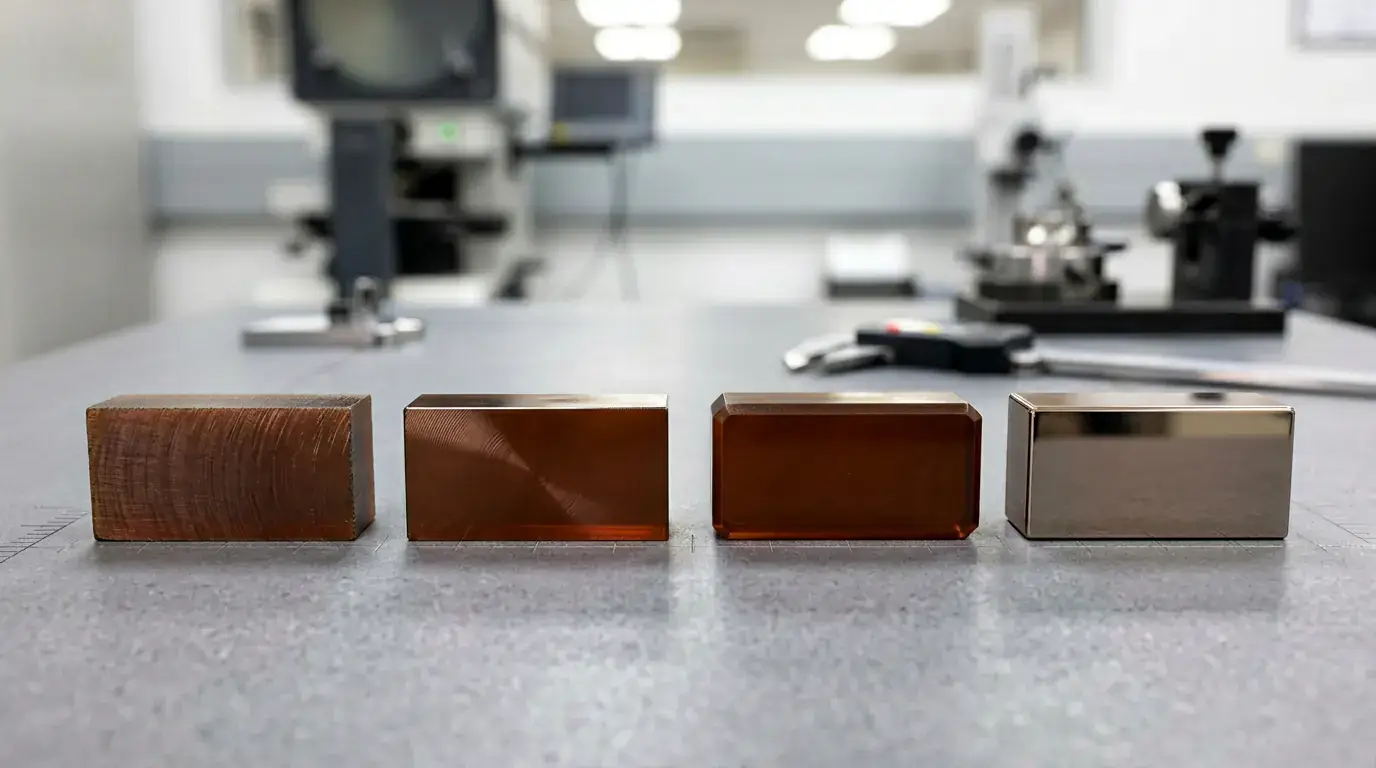
Post-Processing, Cleaning & Packaging (As Required)
High-performance polymers are often used in high-temperature, vacuum-adjacent, or cleanliness-sensitive systems. We align finishing, cleaning, and packaging to your spec—especially for polyimide cnc machining for vacuum applications.
Deburr & edge control
Clean edges reduce assembly damage and stress concentration—especially important on seal rings and thin washers.
Clean handling + optional bakeout planning
If outgassing control matters, define your bakeout and cleanliness requirements. We can align handling, packaging, and shipping to reduce contamination risk.
Protective packaging
Premium parts deserve premium handling: separators, clean bags, and labeling to protect sealing faces and CTQ geometry.
Common Vespel / Polyimide CNC Machining Applications
These examples reflect typical RFQs for vespel cnc machining for aerospace components, seals, bearings, and semiconductor/vacuum hardware.
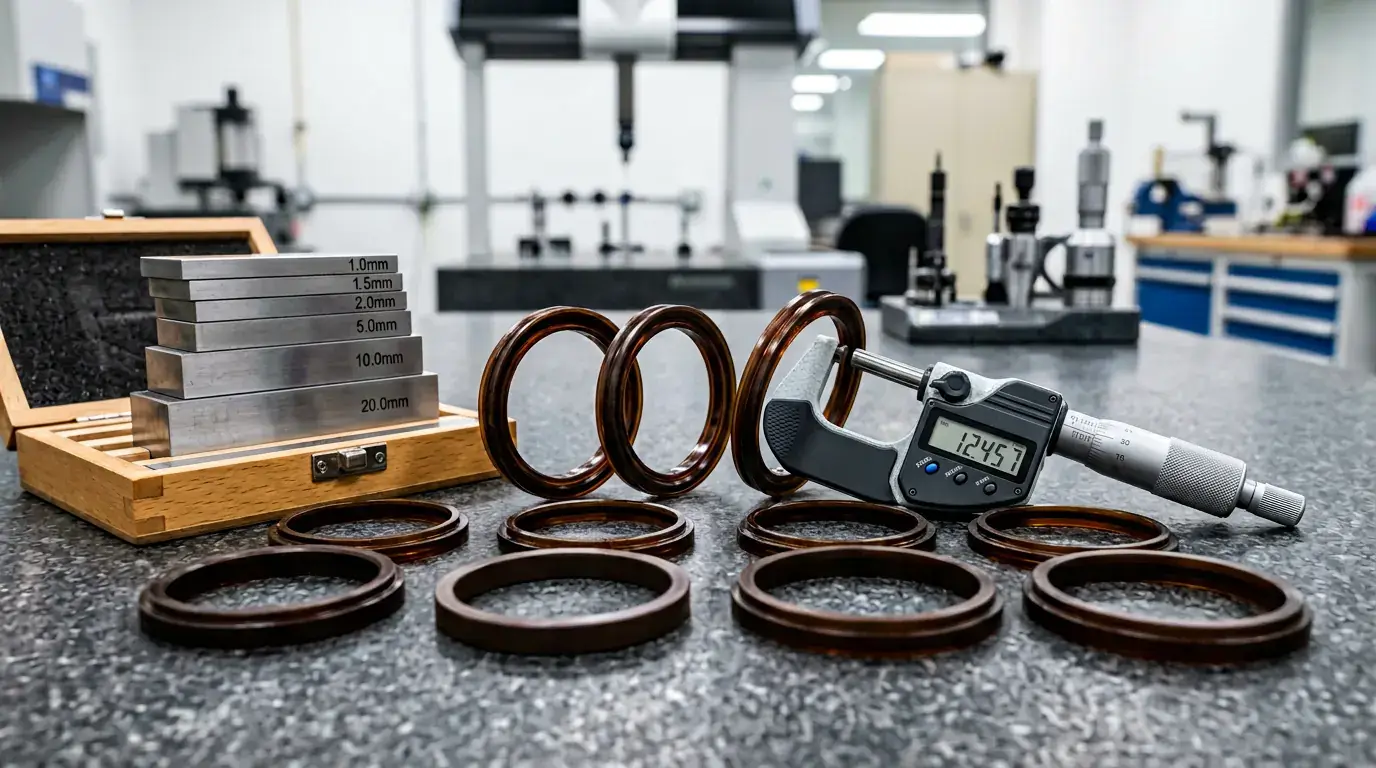
Seal rings & backup rings
Dynamic seal components where heat + wear exist together, often needing tight CTQ faces.
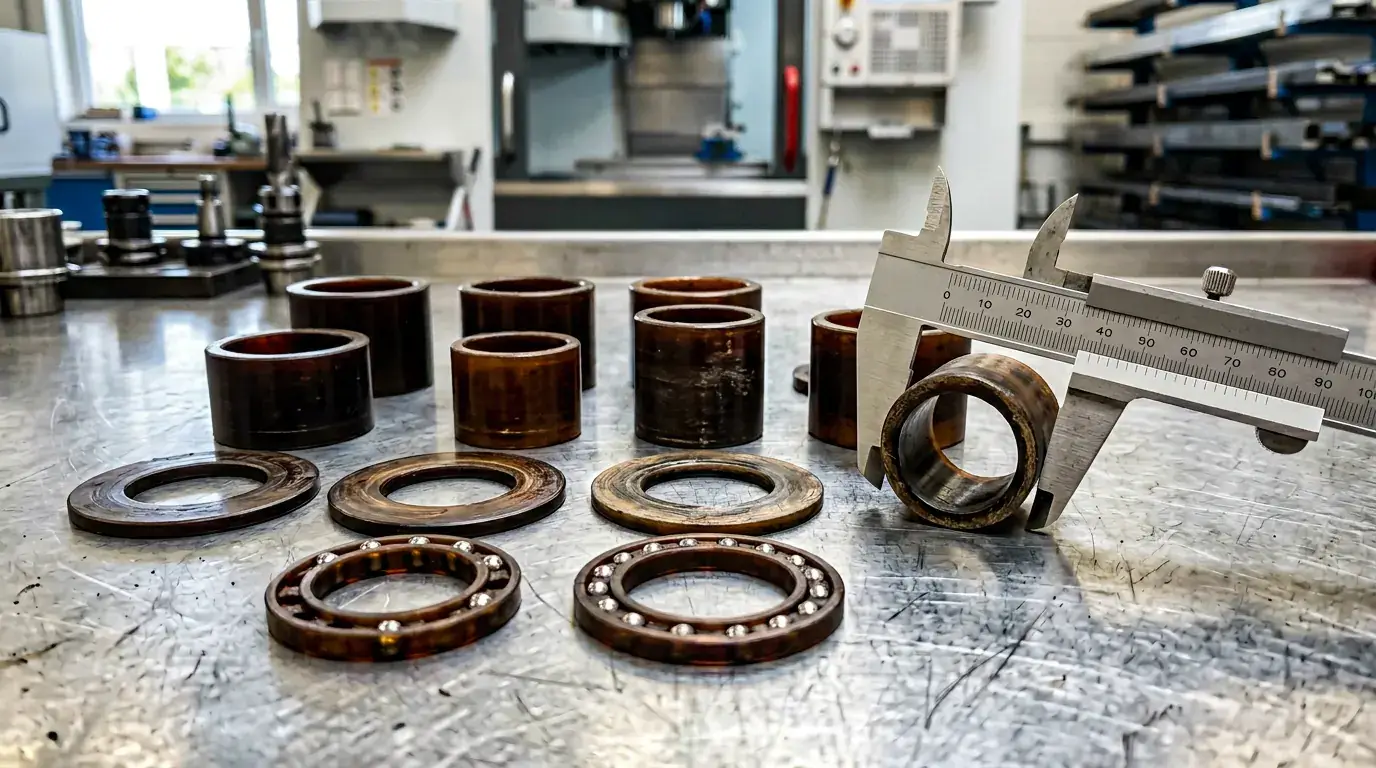
Bearings, bushings & thrust washers
Wear-grade polyimide parts for friction interfaces—where low creep and stable geometry matters.
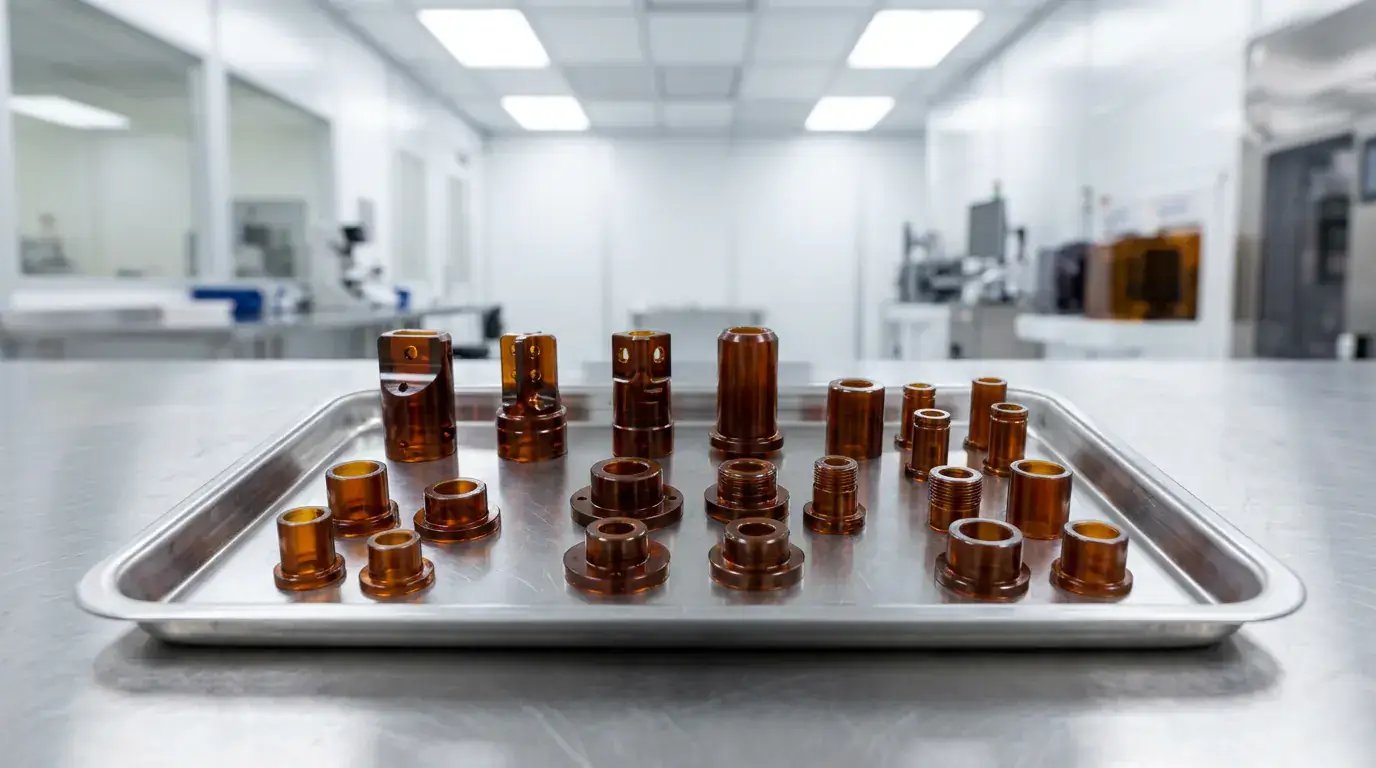
Vacuum / semiconductor hardware
Insulators, spacers, and handling components where thermal stability and cleanliness are key variables.
Polyimide Grades (If Specified)
Polyimide performance depends heavily on grade. If you already specify a particular Vespel® grade (or an approved equivalent), we’ll match it. If not, we can recommend based on wear mode, temperature, and whether electrical insulation matters.
How to specify quickly
When requesting vespel sp-1 cnc machining or a wear grade, include:
- Grade intent: baseline (SP‑1) vs wear grades (e.g., graphite-filled)
- Wear mode: sliding, oscillating, seal contact pressure, mating material
- Environment: temperature range, chemicals/cleaners, vacuum/bakeout requirements
If you’re unsure, tell us the failure mode (wear, creep/relaxation, thermal distortion, friction, outgassing) and we’ll route you to the right grade and process plan.
FAQ: Vespel / PI CNC Machining
Common questions about temperature, creep, grades, and DFM for vespel cnc machining.
What’s the difference between “Vespel” and “polyimide”?
Polyimide (PI) is the polymer family. Vespel® is a well-known brand family of polyimide materials. In sourcing, engineers often use “Vespel” as shorthand for high-performance polyimide grades, but the exact grade matters for wear and friction.
Which grade should I use: SP‑1 or SP‑21?
SP‑1 is a common baseline grade used for broad mechanical performance and insulation. Graphite-filled grades such as SP‑21 are often chosen for wear and friction reduction in bearing/seal applications. The right choice depends on wear mode, mating materials, and temperature.
Can you machine thin-walled polyimide parts?
Yes, but thin walls require a stability-first plan: full support workholding, staged machining, and pragmatic tolerancing. For sensitive parts, we often rough first, stabilize, then finish CTQs.
What tolerances should I specify?
Use CTQ-driven tolerances: tighten only what protects function (fits, datums, sealing faces). For non-CTQs, use a general tolerance such as ISO 2768 medium to control cost and scrap risk.
Why do some parts warp after machining?
Warp can come from internal stress release or uneven material removal, especially on large or thin parts. Published Vespel® guidance recommends a rough-then-finish strategy with conditioning (equilibration) before final machining for improved stability.
Is polyimide good for vacuum applications?
Polyimide is used in vacuum-adjacent and semiconductor systems. If outgassing control is critical, define your cleanliness and bakeout requirements and the grade so we can align handling and packaging to the spec.
Can you compare Vespel vs Torlon for machining?
Both are premium polymers used for high heat and wear applications. The right choice depends on your temperature, chemical exposure, friction/wear mode, and whether electrical insulation or dimensional stability dominates. If you share the operating conditions, we can recommend a direction.
What should I send in an RFQ?
Send CAD + CTQs, the grade (or intended performance), quantity, environment (temperature, wear mode, cleaners/vacuum), and any inspection requirements. This prevents rework and keeps lead time predictable.
Vespel / Polyimide CNC Machining for Prototypes and Production
Batnon supports high-performance polyimide CNC machined parts for engineering teams worldwide—from rapid prototypes to repeat production. Share your grade intent, CTQs, environment (temperature/wear/vacuum), and quantity, and we’ll build a stability-first machining and inspection plan.
Need a different plastic family? Start here: High Performance Plastics CNC Machining.
Explore Other Plastic Materials
Compare machining behavior, tolerances, and DFM notes across plastics:
- Engineering plastics: Delrin / POM · Nylon / PA · ABS · Polycarbonate / PC
- High performance plastics: PEEK · Ultem / PEI · PTFE · Vespel / PI
If you’re unsure where to start, tell us the failure mode (wear, creep/relaxation, temperature, chemicals, purity/vacuum) and we’ll route you to the right material page.