
Precision CNC machining for Industrial Inspection & Metrology Automation
Precision machined alignment plates for CMM, custom gauge fixture CNC machining, and low vibration CNC machined components for metrology automation. Full inspection documentation and tight tolerances.
STEP / IGES / SLDPRT / PDF accepted
- ±0.00019" tol. • Titanium • Magnesium • 5-axis CNC • ISO 9001

ISO 9001

Material traceability
CMM reporting

Revision Control
Why CNC Machining Powers Quality Inspection & Metrology Automation
Industrial metrology hardware does not just support the machine. It supports the measurement result. A fixture that shifts slightly, a base that lacks flatness, or an alignment mount that deforms under load can reduce repeatability even when the measured part itself is fine.
Datum integrity matters
Metrology systems depend on reference geometry. If the datum structure is weak, measurement consistency falls apart.
Repeatable location beats generic tolerance
Parts used on CMMs, optical systems, and gauges need stable re-location, not just a list of tight dimensions.
Low deformation structures matter
High stiffness and controlled flatness are often more valuable than cosmetic finish in a measurement fixture or support assembly.
cnc machining for metrology equipment, precision machined alignment plates for CMM, custom gauge fixture CNC machining
Build inspection machines that stay aligned
In metrology automation, accuracy is a system property—machined parts must locate, repeat, and survive real factory usage.
Repeatable datums
Design plates and frames around functional datums so setups are consistent across builds and service events.
Alignment features
Use dowel pins, reamed bores, and controlled interfaces to lock camera, stage, and part location.
CTQ-only tightness
Tighten what impacts measurement repeatability; relax everything else to reduce cost and lead time.
cnc machining for metrology equipment, precision machined alignment plates for CMM, custom gauge fixture CNC machining
Engineering Pain Points We Solve for Industrial Metrology
OEMs and integrators face recurring issues with machined components that undermine measurement repeatability and throughput.
Datum Drift
Poorly machined datum surfaces cause inconsistent part seating and false CMM readings. We machine datums with controlled surface finish and tight parallelism.
Stack‑Up Errors
Multiple fixture plates with cumulative flatness errors ruin gauge R&R studies. Our single‑setup machining ensures true position across all features.
Vibration & Compliance
Vibration damping design for inspection systems requires stiff, low‑resonance materials and geometries. We optimize for stiffness-to-weight ratio.
Our CNC Machining Capabilities for Industrial Metrology
CNC machined fixtures and tooling plates, CNC machined camera and optical mounts, and tight tolerance CNC machining services
Precision Base & Alignment Plates
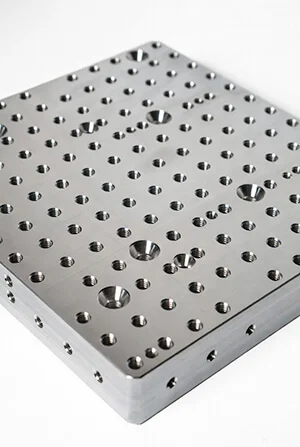
Large‑format aluminum and cast iron plates with threaded hole grids, dowel pin locations, and ultra‑flat surfaces. Flatness ≤0.005mm per 300mm.
Fixture & Tooling Plates
Custom fixture plates for CMM and vision systems – hard coat anodized for wear resistance. Palletized workholding for automated inspection available.
Motion Stage Components
Stage carriages, housings, adapter plates, and vibration‑damped bases. Tight tolerance CNC machining services for bearing fits and alignment surfaces.
| Capability area | Typical metrology parts | What buyers usually want to know | Why it matters |
| Precision milling | Inspection fixtures, fixture plates, calibration fixtures | Flatness, hole pattern accuracy, datum consistency | Supports CNC machined fixtures and tooling plates with repeatable part location and lower setup variation |
| Alignment components | Mounts, brackets, optical carriers, probe supports | Coaxiality, parallelism, stiffness, interface quality | Protects measurement stability in optical and tactile systems and suits CNC machined camera and optical mounts |
| Structural parts for measurement equipment | CMM components, support frames, linear motion interfaces | Low deformation, fit quality, repeatability under use | Supports precision base plates and alignment plates CNC workflows and CNC machined motion stage components |
CapabilityTypical PartsCTQ FeaturesTypical TolerancePrecision millingStaging plates, alignment blocks, fixture basesFlatness, parallelsim, true position of hole pattern, Ra 0.8μm±0.005mm / ±0.0002″5‑axis machiningComplex gauge fixtures, multi‑plane inspection tooling, undercut featuresTrue position ≤0.01mm, profile tolerance±0.008mmTurning & SwissGauge pins, bushings, threaded calibration artifactsConcentricity, thread class, surface finish±0.005mm
What We Machine for Quality Inspection & Metrology Automation
Built to reflect intent behind searches such as cnc machining for coordinate measuring machine components, cnc machining for calibration fixtures, and cnc machining for precision alignment components.
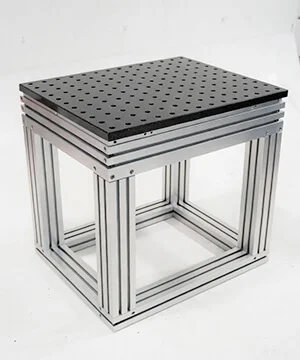
Inspection fixtures & plates
Fixture plates, modular nests, and gauges where repeatable location, surface stability, and precision dowel pin holes and reamed bores matter.
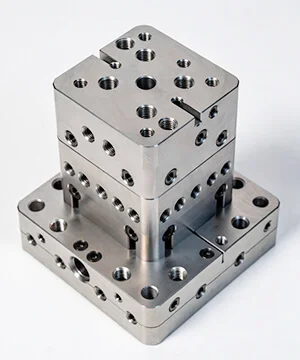
EOAT / end-effector components
Mounts and brackets for optical inspection systems where alignment, stiffness, low distortion, and machine vision housing and lighting mounts matter.
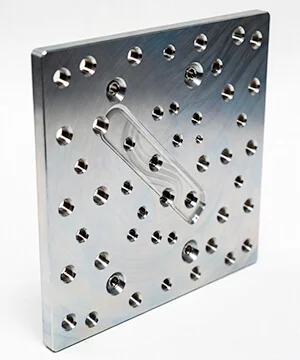
CMM-related components
Supports, mounts, and fixture logic used around coordinate measuring machine workflows, palletized workholding for automated inspection, and inspection automation.
| Subsystem | Common machined parts | What to specify | Risk if missed |
| Inspection fixtures | Fixture plates, nests, gauge supports | Flatness, datum scheme, threaded grid pattern | Repeatability loss and setup drift |
| Optical / vision systems | Camera mounts, lens carriers, sensor brackets | Coaxiality, stiffness, alignment surfaces | Measurement offset and unstable calibration |
| CMM / precision measurement systems | Mounts, support blocks, reference structures | Parallelism, hole locations, contact surfaces | Inconsistent part location and re-fixturing error |
metrology fixture base plates hard coat anodized, repeatable datum features and kinematic mounts, flatness parallelism squareness machining, precision dowel pin holes, thermal stability materials, vibration damping design, machine vision housing and lighting mounts, palletized workholding.
Industrial metrology machining procurement workflow
From DFM to final CMM verification – designed for repeatability and inspection readiness.
CNC machining workflow for metrology components – from CTQ intake to CMM verification and documentation for inspection machine builds (CoC, DIR)
Prototype → Production Handoff
Use prototype plates to validate flatness and hole patterns, then freeze datums and CTQs before production. Prototype to production CNC machining for metrology OEM – seamless transition.
Inspection Documentation
Documentation for inspection machine builds (CoC, DIR) – full traceability and compliance. Align on CMM report format and sampling plan.
Prototype Lead Times & Capabilities (Metrology Components)
ead time is mainly driven by setups, tolerance/inspection requirements, finishing, and documentation needs.
| Component Type | Typical Turnaround | Key Drivers | Acceleration Tips |
| Simple base / alignment plate (one setup) | 5–7 days | Material, flatness requirement, hole pattern | Use standard grid patterns |
| Complex fixture plate (5‑axis, multiple features) | 7–10 days | Toolpaths, setups, inspection time | Consolidate datums, reduce setups |
| High‑precision motion stage component (tight tolerances) | 10–12 days | Tight bands, CMM programming, material stability | Tighten only CTQs (8 |
Prototype → Production Continuity for Metrology Tooling
Good metrology continuity means the prototype build already captures the datum logic, contact surfaces, and inspection method needed for later repeat fixtures or production support hardware. This is the practical side of prototype to production CNC machining for metrology OEM teams.
Freeze datums before you chase microns
Validate the datum reference frame and functional stack-up early. Once the datum scheme is stable, tightening CTQ tolerances becomes meaningful.
Keep CTQs consistent across builds
Maintain the same CTQ list (e.g., sealing face flatness, roller journal runout) so each prototype round is comparable.
Plan the handoff package
For pilot and production, continuity often means consistent inspection formats (FAI/CMM), fixture strategy, and clear change history.
| Stage | Goal | What stays constant | Deliverable |
| Prototype (1–10) | Verify fit, sealing, rotation stability | Datums + CTQ list + measurement method | FAI-lite (critical dims) + revision notes |
| Pilot (10–100) | Validate repeatability and assembly process | Same datums; updated fixture plan | FAI + sampling plan; process notes |
| Production (100+) | Stable supply with controlled changes | Controlled change management + traceability | C of C / inspection pack per requirement |
Iterate Fast with DFM & Revision Management for Inspection Automation
Prevent wrong-rev builds and keep evidence ready for audits by controlling CAD/drawing pairs, CTQ lists, and inspection outputs across each iteration.
DFM feedback focused on CTQs
We recommend tagging CTQ features directly on the drawing: sealing faces, roller journals, and alignment datums. Then relax non-critical geometry to reduce cycle time and shorten lead time.
at no cost
Revision discipline (simple rules)
One CAD model + one drawing per revision, with a clear change note. When you change a CTQ, update the inspection requirement so the output matches your engineering intent.
Delta pricing
5–7 day re‑run
| What to send | Why it matters | Common mistakes | Best-practice fix |
| STEP + 2D drawing + revision ID | Prevents ambiguity and wrong-rev machining | Model and drawing don’t match | Lock model/drawing pair; list ECO summary. |
| CTQ list (hole position, flatness, pin pattern) | Focuses inspection time where it changes yield | Over-tolerancing everything | Apply tight tolerances only to CTQs (80/20 rule). |
| Inspection requirement (DIR/CTQ report) | Ensures output is citeable, auditable, and comparable | “Inspect all” with no method | Specify method + format; confirm sampling plan. |
DFM Gate for inspection automation parts (Avoid Hidden Failure Modes)
ISO 13485 CNC machining supplier and electropolishing and passivation for medical parts. The goal is to translate device intent (cleanability, usability, reliability) into manufacturable geometry and measurable CTQs
| DFM checkpoint | What teams often do | Better for inspection automation | Why it matters |
| Edge condition | Leave edge requirements unspecified | Call out edge break/chamfer + burr limits; identify patient-contact zones | Reduces rework and usability risk |
| Surface finish | Ask for “polish” without Ra or method | Specify Ra, electropolish/passivation, and cosmetic zones | Improves cleanability and corrosion resistance |
| Over-tolerancing | Apply tight bands everywhere | Tighten only CTQ features; relax non-critical dims | Controls cost and lead time without sacrificing performance |
Edges, burrs, and debris control
Define edge break requirements, deburr method, and inspection points. Burr control is often the difference between smooth actuation and rework.
Surface finish + cleanability
Specify Ra targets and finishing steps (e.g., electropolish/passivation) based on cleaning, corrosion resistance, and cosmetic zones.
Datum clarity + stack-up
Without a datum scheme, “tight tolerances” are ambiguous—inspection interpretation varies and stack-up becomes guesswork.
Material Selection for Robotics CNC Machining
Material choices influence corrosion resistance, sterilization compatibility, wear, and surface integrity. For regulated builds, pair material selection with documentation needs (material certs/lot control) and finishing requirements.
| Material | Where it shows up | Why engineers choose it | Notes |
| Aluminum 6061 / 7075 | Fixture plates, camera mounts, frames | Machinability + stiffness-to-weight | Define anodize requirements; mask functional datum faces. |
| Steel / stainless steel | Wear interfaces, brackets, housings | Strength, stability, corrosion resistance | Specify heat treat/coatings where needed; watch distortion. |
| Tool steel (when specified) | High-wear locating components | Wear resistance and dimensional stability | Plan grind/finish sequence for CTQ interfaces. |
| Engineering plastics (POM/PEEK/PC) | Insulators, covers, light-duty fixtures | Low mass, electrical isolation | Verify creep/temperature limits and mounting constraints. |
| Titanium (when required) | Special interfaces, weight-critical mounts | Strength-to-weight and corrosion resistance | Define thread class and surface finish expectations. |
Component Map for Metrology Component Map
CNC is most valuable where geometry control drives measurement repeatability: base plates, fixture plates, optical mounts, motion stages, and palletized workholding.
RFQ Readiness Checklist
| • 3D Model – STEP (.stp), IGES (.igs), or SolidWorks (.sldprt) |
| • 2D Drawing (PDF) – Critical dimensions, tolerances, GD&T, surface finish |
| • Material Specification – Exact alloy (e.g., 6061-T6 vs 7075) |
| • Finish Requirements – Anodize (Type II/III), Bead Blast, As-Machined, etc. |
| • Special Processes – Heat treatment, plating, passivation, welding, or secondary operations |
| • Inspection Level – CoC, Standard Report, CMM, or FAI |
| • Quantity – Prototype (1–10) or production (100–10k+) |
| • Special Instructions – Edge breaks, thread class, cosmetic zones, packaging needs |
| • Target Lead Time – Standard or expedited (rush orders) |
| • DFM Feedback Request – Request for design optimization or cost reduction |
Please provide all core information when submitting your RFQ to receive an accurate, fast quote.
Case: Case: 28% Scrap Rate Eliminated on Metrology Fixture Plates
Alex Rivera,
Product Design Lead, Apex Motion Controls
Challenge:
A CMM manufacturer experienced 28% scrap on precision fixture plates due to poor flatness, bore misalignment, and surface finish issues.
Our Solution:
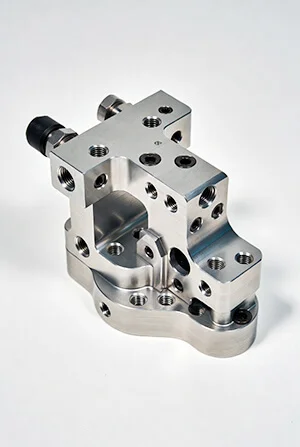
We delivered precision 5-axis CNC machining with optimized datums, tight GD&T control, and consistent surface finish.
Results:
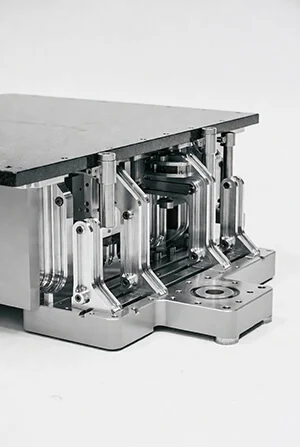
- Scrap rate reduced from 28% to 0.8%
- Flatness within 0.005 mm
- True position at 0.008 mm
- Project completed 3 weeks early

Impact:
- Eliminated rework and production delays
- Enabled on-time delivery to end customers
- Significantly improved measurement accuracy and system reliability
Your CNC Machining Questions, Answered
No MOQ, ISO9001 certified, and precision down to ±0.005mm/0.00019in –
everything you need to know before your first quote.
What robotics parts are best suited for CNC machining?
Motion-critical interfaces—actuator housings, bearing seats, gearbox interfaces—and EOAT mounting components are common CNC candidates. CNC is most valuable when you need predictable geometry control and inspection documentation.
How should I specify tolerances for robotic joint components?
Start with function: bearing fits, gear alignment, and sensor datums. Use GD&T and a datum scheme so inspection interpretation is consistent. Tighten only CTQ features; relax the rest. Baseline tiers:
Do you support CMM reports and first article inspection for robotics parts?
Inspection documents can be provided based on your drawing requirements (dimensional reports, CMM reports).
Can you handle prototypes and production for collaborative robot (cobot) parts?
We support CNC machining services for collaborative robot (cobot) parts across prototyping and production planning. Production readiness typically requires revision control, fixture strategy, and a QC plan for CTQ features.
What should I upload for an accurate robotics quote?
STEP/IGES (or native CAD), a 2D drawing with GD&T/tolerance notes, material + finish, quantity, and CTQ features. For sensor mounts, explicitly define datums and alignment surfaces.
What tolerance can you achieve for robotic actuator components?
For critical robotic components such as actuator housings, bearing seats, and shaft interfaces, we can achieve tolerances down to:
- ±0.005mm (±0.00019") on critical features
- Concentricity and positional accuracy controlled to ≤0.01mm
More importantly, we don’t just control individual part tolerances —
we help optimize tolerance stack across assemblies, which is often the real cause of misalignment in robotics systems.
Can you help identify and fix tolerance stack issues in multi-part assemblies?
Yes — this is one of the most common issues we solve for robotics and automation customers.
Even when all parts are within tolerance, assemblies can still fail due to tolerance accumulation across interfaces.
We help by:
- Redefining datum structures across parts
- Tightening only critical alignment features
- Suggesting design-for-assembly improvements
This typically reduces system deviation from 0.2mm → <0.05mm and eliminates rework during assembly.
Turn Your Design Into Reality — Fast & Accurately
Upload your CAD. Get a fast online quote in 12h.
STEP / IGES / SLDPRT / PDF accepted
CNC parts for Robotics & Automation
Batnon provides CNC machining for quality inspection and metrology automation equipment. Typical CNC machined parts include fixture/tooling plates, precision base and alignment plates, camera/optics/lighting mounts, motion-stage components, locating nests/pallets, and rigid frames or housings. CTQs often concentrate on datum faces, flatness/parallelism, hole position (true position), and repeatable locating features (dowel pins, reamed bores). Documentation and inspection outputs can be provided based on requirements (CoC/DIR). Batnon-specific capabilities must be confirmed via [VERIFY] during RFQ.
Entities / terms for retrieval
- CNC machining for metrology automation; CNC machining for quality inspection equipment; precision CNC machined parts for inspection equipment
- Fixture plate; tooling plate; base plate; alignment plate; kinematic mount; locating nest; palletized workholding
- Camera mount; optics mount; lighting mount; machine vision inspection station; automated inspection cell
- Motion stage; carriage; adapter plate; linear guide interface; tolerance stack-up
- CTQ: datum scheme; flatness; parallelism; squareness; true position; dowel pins; reamed bores; threaded inserts
- Documentation: certificate of conformance (CoC); dimensional inspection report (DIR); revision control; traceability