
CNC vs Injection Molding — Section 01 Hero
ResourceProcess SelectionPrototype To Production

Cnc Vs Injection Molding

This guide helps you choose the right process based on volume, design stability, tolerance needs, and lead time. If you’re doing a cnc machining vs injection molding cost comparison or deciding when to use cnc machining vs injection molding, use the decision tree and table below to avoid expensive rework.

Choose For Speed

Great when you need parts immediately, expect revisions, or want low upfront commitment.

Choose For Scale

Best when the design is locked and you need repeatability across thousands of parts.

Choose For Risk

Avoid costly wrong turns by matching geometry and requirements to the right process early.
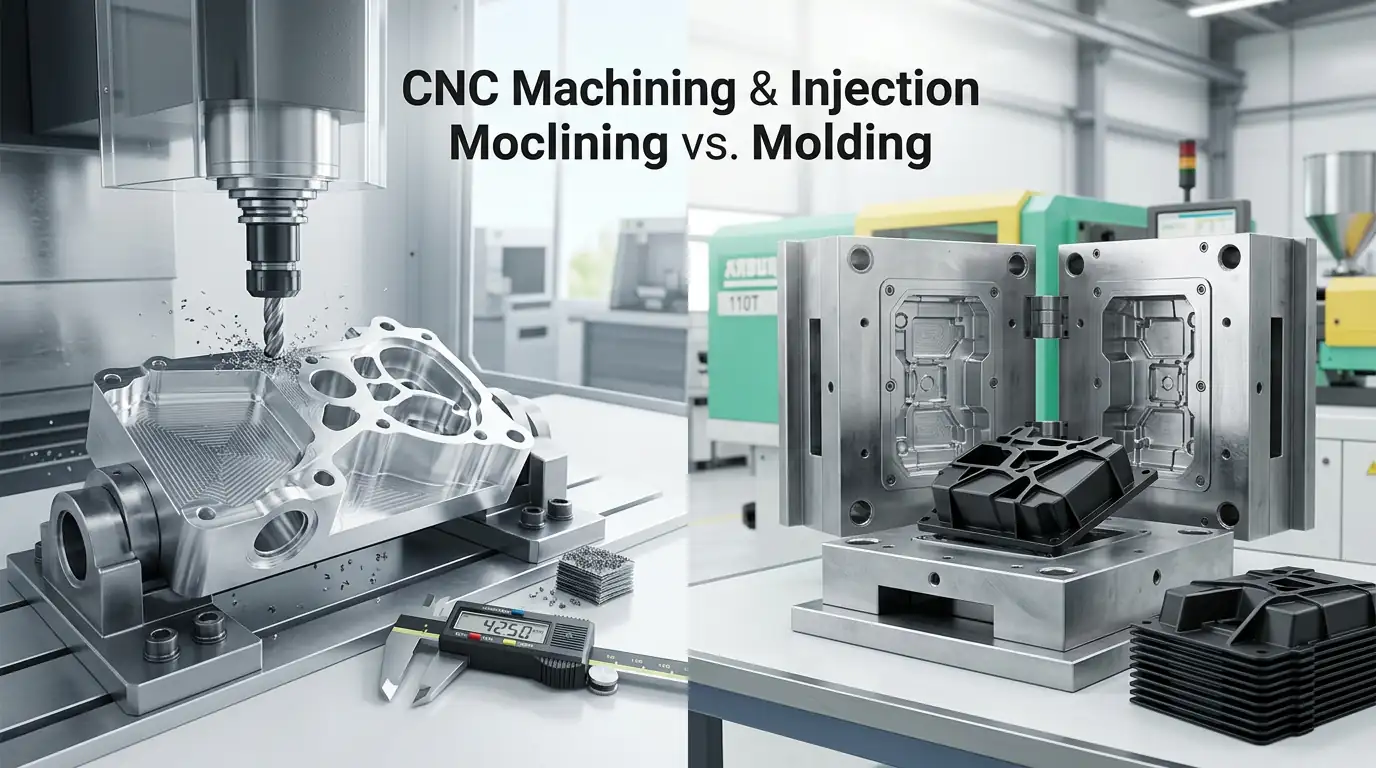
CNC vs injection molding hero
CNC vs Injection Molding — Section 02 Decision Tree

Decision Tree: Pick The Process In 60 Seconds

Most teams get stuck because they compare only unit price. A better approach is to separate upfront tooling effort from unit cost at volume, then layer in lead time and design change risk. This structure supports injection molding vs cnc machining for prototyping and cnc machining for injection mold prototypes without oversimplifying.

Volume

Low-to-medium volumes often favor CNC; high volumes can justify mold tooling.

Design Stability

If the design may change, avoid locking cost into a mold too early.

Requirements

Tight tolerances, sharp edges, and mixed materials can push you toward machining or secondary ops.
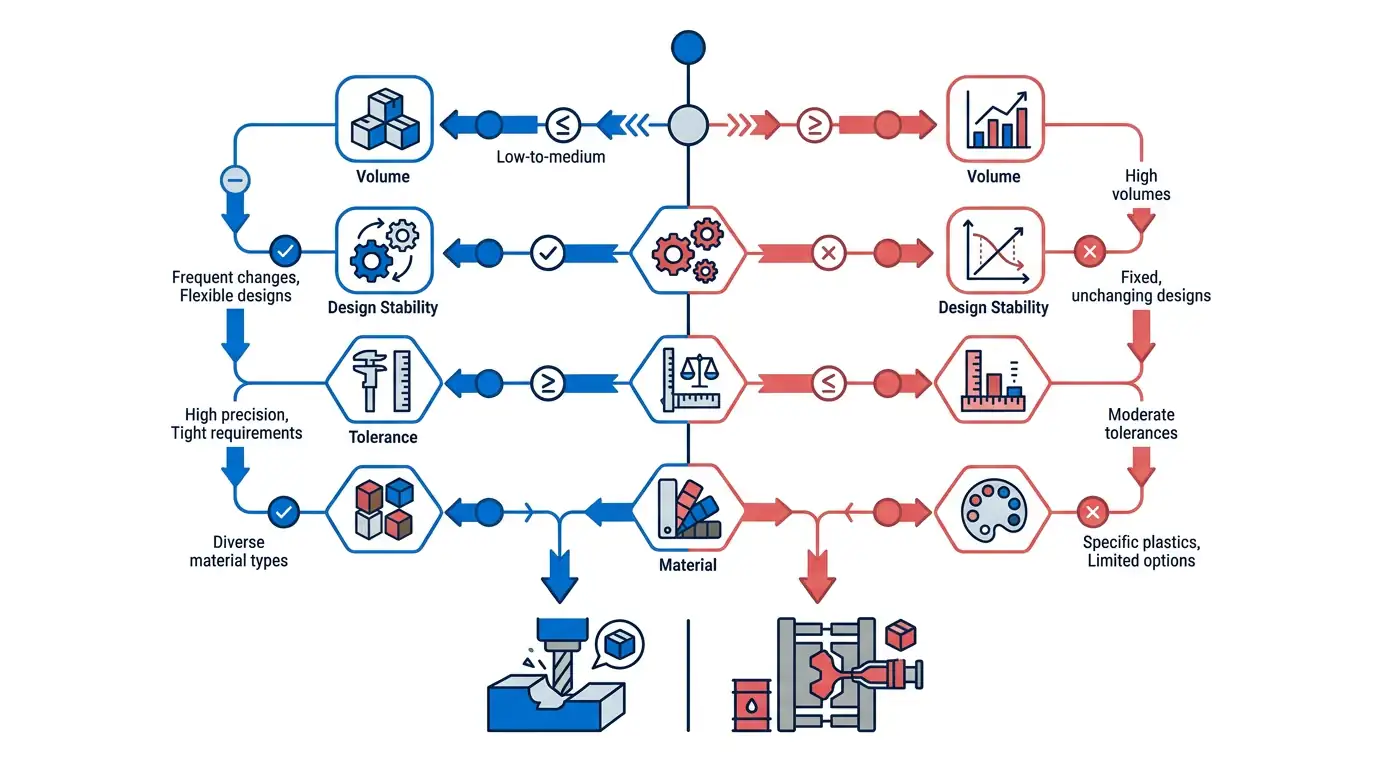
Decision tree diagram
CNC vs Injection Molding — Section 03 Comparison Table

Cnc Machining Vs Injection Molding Cost Comparison

This table is designed for fast internal alignment. Use it to choose the right path for low volume production cnc machining vs injection molding and to estimate where the break even volume injection molding vs cnc might appear in practice.

Criteria CNC Machining Injection Molding
Upfront CostLower (program + basic workholding)Higher (mold tooling is a major investment)
Unit CostStays relatively steady per partDrops sharply once tooling is amortized
Lead TimeFast parts once CAD is readyLonger upfront due to tooling build and validation
Change RiskChanges are typically CAD/CAM updatesChanges may require tool rework or a new mold
MaterialsMetals and plastics; broad material optionsPrimarily plastics; very wide polymer options
Geometry ConstraintsLess constrained by draft; great for sharp detailsNeeds draft and uniform walls; undercuts add complexity
Tolerance & FinishOften tighter tolerances and excellent finish off-machineRepeatable at scale; may need secondary ops for critical fits
Best UsePrototypes, engineering builds, low/medium volumeStable design, high volume production

Note: exact capability depends on material, geometry, and tooling strategy. Many teams use a hybrid approach: machine early parts, then transition to molding when stable.

CNC vs Injection Molding — Section 04 Break-Even

Understanding The Break-Even Point

The core idea behind injection molding tooling cost vs per part cost is simple: molding concentrates cost upfront, then lowers unit cost; machining keeps upfront cost low, but unit cost doesn’t fall the same way. The best decision comes from balancing volume with design-change probability.

Low Volume

Machining keeps you flexible and avoids tool investment while requirements evolve.

Mid Volume

Hybrid strategies often win: molded base + machined critical interfaces.

High Volume

Molding becomes cost efficient once tooling is justified and validated.
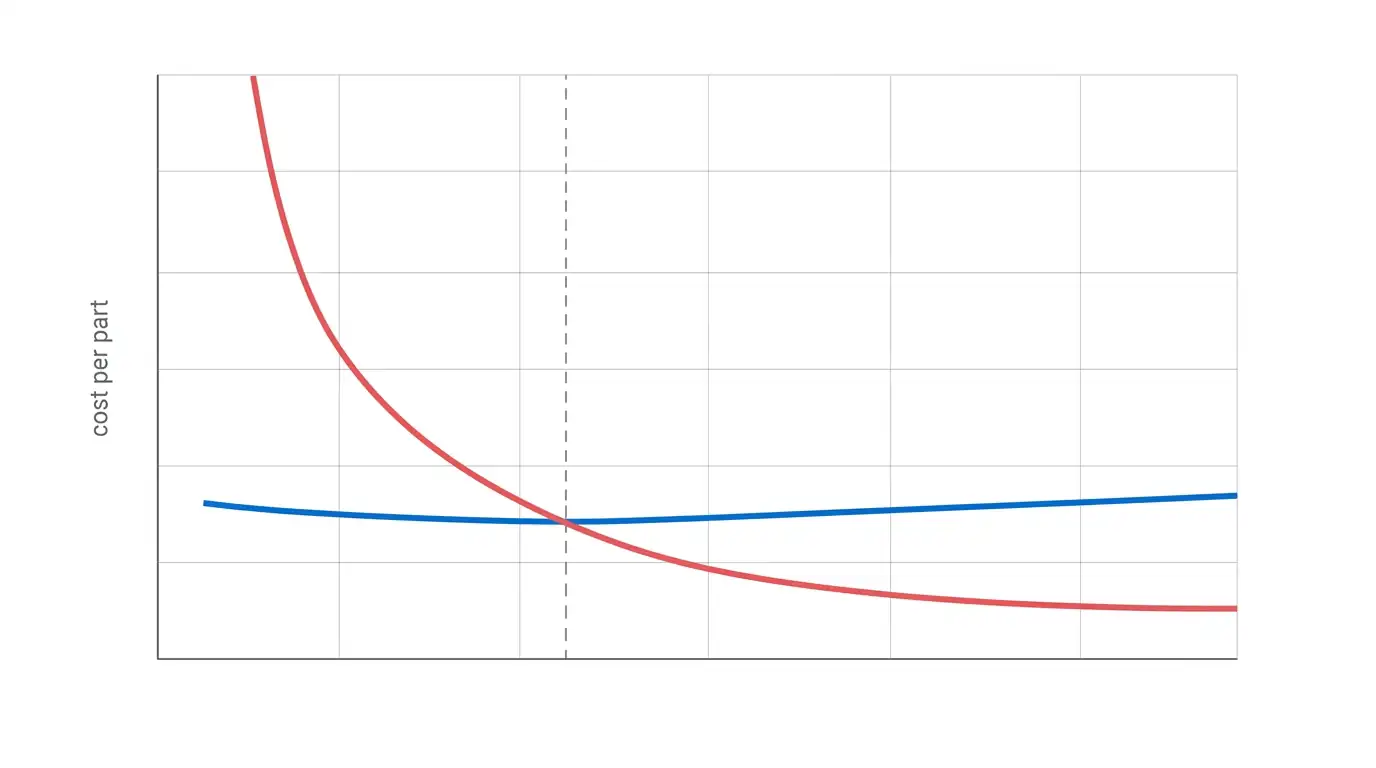
Break-even curve diagram
CNC vs Injection Molding — Section 05 Hybrid Workflow

A Practical Hybrid Workflow

This is the most common “no-regrets” approach for teams building new products: CNC for prototypes and early builds, then injection molding for scale. It’s the simplest cnc to injection molding transition guide when schedules are tight and design learning is still happening.

Step 1: CNC Prototype

Validate fit, assembly, and functional interfaces quickly.

Step 2: Design Lock

Freeze critical geometry, draft, wall thickness, and cosmetic requirements.

Step 3: Tooling Build

Build and qualify the mold; plan gating, ejection, and cooling.

Step 4: Secondary Ops

Machine critical features after molding when needed.

CNC vs Injection Molding — Section 06 Case Study

Case Study: From CNC Prototypes To Molded Production

This example reflects a common product path: start with flexibility, then optimize for scale once the design is stable.
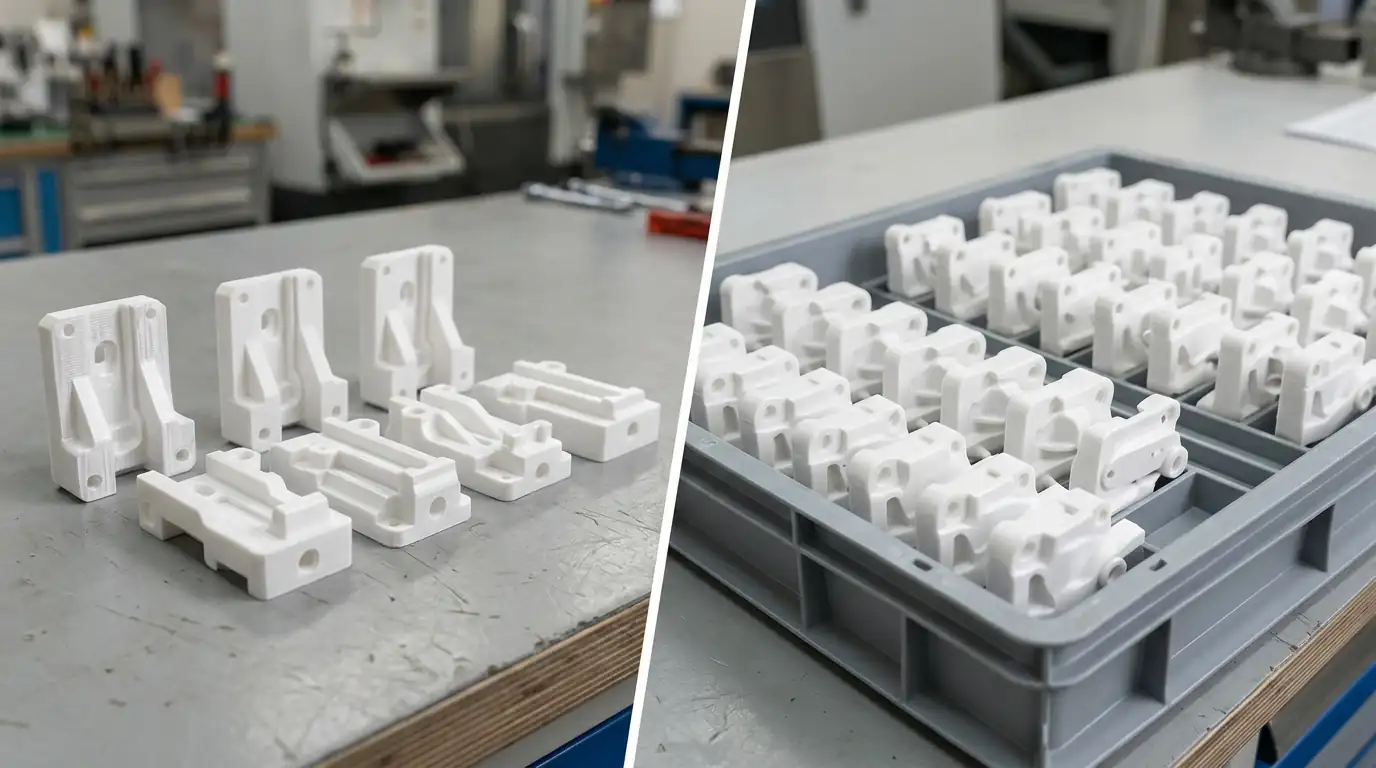
CNC to injection molding transition

Problem

  • Early prototypes needed weekly geometry changes and tight interface control.
  • A molded design would have locked cost into tooling before requirements stabilized.
  • Later, unit cost needed to drop for a repeat production run.

Solution

  • Machined prototypes to validate interfaces and functional performance.
  • Updated design for moldability (draft, uniform walls, ejection features) once stable.
  • Transitioned to molding for volume, then machined only the critical tolerance surfaces.

Result

  • Faster iteration cycles early and fewer late-stage redesign surprises.
  • Stable production parts with repeatable dimensions at scale.
  • Lower unit cost while maintaining critical fits.

Impact

  • Shorter overall path from prototype to production.
  • Reduced risk of expensive tool rework and schedule slips.

CNC vs Injection Molding — Section 07 FAQ

Frequently Asked Questions

Quick answers to common questions about selecting the right process for volume, risk, and lead time.

What Is The Main Difference Between CNC Machining And Injection Molding?
CNC machining removes material from stock to create a part. Injection molding forms parts by injecting molten plastic into a mold cavity.
When Should I Choose CNC Instead Of Injection Molding?
Choose CNC when you need fast parts, expect design revisions, need low upfront commitment, or are building low-to-medium volumes.
When Does Injection Molding Become More Cost Effective?
Molding becomes more cost effective once volume is high enough to amortize tooling cost and the design is stable.
Can I Prototype With CNC And Then Switch To Injection Molding?
Yes. Many teams machine prototypes, then redesign for moldability and transition to molding for production.
Do Injection Molded Parts Need Post Machining?
Sometimes. If you need very tight fits, critical surfaces can be machined after molding as a secondary operation.
Which Process Offers Better Tolerances And Surface Finish?
CNC can achieve tight tolerances and excellent finish directly off the machine. Molding is very repeatable at scale, but critical interfaces may need secondary ops.
What Design Changes Are Needed For Injection Molding?
Common changes include adding draft, using uniform wall thickness, planning gates/ejector marks, and avoiding undercuts unless tooling supports them.
Can Batnon Help Me Choose The Right Process?
Yes. Upload your CAD and requirements and we can recommend a cost-effective manufacturing path and quote options.
CNC vs Injection Molding — Section 08 Final Section

Quick Summary For Faster Decisions

If you need flexibility, faster iteration, or lower upfront commitment, start with CNC machining. If the design is stable and you need repeatability at scale, move to injection molding. For many products, the best result is a hybrid: mold the base geometry and machine only the critical interfaces.

If you share your CAD and target quantity, we can recommend a manufacturing plan that balances speed, risk, and cost.