
CNC Cost Sheet
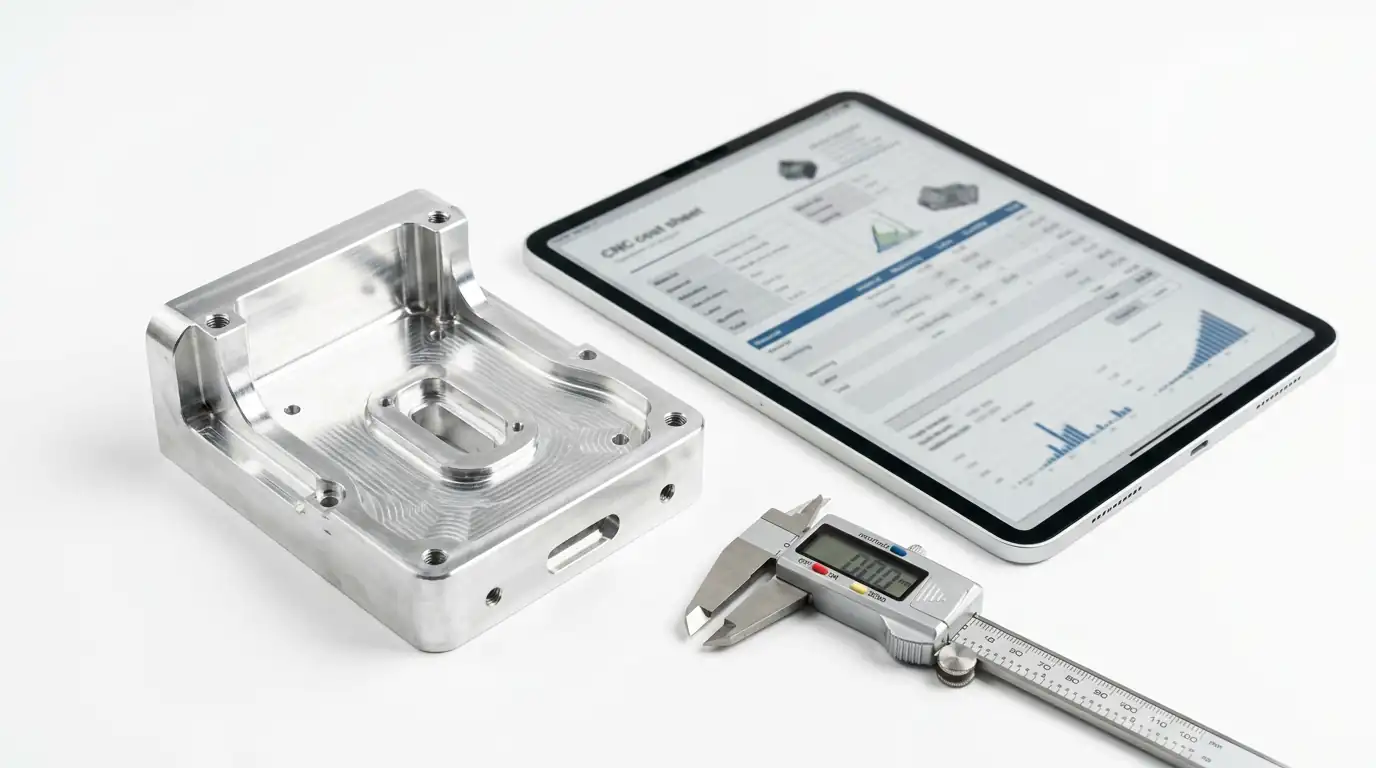
This guide gives you a practical cnc cost sheet you can use to explain quotes, compare suppliers, and plan realistic cost down steps. If you’re looking for a cnc machining cost estimate template or asking how to estimate cnc machining cost, start with the cost buckets and the worksheet below.
Use It To Explain Quotes
Translate line items into the real drivers: setup, cycle time, tooling, inspection, and finishing.
Use It To Compare Options
Separate one-time effort from per-part effort so prototype and production decisions stay consistent.
Use It To Drive Cost Down
Know what design and planning changes actually move price, not just what sounds good.
CNC Machining Cost Breakdown
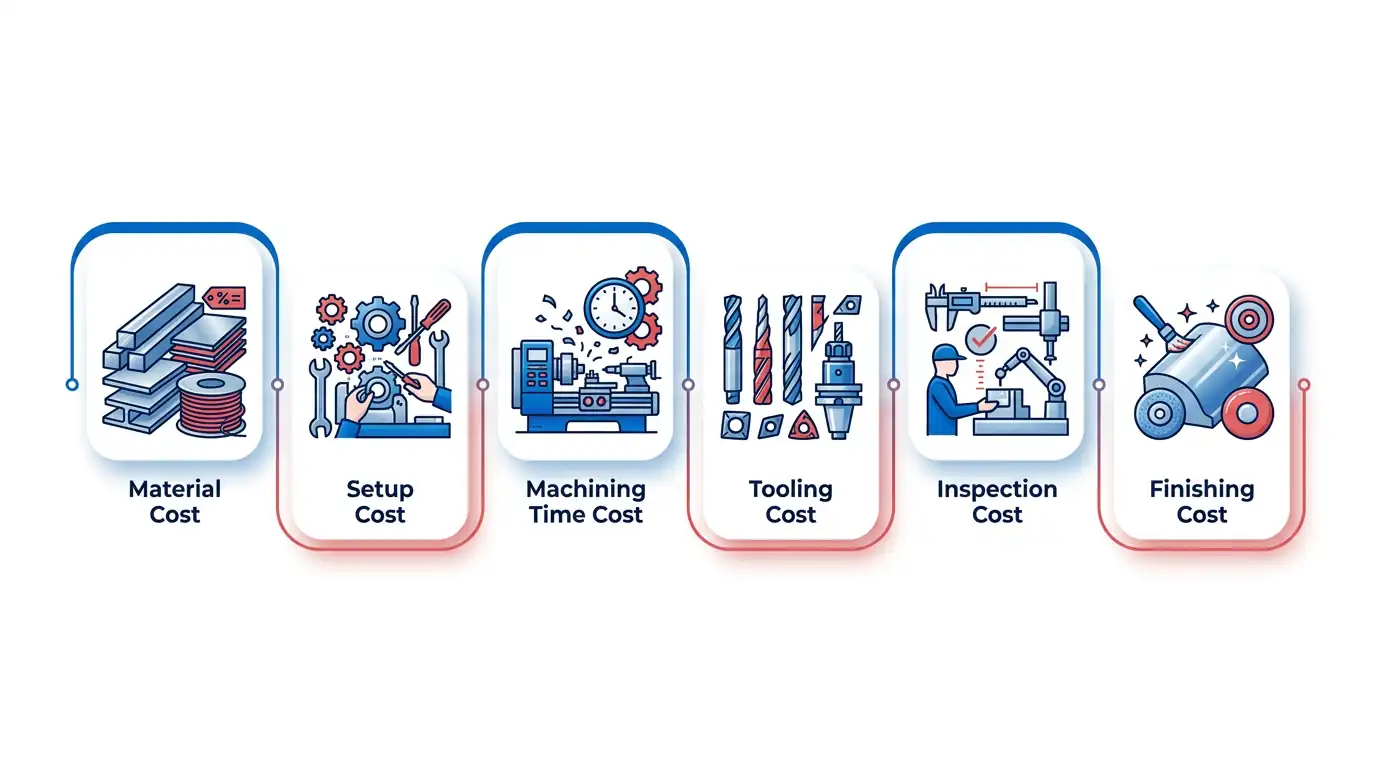
Most pricing can be explained by a few buckets. The fastest way to interpret a cnc machining quote cost drivers is to ask: which bucket is growing, and why?
Material
Stock price, blank size, and waste. Harder-to-machine materials can increase time and tool wear.
Setup
Workholding, probing, alignment, and multi-orientation planning. Usually the biggest lever at low quantities.
Machining Time
Cycle time is where complexity turns into cost—small tools, deep pockets, and tight features slow everything down.
Tooling
Special cutters, tool changes, and wear. Tooling complexity often shows up as time.
Inspection
Gauging strategy, CMM time, fixtures, and documentation. Tight tolerances multiply inspection effort.
Finishing
Anodize, bead blast, passivation, marking, cleaning, masking. Each step adds handling and risk.
Tip: ask whether your part is dominated by setup (low qty) or cycle time (higher qty).
Setup Cost Vs Cycle Time (Why Quotes Change With Quantity)
A reliable setup cost vs cycle time cnc model is the key to explaining why a one-off can feel expensive while the same part becomes economical at higher quantity. Setup is mostly one-time effort; cycle time repeats for every part.
Setup Dominated
Low quantities, many orientations, custom workholding, complex probing, first-time programming, or uncertain datum strategy.
Cycle Time Dominated
Higher quantities, stable workholding, long toolpaths, small cutters, deep pockets, hard materials, heavy finishing passes.
Inspection Dominated
Many critical features, tight tolerances, GD&T reporting, CMM fixtures, or documentation requirements.
| Driver | Shows Up As | Best Fix |
|---|---|---|
| More Setups | Extra alignment + touch-offs | Move features to fewer faces; add datums; redesign as two parts |
| Long Reach Tooling | Slow feeds + chatter risk | Reduce depth; open pockets; increase internal radii; add relief |
| Tight Tolerances Everywhere | More inspection time | Keep tight only on functional interfaces; define critical zones |
| Short Lead Time | Expedites + schedule disruption | Confirm true need; allow standard lead time for best value |
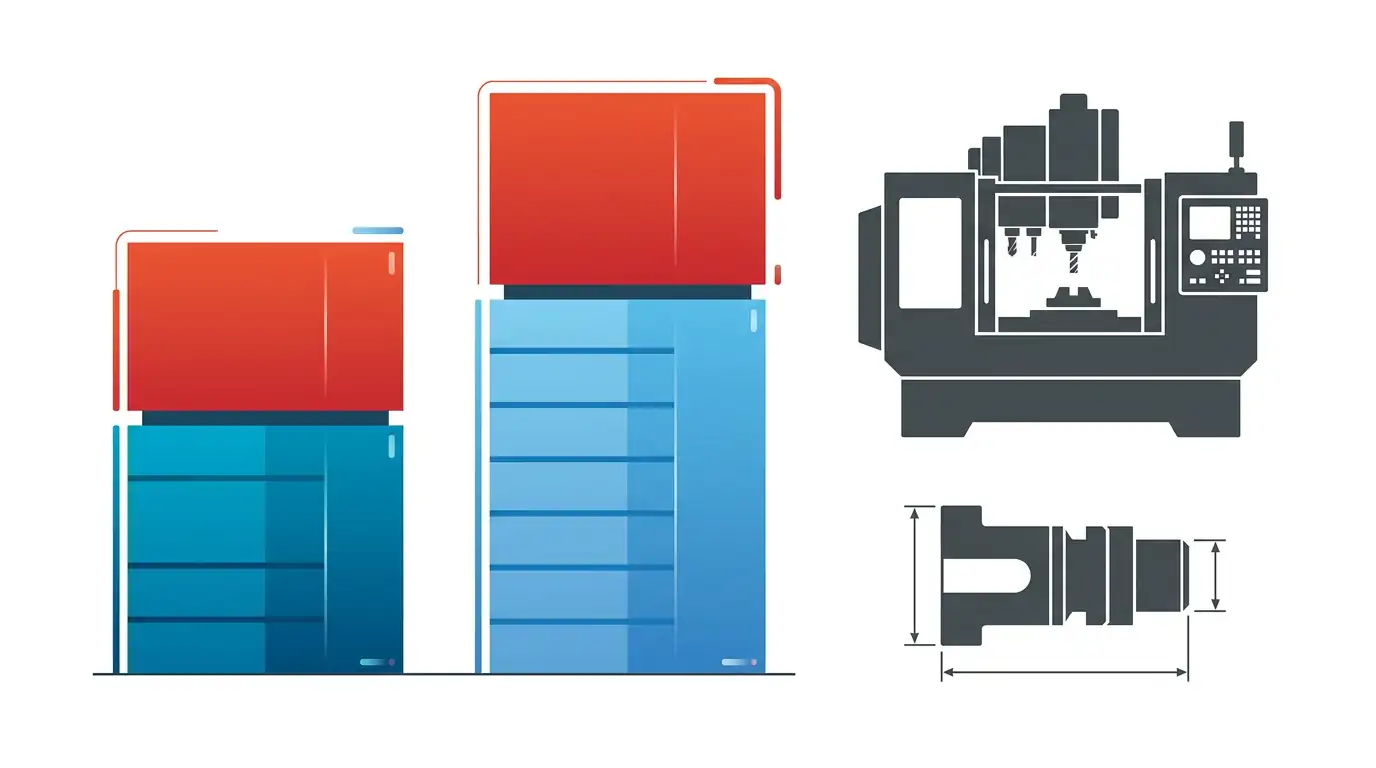
If two quotes differ, ask the supplier which bucket is driving the difference, and what design change would shrink it first.
CNC Cost Estimation Worksheet (Copy Into Your Own Template)
Use this cnc cost estimation worksheet as a quick sanity check. It’s not a substitute for a quote, but it makes your inputs explicit and helps you spot the biggest lever before you upload CAD.
Estimated Output
Estimated Unit Cost
Estimated Total Cost
Setup Share (one-time)
If your unit price feels high, check whether setup, cycle time, or inspection is dominating—then adjust only the features that drive function.
What This Worksheet Includes
Material, scrap allowance, setup, machine time, tooling adders, inspection, finishing, and overhead.
Good For
Comparing concepts, explaining quote movement, and preparing a cleaner RFQ package.
Not For
Complex assemblies, hidden risks, supplier-specific routing, or special process validation.
Best Practice
Use it with CAD review, critical datums, quantity range, and finishing requirements.
How To Reduce CNC Machining Cost Without Hurting Function
The strongest savings usually come from geometry choices made before release. A good reduce cnc machining cost checklist does not simply loosen everything—it identifies where manufacturability changes preserve function while reducing setup count, tool reach, inspection effort, and scrap risk.
| Design Lever | What It Changes | Why Cost Drops | Starting Rule Of Thumb |
|---|---|---|---|
| Increase Internal Radii | Allows larger cutters | Fewer slow passes, less chatter, less tool wear | Corner radius ≥ about one-third of cavity depth when possible |
| Reduce Pocket Depth | Shorter tool reach | Faster feeds and more stable machining | Keep cavity depth around ≤ 4× feature width when possible |
| Control Thread Length | Less tapping effort | Less cycle time and less broken tool risk | Thread length around 3× nominal diameter is often enough |
| Use Standard Hole Sizes | Enables standard drills | Eliminates extra interpolation or special tools | Prefer standard drill increments and through holes where practical |
| Localize Tight Tolerances | Shrinks inspection burden | Less CMM time, less fixture work, lower scrap risk | Typical CNC features are often around ±0.1 mm unless function needs more |
| Minimize Setups | Fewer orientations | Lower alignment time and lower stack-up risk | Move features to fewer faces or split into easier modules |
| Choose Machinable Material | Higher cutting efficiency | Lower cycle time and lower wear | For many projects, aluminum or easier-machining grades reduce cost sharply |
CNC Machining Cost For Prototypes Vs Production
A common planning mistake is using prototype logic for production, or production logic for prototypes. A useful cnc machining cost for prototypes vs production comparison separates fixed effort from repeating effort so the right tradeoffs show up at the right stage.
Prototype Priorities
Speed, design learning, and de-risking. It can be smart to accept higher setup share if it gets parts in hand faster and avoids tooling dead ends.
Pilot Build Priorities
Repeatability, datum stability, and inspection confidence. This is where unstable geometry starts to show its real cost.
Production Priorities
Cycle time, yield, capacity loading, and process control. Small feature changes can compound into meaningful unit savings.
| Decision | Prototype View | Production View |
|---|---|---|
| Custom Fixture | Often avoid unless necessary | Worth it when it reduces setup time or stabilizes quality |
| Material Upgrade | Sometimes use surrogate to move faster | Use final material if machinability affects real cycle time or distortion |
| Tolerance Strategy | Only control what is needed to validate concept | Lock critical interfaces and use measurable datum structure |
| Finish Strategy | Prove geometry first when possible | Add final finish when cosmetic or corrosion requirements matter |
How Buyers Should Read A CNC Machining Cost Per Part Calculation
When a supplier shares a cnc machining cost per part calculation, the question is not whether the total is high or low by itself. The real question is whether the quote structure matches the part’s actual difficulty and your quantity range.
Check The Blank
Is the part being machined from a much larger block than necessary? Blank size and waste matter.
Check The Routing
How many setups, what tools, what finish steps, and what inspection path are implied?
Check The Quantity Logic
Is one-time setup spread correctly? Low-volume and repeat-order pricing should not look identical.
Ask These Four Questions
What Is Driving Setup?
Orientation count, fixturing, probing, or first-article complexity?
What Is Driving Cycle Time?
Deep pockets, small cutters, hard material, fine finish, or long toolpaths?
What Is Driving Inspection?
Functional datums, reporting requirements, or over-specified tolerances?
What One Change Helps Most?
A strong supplier should be able to name the first change worth considering.
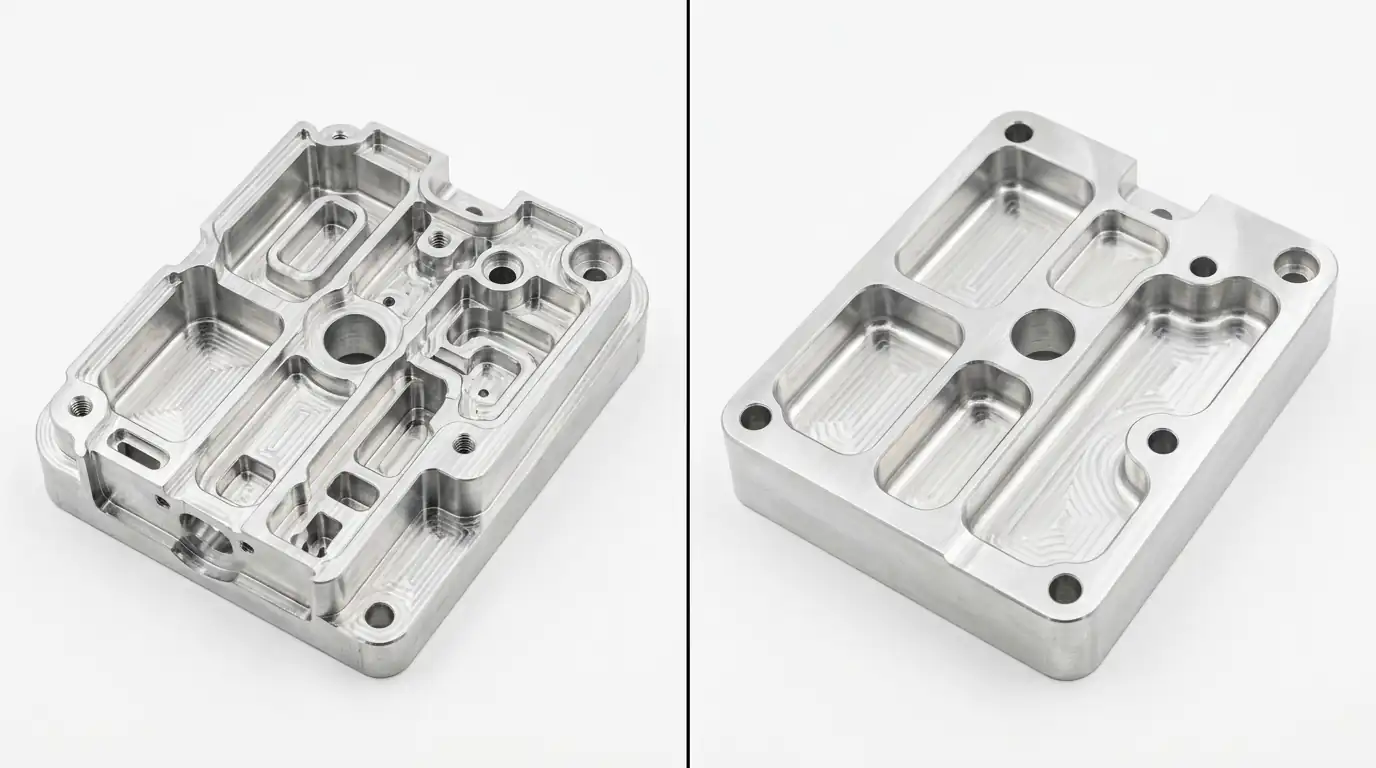
Case Study: Simplifying A Pocketed Aluminum Base To Reduce Quote Risk
This example shows how cost moves when geometry is redesigned around tool access, setup simplicity, and focused tolerancing rather than broad “tight everywhere” control.
Title
Pocketed aluminum base reworked for fewer setups, shorter cycle time, and a cleaner inspection path.
Problem
The original part had many deep cavities, mixed radii, and more critical dimensions than function actually required.
Solution
Increase internal radii, simplify some pocket transitions, keep tight control only on mounting and alignment zones, and clean up the datum plan.
Result
More standard tooling, lower risk of chatter, less CMM burden, and a quote that reflects stable routing rather than contingency.
Impact
The project moved from a quote dominated by uncertainty to one dominated by known process time. That improves price confidence, repeatability, and supplier alignment—even before quantity scales.

Quote-Ready Checklist (What To Send For A Faster, More Reliable RFQ)
The cleanest way to improve quote quality is to reduce ambiguity. This is the practical side of a cnc machining cost estimate template: give the supplier enough information to route the part correctly the first time.
CAD + Revision
STEP or native model, plus the revision you want quoted.
Material + Quantity
State the exact grade if fixed, and share quantity ranges if they matter.
Critical Features
Highlight the 2–5 surfaces or patterns that actually drive function.
Finish + Inspection
Call out cosmetic requirements, reports, and whether first-article data is needed.
Fast RFQ Notes You Can Copy
□ Standard lead time is acceptable □ Tight zones only are critical □ Cosmetic areas marked clearly □ Alternate material is acceptable if value improves □ Modular split allowed if needed
FAQ: CNC Cost Sheet
Quick answers to common questions buyers and engineers ask when trying to interpret machining quotes and reduce unnecessary cost.
What Is Included In A CNC Cost Sheet?
Why Can One Prototype Cost So Much More Than The Unit Price In Production?
Is Machining Time Always The Biggest Cost Driver?
How Do Tight Tolerances Affect Price?
What Geometry Changes Usually Cut Cost First?
How Should I Compare Two CNC Quotes?
Can A Cheaper Material Reduce Total Cost Even If Machining Time Stays Similar?
What Should I Send To Get A Better Quote Faster?
Engineering Summary For Smarter CNC Cost Planning
If you need one takeaway from this page, use this: CNC cost becomes understandable when you separate one-time effort from repeating effort, then focus tight control only where the part’s function truly needs it. That is the logic behind a better cnc machining cost breakdown, a better RFQ, and a better production handoff.
Better Inputs
Clear CAD, quantity range, material, finish, and critical features reduce quote ambiguity immediately.
Better Decisions
Setup, cycle time, and inspection should be treated as separate levers, not one blended price.
Better Outcomes
Cleaner routing, more predictable quality, and stronger supplier alignment create faster inquiries and more credible quotes.
Ready To Review Your Part Cost Structure?
Send your CAD, material, quantity, and the features that matter most. Batnon can help identify the main cost drivers, explain where the quote is carrying risk, and suggest the first changes worth considering.