
Complete ISO 2768 Overview For CNC Machining
Understand ISO 2768 tolerance classes f, m, c, v, learn when to use each class, and see how to apply ISO 2768 on technical drawings without over-tolerancing your parts. This guide is built for engineers and sourcing teams who want the right balance between cost, quality, and manufacturability.
Fast Answer: For many general machined parts, ISO 2768-m is a sensible baseline. Use tighter local callouts only where fit, sealing, alignment, or assembly function truly depends on them.
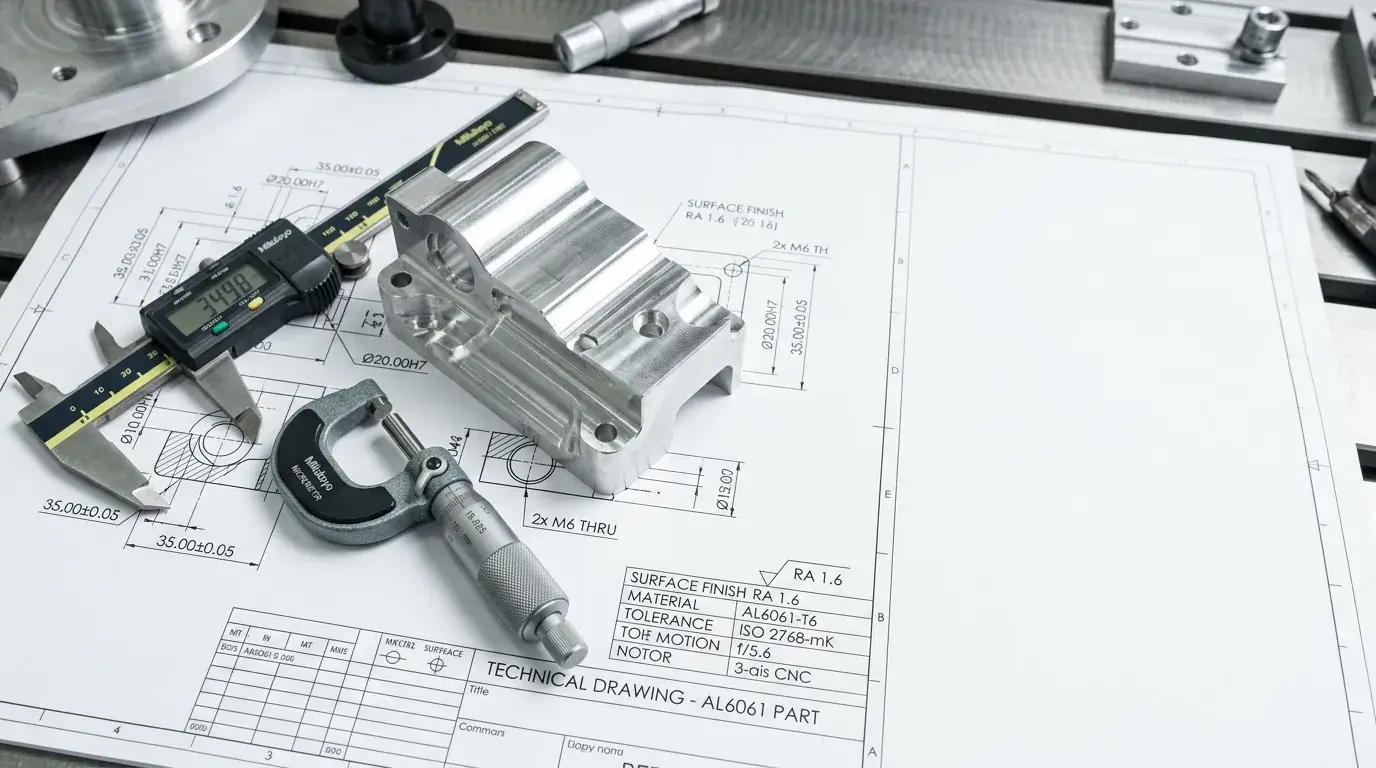
What ISO 2768 Means On A CNC Drawing
ISO 2768 is a general tolerance system used when you do not want to assign an individual tolerance to every linear and angular dimension on a drawing. It gives the drawing a default tolerance framework so the part can be interpreted consistently without turning the title block into a wall of repeated numbers.
What It Covers
ISO 2768-1 is used for general linear and angular dimensions without individual tolerance indications. Public machining guides consistently describe the four classes as f, m, c, v.
What It Does Not Replace
It does not remove the need for explicit control on fit-critical bores, bearing seats, sealing faces, threads, surface finish, or GD&T-driven relationships.
Why Shops Prefer It
A clean general tolerance note helps machinists and inspectors understand the default intent quickly, which can reduce review friction and quoting delays.
Good Practice: Use ISO 2768 as the drawing’s default background rule, then override it wherever function actually depends on tighter size, location, or form control.
Why This Matters For CNC Machining
- It shortens cluttered drawings and improves readability.
- It helps you avoid over-tolerancing non-critical features.
- It gives buyers a more predictable path from drawing to quote.
ISO 2768 Tolerance Classes F M C V At A Glance
If you are searching for an ISO 2768 tolerance chart for machined parts, start with this practical summary: the class should match feature criticality, assembly risk, and the level of process control you actually need.
Fine
Best for tighter default expectations on precision-oriented features and parts where variation must stay closely controlled.
Medium
The most practical all-purpose choice for many machined housings, brackets, covers, and fixture components.
Coarse
Suitable when function is forgiving and dimensional looseness will not affect fit, sealing, or alignment.
Very Coarse
Used for rougher, larger, or highly forgiving work where broad general limits are acceptable.
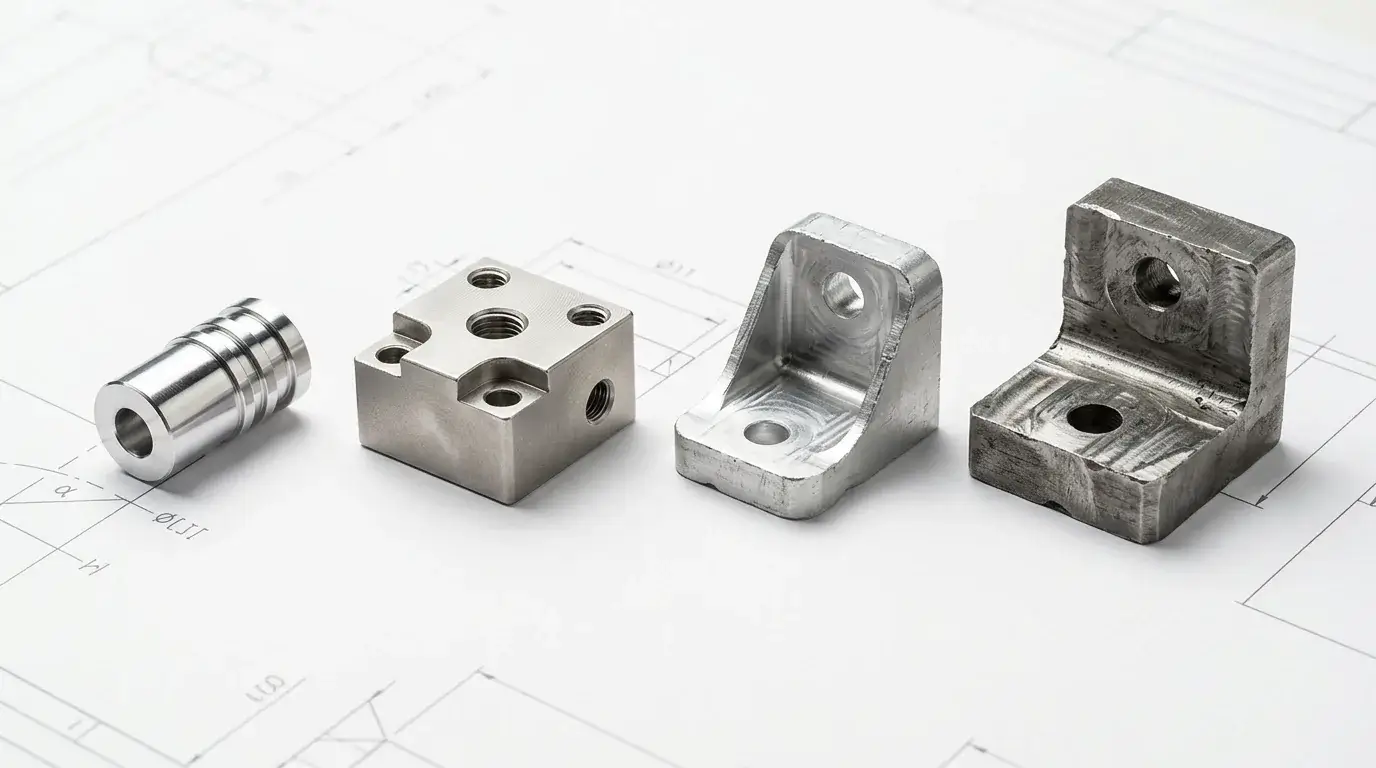
Part 1 Note
Use lowercase for Part 1 classes: f, m, c, v.
Part 2 Note
Public summaries of ISO 2768-2 refer to geometrical classes H, K, L.
Most Common Pattern
General-purpose machined drawings often start from a note like ISO 2768-mK.
Quick Reference For Choosing The Right Default Class
This matrix is designed to answer the practical question behind most searches for when to use ISO 2768 m tolerance class or whether a part needs a tighter default.
| Class | Best For | Typical Part Types | Cost Tendency | Inspection Load | Recommendation |
|---|---|---|---|---|---|
| f | Precision-sensitive default tolerance where variation has less room | Optical mounts, precision covers, sealing faces with further critical callouts | Higher | Higher | Use selectively, not as a blanket habit |
| m | General CNC machining drawings with balanced expectations | Housings, brackets, electronic enclosures, fixture plates | Balanced | Moderate | Best starting point for many machined parts |
| c | Forgiving geometry that does not drive tight assembly behavior | Simple support parts, rough covers, non-critical structures | Lower | Lower | Use when functional risk is low |
| v | Very forgiving large or rough work | Large rough structures or broadly tolerant fabricated parts | Lowest | Lowest | Reserve for parts where broad limits are truly acceptable |
Key Point: The default class is not the whole tolerancing strategy. Any feature that controls fit, function, sealing, bearing performance, or positional accuracy should still be called out explicitly.
When To Use Each ISO 2768 Class In Real Parts
A better question than “what class is tighter?” is “which default class matches the functional risk of this part?” Use the examples below as a practical class-selection filter.
Use Fine When
- The part has precision-critical external dimensions.
- Assembly sensitivity is high and local variation must stay tighter.
- You can justify added inspection and slower machining.
Use Medium When
- The drawing needs a clean default for general machined geometry.
- The part is a housing, bracket, cover, manifold, or fixture component.
- You will separately control only the truly critical features.
Use Coarse When
- General shape matters more than close dimensional precision.
- Features are not driving fit, seal, or alignment.
- You want manufacturability and lower inspection burden to dominate.
Use Very Coarse When
- The part is large, forgiving, or rough by function.
- Blanket precision would only add cost without benefit.
- Broad dimensional freedom is acceptable in final use.
Rule Of Thumb
If you are unsure, start from ISO 2768-m for the drawing note, then add explicit local tolerances or GD&T only where the part would fail in assembly, sealing, alignment, or motion without them.
How To Apply ISO 2768 On Technical Drawings
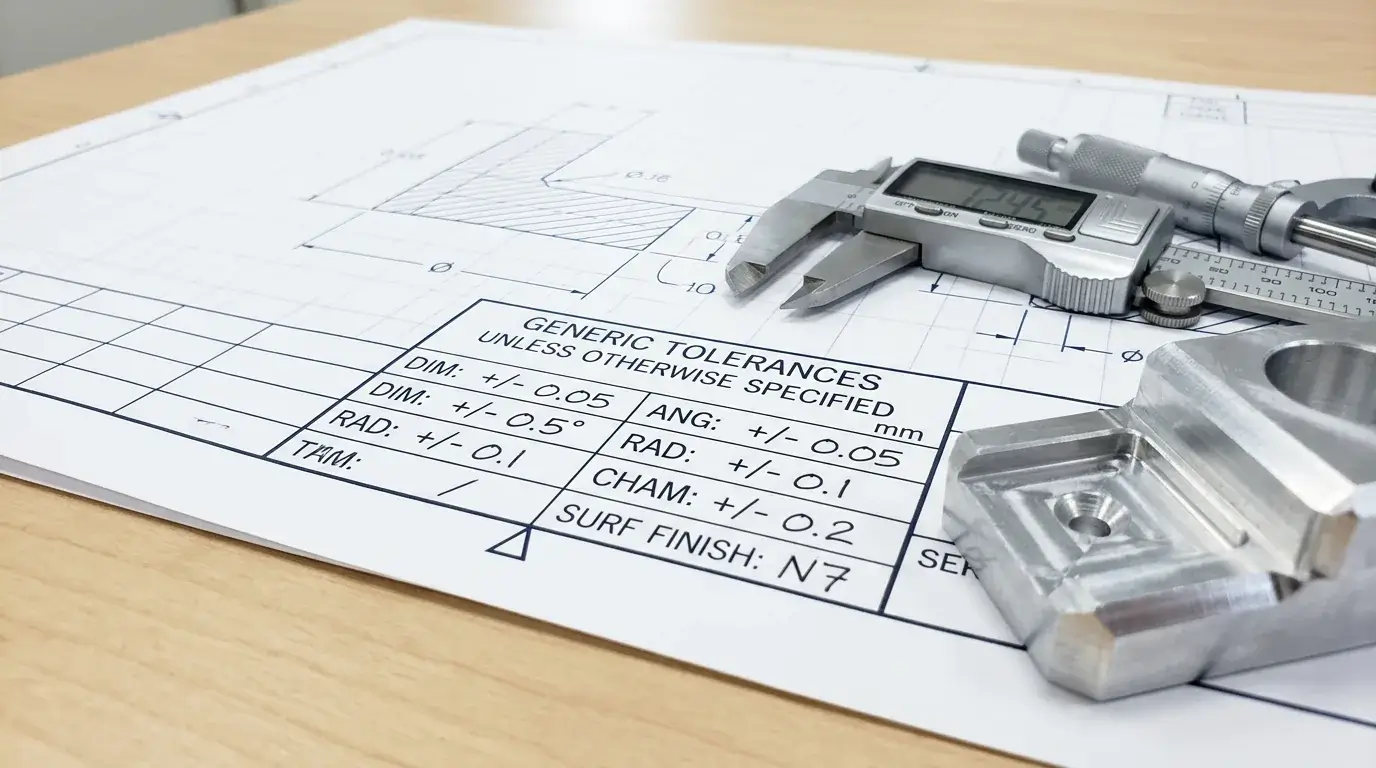
For engineers searching how to apply ISO 2768 on technical drawings, the practical workflow is simple: place the general tolerance note in or near the title block, state that it applies unless otherwise specified, and then override it where function demands tighter or different control.
GENERAL TOLERANCES: ISO 2768-mK
UNLESS OTHERWISE SPECIFIEDUse Correct Notation
Lowercase letters are used for Part 1 classes and uppercase letters for Part 2 classes. A typical note is ISO 2768-mK.
Apply It As A Default
The note should govern features without individual callouts. It is the background rule, not the replacement for feature-level engineering intent.
Still Specify Separately
- Threads
- Fits and bearing seats
- Surface roughness
- Critical positional or geometric controls
Good Drawing Habit
- Call out exceptions locally
- Define finish-critical dimensions clearly
- Use GD&T where size alone does not control function
How Tolerance Choice Affects Cost Quality And Manufacturability
One of the biggest mistakes in CNC drawings is assuming tighter default tolerance always means better parts. In reality, tighter blanket tolerances often increase machining effort and inspection time without improving functional performance.
Machining Time
Tighter limits can require slower feeds, more stable setups, and extra passes to maintain consistency.
Fixturing
Precision demands can push the job toward more controlled workholding and more careful process sequencing.
Inspection
Difficult features are often harder to verify, which raises inspection time and documentation effort.
Scrap Risk
Tight blanket tolerances leave less room for normal variation, which can raise rejection risk on non-critical geometry.
Lead Time
Secondary operations or more inspection checkpoints can lengthen delivery even when the part looks simple.
Best Practice
Keep the default rational, then tighten only the features that actually protect fit, sealing, motion, or alignment.
Practical Reading: If a feature does not affect assembly or performance, tighter blanket tolerance usually buys cost and delay before it buys value.
Common ISO 2768 Mistakes And Better Practice
Most drawing trouble does not come from the standard itself. It comes from applying the standard where explicit engineering intent is still required.
Mistake: Blanket Fine Everywhere
Using a fine class across the whole drawing can inflate cost and inspection burden even when most features are non-critical.
Better Practice: Tighten Locally
Keep the drawing readable with a sensible default note and call out only the features that drive function.
Mistake: Treating ISO 2768 As GD&T
Size limits alone do not fully control position, perpendicularity, profile, runout, or datum-related intent.
Better Practice: Use GD&T Where Needed
When the relationship between features matters more than size alone, use explicit GD&T instead of trying to tighten everything.
Another Frequent Oversight
Threads, surface roughness, coating or anodizing effects, and fit-critical bores should not be left to a blanket ISO 2768 assumption. They need their own callouts.

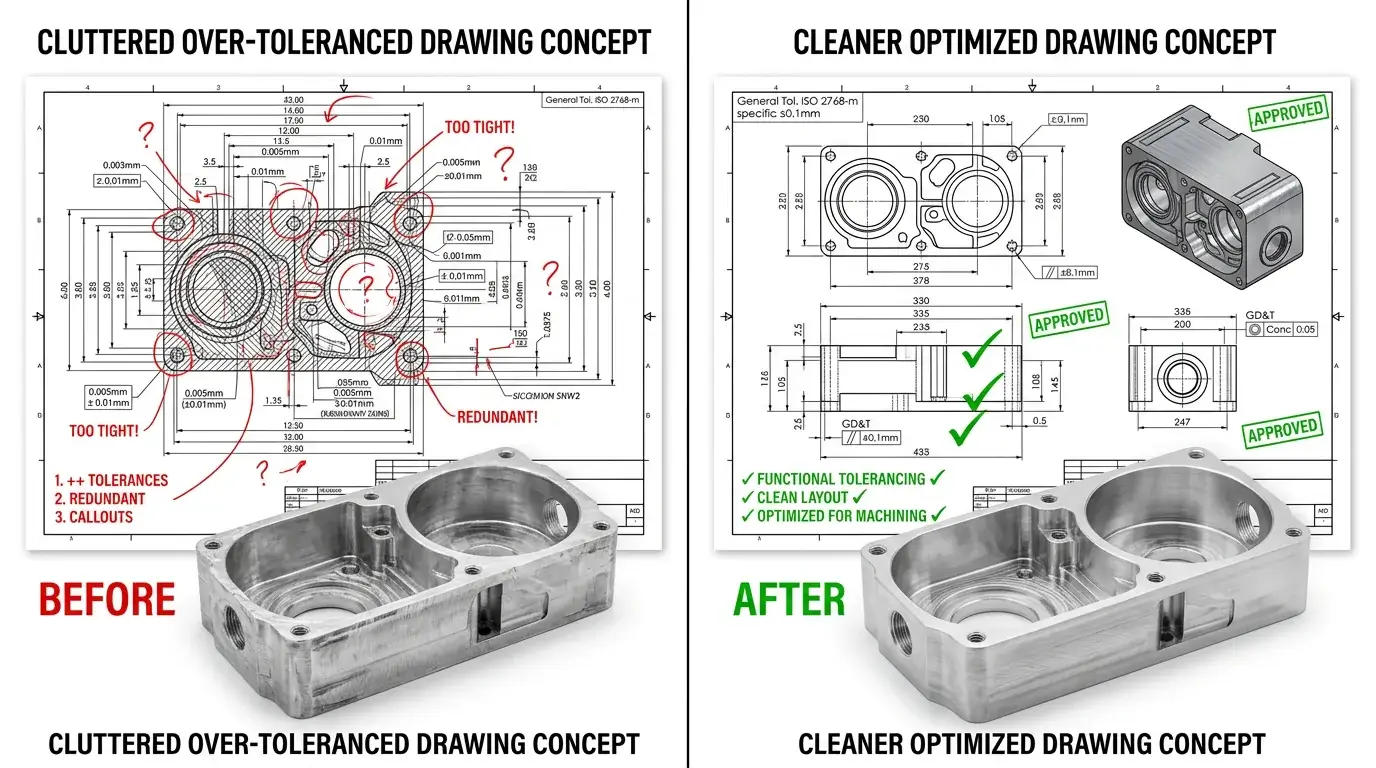
How A Cleaner ISO 2768 Strategy Improved A CNC Housing Review
This example shows how replacing an over-toleranced drawing with a clearer default strategy can improve manufacturability without giving up control where it matters.
Problem
A machined housing drawing used repeated tight tolerances on many non-critical faces and hole locations. Review time grew because the drawing suggested higher process and inspection burden than the function actually required.
Solution
The drawing was rebuilt around a general note of ISO 2768-mK. Only fit-critical bores, sealing interfaces, and key positional relationships kept explicit local callouts.
Result
The revised drawing became easier to interpret, the quote review path became cleaner, and the tolerance strategy aligned better with actual assembly risk.
Impact
The part remained functionally protected where it mattered, while unnecessary precision expectations were removed from non-critical geometry.

ISO 2768 For CNC Machining — FAQs
Quick answers to common engineering and purchasing questions when you are preparing an ISO 2768 drawing for RFQ and production.
What Does ISO 2768 Mean On A Drawing? +
It means the drawing uses a general tolerance standard for features without individual tolerance indications, so you do not need to repeat default limits on every linear or angular dimension.
What Are ISO 2768 Tolerance Classes F M C V? +
They are the commonly referenced classes for ISO 2768-1 general tolerances: fine, medium, coarse, and very coarse. The right choice depends on feature criticality, assembly sensitivity, and manufacturability.
When Should I Use ISO 2768 M? +
For many general machined housings, brackets, covers, and fixture parts, ISO 2768-m is a practical default because it keeps the drawing readable while avoiding unnecessary machining and inspection burden.
What Does ISO 2768 MK Mean? +
It typically means a Part 1 class of m for general dimensions and a Part 2 class of K for general geometrical tolerances, used as a baseline note for features without explicit individual callouts.
Can ISO 2768 Replace GD&T? +
No. If datum relationships, position, perpendicularity, runout, or other geometric controls affect function, you should still use GD&T or explicit local tolerances rather than relying only on a blanket ISO 2768 note.
Does A Tighter ISO 2768 Class Always Mean Better Quality? +
Not always. Tighter blanket tolerances can increase setup complexity, inspection time, and cost without improving part performance if the features are not function-critical.
Should Threads And Surface Finish Follow The Same General Note? +
No. Threads, surface finish, coatings, and fit-critical details should be specified separately instead of being left to the general ISO 2768 note.
What Should I Send For A Faster CNC Tolerance Review? +
Send the 2D drawing, 3D CAD, material, finish, quantity, and highlight the features that truly control fit, sealing, alignment, or motion. That makes review faster and more accurate.
Use ISO 2768 To Simplify Drawings Without Losing Control
A strong ISO 2768 strategy does three things at once: it keeps the drawing readable, protects the features that really drive performance, and avoids spending money on precision that the part does not need. For many CNC machining drawings, the right path is a practical default such as ISO 2768-m or ISO 2768-mK, combined with explicit local callouts wherever fit, sealing, alignment, or geometric behavior matters.
What A Good Drawing Usually Includes
- A clear general tolerance note in the title block
- Explicit exceptions for critical features
- Separate callouts for finish, threads, and fits
- Enough context for fast manufacturing review
What Batnon Can Review With You
- Whether your default ISO 2768 class is too tight or too loose
- Which features should keep local tolerances or GD&T
- How to improve manufacturability before quoting
- How to reduce unnecessary inspection and machining burden