
Section 1 Hero
Free CNC Machining RFQ Template

Free CNC Machining RFQ Template For Faster, Clearer Quotes

Use this CNC machining RFQ template to organize the details a serious quote needs: drawing revision, material grade, critical tolerances, GD&T callouts, surface finish, CTQ features, inspection scope, and delivery priorities. A clearer request for quote template helps suppliers respond with fewer assumptions and fewer follow-up emails.

Clear RFQ Structure

Keep files, materials, quantities, tolerances, finishes, and inspection requirements in one package.

Better Quote Accuracy

Reduce avoidable scope gaps before pricing starts, especially for precision parts and fit-critical features.

Less Back-And-Forth

Give reviewers the context they need to evaluate risk, setup, and finished-condition requirements earlier.
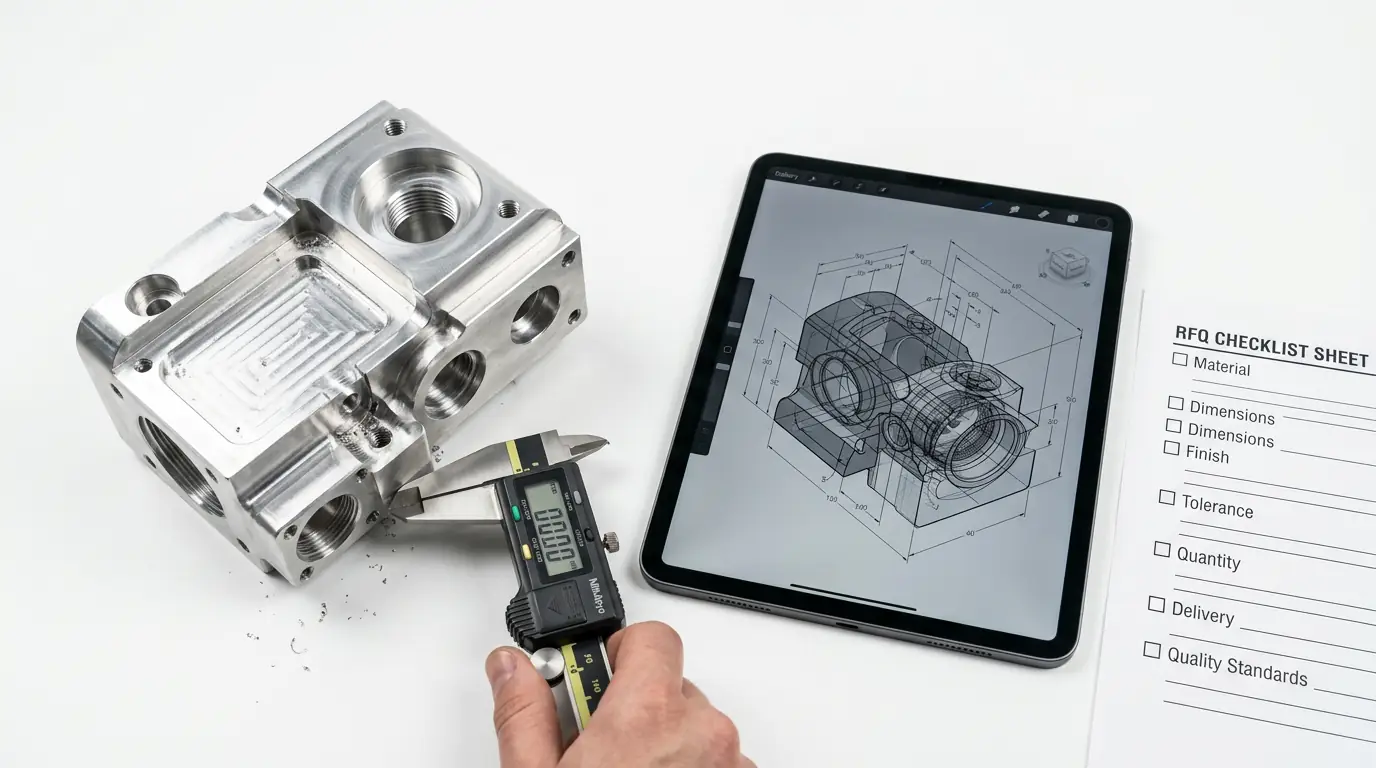
CNC machining RFQ template hero image
Section 2 Why RFQ Quality Matters
Why Buyers Still Lose Time

Why RFQ Quality Changes Quote Speed And Quote Accuracy

For precision CNC machining, a quote is only as clean as the package behind it. Missing material condition, unclear tolerance scope, unfinished revision control, and undefined post-processing notes force reviewers to pause, guess, or ask for clarification before they can commit to lead time and price.

3D + 2D

Strong RFQ pages consistently treat both CAD and drawing as the safest quoting starting point for machined parts.

CTQ First

Critical-to-quality features should be identified clearly so the reviewer knows which dimensions drive function or inspection burden.

Finish State

If a feature must be verified after anodize, plating, blasting, or final machining, say it directly in the RFQ package.

Scope Match

A useful CNC quote checklist keeps commercial scope aligned with technical scope before price release.

What Usually Slows A Quote

  • No STEP file, only a screenshot or legacy PDF.
  • General tolerance stated, but CTQ dimensions not identified.
  • Finish called out, but inspection state not defined.
  • Prototype quantity shared, but no production expectation or reorder context.

What Buyers Need Instead

  • A request for quote template for machined parts that centralizes the essentials.
  • A CNC drawing checklist that shows what belongs in notes versus dimensions.
  • A machining RFQ checklist that separates standard requirements from fit-critical ones.

What A Good RFQ Achieves

  • Cleaner supplier comparison.
  • Fewer avoidable assumptions.
  • Better DFM discussion before cost locks in.
  • Less chance of quoting the wrong inspection or finish scope.
Section 3 Complete RFQ Package Table
RFQ Checklist Core

What A Complete CNC RFQ Package Should Include

This CNC machining RFQ checklist is built for precision parts. It covers the information reviewers need to quote correctly without guessing at material, revision, CTQ features, or inspection expectations.

RFQ ItemWhat To IncludeWhy It MattersIf It Is Missing
3D CAD FileSTEP preferred, current revision only.Supports manufacturability review, tool access evaluation, and setup planning.Reviewers may quote from assumptions or pause for clarification.
2D DrawingPDF with revision level, datums, GD&T, CTQ dimensions, and notes.Defines functional requirements that a model alone may not communicate.Critical callouts can be missed or interpreted inconsistently.
Material GradeExact alloy, temper, condition, or approved equivalent policy.Material changes machining behavior, price, lead time, and certification scope.The quote may be delayed or based on the wrong stock assumption.
QuantityPrototype quantity, repeat quantity, and expected reorder pattern if known.Volume changes setup allocation, routing, and cost structure.Piece price can be skewed or difficult to compare.
Critical TolerancesOnly call out dimensions that truly control fit, seal, motion, alignment, or function.Keeps tolerance strategy practical and reviewable.Blanket tight tolerance can increase cost without adding value.
Surface FinishRa, cosmetic expectation, anodize / plating / blasting / passivation as needed.Finish affects process choice, masking, inspection state, and delivery scope.Quote accuracy drops and post-process assumptions multiply.
Inspection ScopeStandard inspection, FAI, CMM, report package, certs, or finished-condition verification.Inspection burden affects route, time, and reporting requirements.Suppliers may price different quality packages for the same part.
Commercial NotesTarget timing, approved substitutions, special packaging, cleanliness, or marking notes.Prevents late-stage surprises unrelated to geometry.Quote iteration increases even when machining details are clear.
A strong CNC quote checklist does not overload the drawing. It makes the important things explicit: what is critical, what condition is inspected, and what must arrive with the final shipment.
Section 4 Template Preview And How To Use It
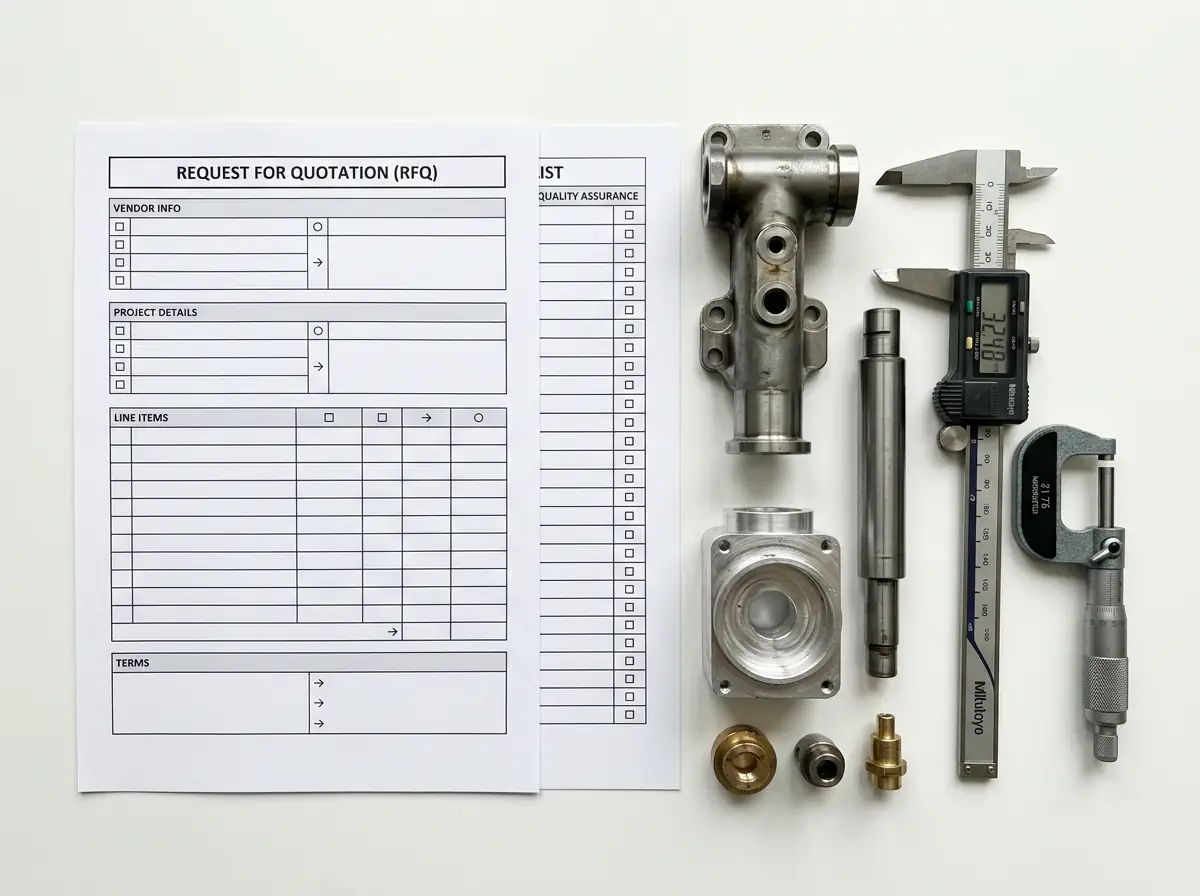
RFQ template preview image
Template Preview

How To Use This RFQ Template Before You Send Files

This free CNC machining RFQ template gives purchasing teams and engineers one place to record the details that usually trigger clarification loops: revision status, material grade, quantity, delivery target, finish callouts, critical tolerances, GD&T references, CTQ notes, and inspection package requirements.

  • Attach the latest STEP file and current 2D drawing together.
  • Mark fit-critical features separately from general dimensions.
  • State whether inspection is required before or after finish.
  • List any documentation needed at shipment: CoC, material cert, FAI, or dimensional report.
Section 5 CTQ GD&T And Review Workflow
Engineering Clarity

How To Call Out CTQ Features, GD&T, And Finished-Condition Inspection

For a precision parts RFQ template to do real work, it has to show where the risk lives. That usually means identifying CTQ features, referencing the right datums, and stating whether final acceptance happens before or after coating, plating, heat treatment, or final machining.

CTQ Features

Use notes or balloons to identify the dimensions that control fit, sealing, concentricity, motion, alignment, or assembly. A custom machined parts quote checklist should not treat every dimension as equally critical.

GD&T Callouts

Use datum-driven callouts where form, orientation, or position matters. Keep the RFQ package consistent between the drawing, notes, and any inspection expectations.

Finished-Condition State

If anodize thickness, plating buildup, blasting, or post-machining changes the final size or surface, say exactly which state controls final acceptance.

Package Review

The reviewer checks revision consistency, file completeness, and obvious scope gaps before routing the request.

Manufacturability Check

Tool access, setup count, material behavior, and process risks are reviewed against the drawing and CAD model.

Quality Scope Alignment

Inspection level, CTQ verification method, and finished-condition requirements are aligned before pricing is finalized.

Quote Release

Once technical and commercial assumptions match, the quote can be released with fewer hidden variables.

Useful RFQ sentence template: Critical Interface To Be Verified In Finished Condition From Referenced Datums. Report Actual Size On CTQ Features And Confirm Required Finish Scope.
Section 6 Common Mistakes And Download Checklist
Avoidable Errors

Common RFQ Mistakes That Slow Quotes Or Distort Pricing

Many RFQs stall for reasons that are preventable. A request for quote template for machined parts should help you avoid vague scope, revision confusion, undefined finish state, and tolerance strategies that force the reviewer to ask the same questions twice.

What To Avoid

  • Sending only a screenshot or only a PDF when a STEP file exists.
  • Using one blanket tolerance note for both general and fit-critical features.
  • Calling out anodize, plating, or blasting without defining finished-condition inspection.
  • Listing quantity without target timing or likely reorder pattern.
  • Referring to a previous revision in email while attaching a newer drawing.
  • Requesting CMM or FAI without clarifying which features need to be reported.

Pre-Send RFQ Check

  • STEP file and current PDF drawing attached.
  • Material grade and condition confirmed.
  • Critical tolerances, GD&T, and CTQ features marked clearly.
  • Surface finish and post-processing defined.
  • Inspection package stated.
  • Commercial notes added for timing, packaging, or approvals.
Section 7 Case Study
Representative RFQ Improvement Case

Case: Cleaner RFQ Scope For A Precision Housing Quote

Problem

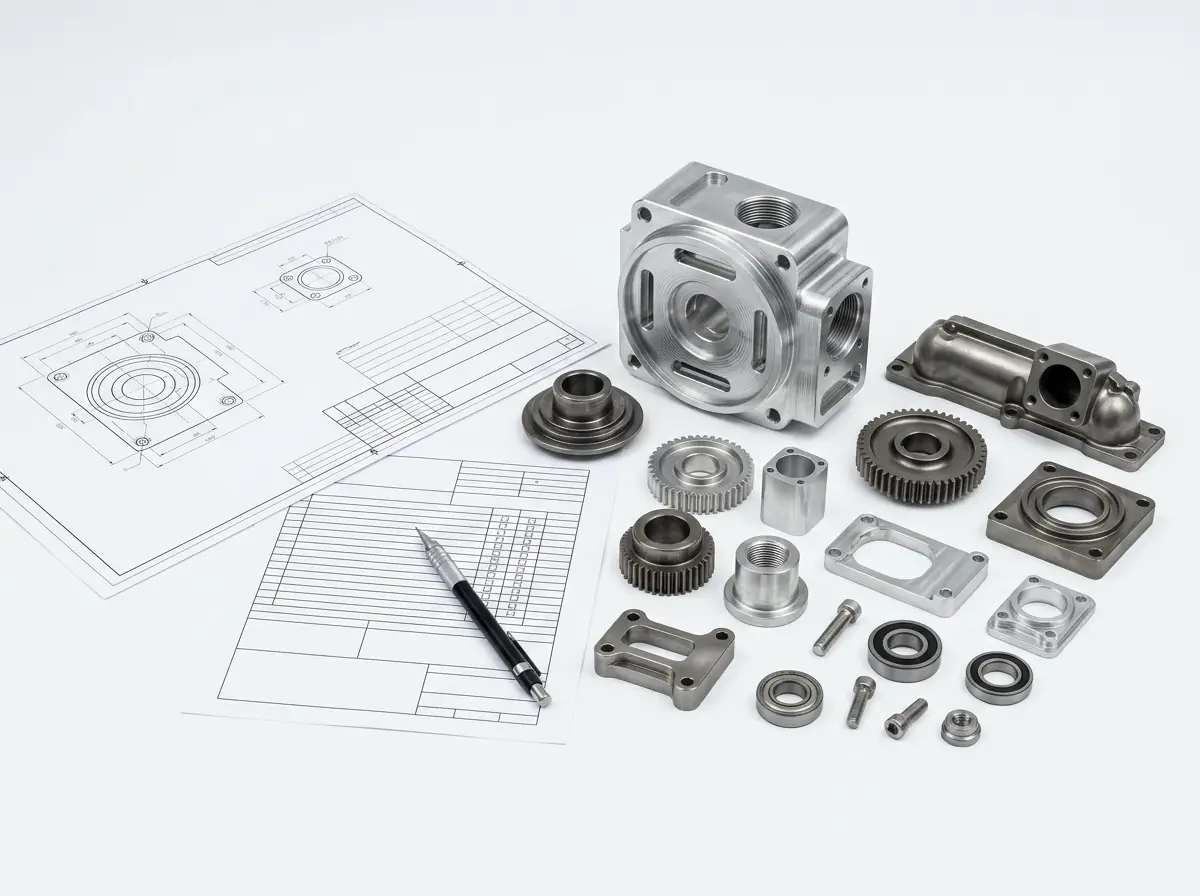
A buyer sent a machined housing package with a STEP file, a drawing, and a finish note, but the RFQ did not define which bore positions were CTQ, whether final inspection applied before or after coating, or what documentation needed to ship with the parts.

Solution

The RFQ checklist was used to align the revision, material condition, critical features, post-finish inspection state, and report expectations before pricing moved forward.

Result

The technical scope became clear in one consolidated review cycle, so the quote could be released against the same assumptions used for production planning and inspection.

Impact

The buyer had a cleaner basis for supplier comparison and less risk of re-quoting after scope corrections. The checklist improved decision quality before the purchase order stage.

Precision CNC RFQ case study image
Section 8 FAQ
FAQ

Frequently Asked Questions About RFQ Templates For Precision Parts

These are the questions buyers usually ask when they prepare a CNC quote checklist, compare suppliers, or tighten the RFQ package before submission.

If you have both, send both. The 3D model supports geometry review, while the drawing communicates revision, tolerances, GD&T, finish callouts, and inspection intent more clearly.

State the approved material family and note whether equivalent grades are acceptable. If the exact grade is required for function, corrosion resistance, certification, or downstream processing, define it explicitly.

Mark only the dimensions that control fit, function, alignment, sealing, or motion. Keep general tolerance separate from CTQ features so the quote reflects the true inspection burden.

If final acceptance depends on the coated or finished condition, say so directly in the RFQ package. Finished-condition notes remove a common source of misunderstanding.

Request CMM or FAI when the part has fit-critical geometry, high-risk tolerances, customer approval requirements, or documentation expectations that go beyond standard inspection.

Yes. The same structure works for prototype, bridge, and repeat orders. The main difference is that production RFQs should include volume assumptions and any recurring documentation needs.

STEP for 3D CAD and PDF for the drawing are the safest default combination for most machining RFQs.

Yes. If your package is almost ready but you want a technical review before full submission, you can send the current files and identify the open questions in the notes section.

Section 9 Final CTA Summary
Clear RFQs Get Better Answers

Use A Structured RFQ Template To Make Precision Quotations Easier To Review

A strong CNC machining quote template does more than list part details. It connects drawing revision, material grade, critical tolerances, GD&T references, finish state, CTQ features, and inspection scope in one reviewable package. That makes it easier to compare suppliers on the same requirements and easier for the reviewer to respond with fewer assumptions.

Technical Summary

Define the part, revision, material, quantity, finish, CTQ features, and inspection state clearly.

Commercial Summary

Add target timing, repeat expectations, packaging notes, and any required approval documents.

Action Summary

Use the downloadable RFQ checklist now, or send your package directly for engineering review.