
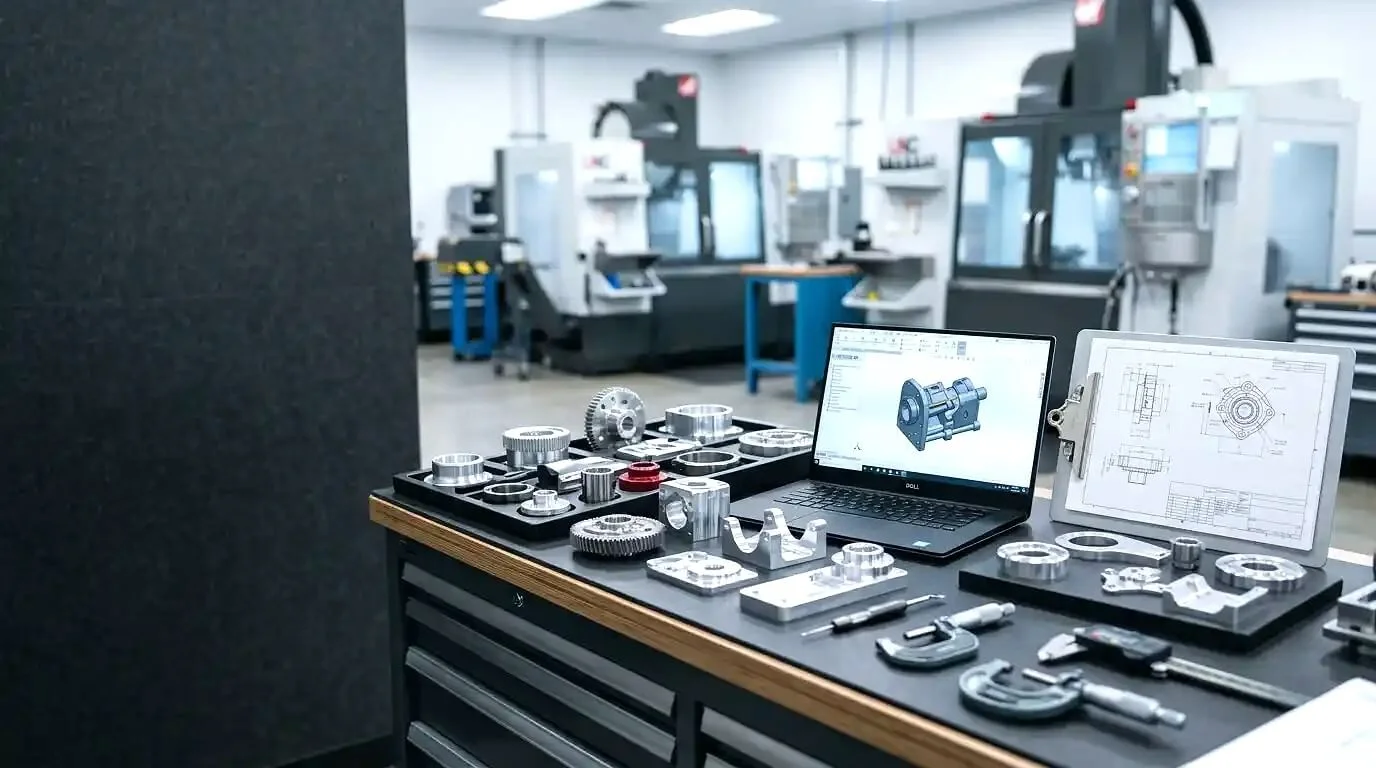
CNC Machining RFQ Process (How We Work)
If you’re searching for a clear CNC machining RFQ process step by step, you’re in the right place. Batnon is a precision CNC machining manufacturer supporting US and Canada engineering teams with a workflow designed to be fast, predictable, and CTQ-focused. Send the right inputs once, get a cleaner quote faster, and avoid back-and-forth.
Uploads are treated as confidential. If you need an NDA, tell us in your message and we’ll align before review.
What you’ll get on this page
A practical RFQ checklist, the quote timeline, how DFM works, and what inspection options to request—so you can get a precision CNC machining quote without surprises.
Fastest quote path
Send CAD + drawing + CTQs + material grade + quantity. That’s the difference between a fast quote and a quote you can build.
Best cost lever
Use CTQ-first tolerancing (tight only where function requires). Over-tolerancing is the #1 avoidable cost driver.
Quick jump
Want machining capability context? Open: CNC machining services.
What to Include in a CNC Machining RFQ (So We Can Quote Fast)
A quote is only as accurate as the inputs. The fastest way to learn how to get a CNC machining quote fast is to provide the files and CTQs that drive manufacturing decisions—material grade, tolerance intent, finish, quantity, and inspection requirements.
1) 3D CAD + revision
STEP is ideal for quoting and CAM planning. Include revision control so we quote the right geometry.
2) 2D drawing for CTQs
Use the drawing to call out GD&T, datums, and critical fits. CTQ clarity reduces rework and delays.
3) Order context
Quantity, finish, lead-time needs, and inspection/cert requirements determine process route and cost.
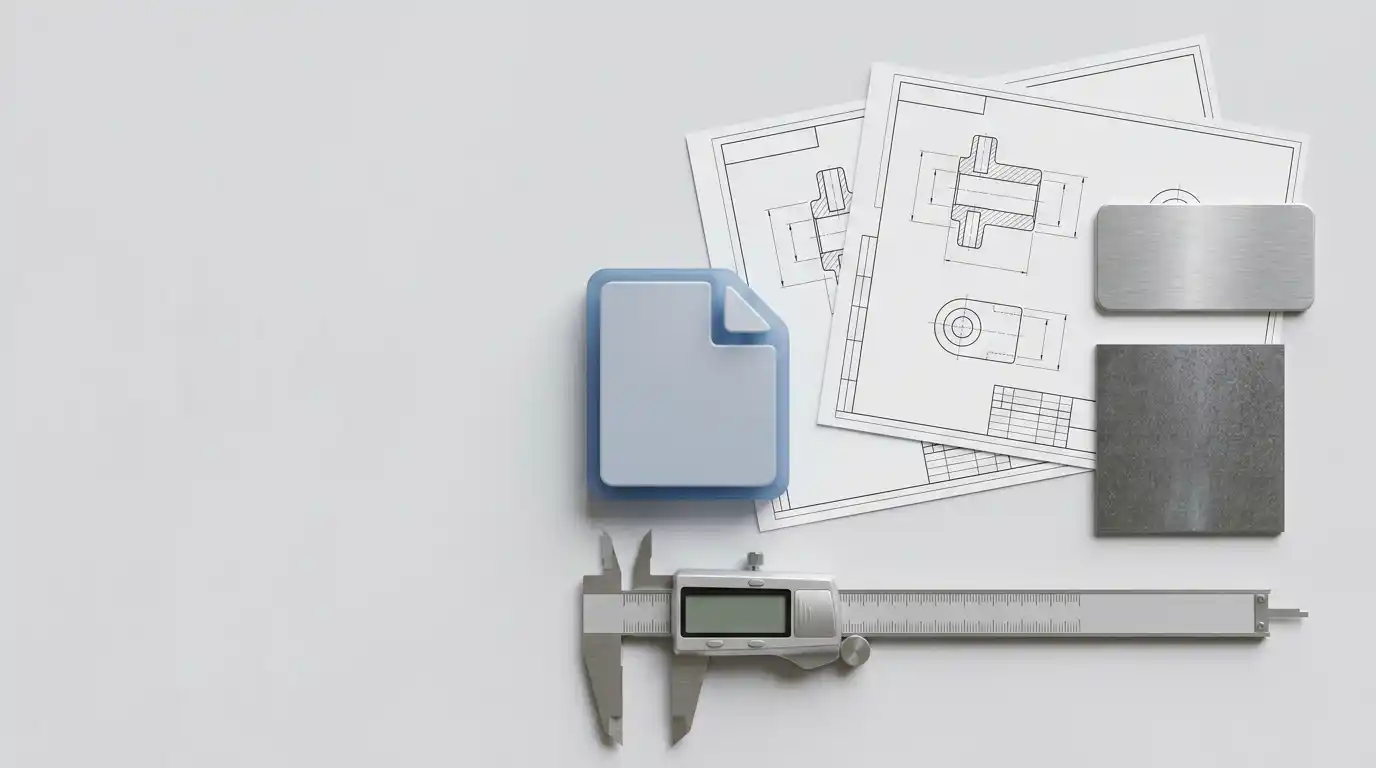
Send the right package once
When your RFQ includes CAD, drawing/CTQs, material grade, finish, quantity, and inspection intent, you avoid the common “one question per email” loop.
CNC Machining Quote Checklist (CAD + Drawing + Requirements)
Use this CNC machining quote checklist CAD and drawing list to shorten the quote cycle and keep assumptions explicit.
| Item | What to send | Why it matters | Common mistakes |
|---|---|---|---|
| Part name + revision | Part number, rev, and latest date | Prevents quoting the wrong geometry | Mixed revisions in CAD vs drawing |
| 3D CAD | STEP (preferred), Parasolid, or native CAD | Drives CAM strategy and cycle time | Mesh-only exports for machined parts |
| 2D drawing | PDF with GD&T, datums, notes | Defines CTQs and inspection plan | Missing datum scheme / fits |
| CTQs highlighted | Bores, sealing faces, datums, fits | Keeps tolerancing functional, not expensive | Tight tolerances everywhere |
| Material grade | Exact grade/condition (ex: 6061-T6) | Impacts machinability and cert options | Only stating “aluminum” or “steel” |
| Surface finish | Ra callouts + cosmetic faces | Finish changes time and sometimes size | No definition of cosmetic vs functional |
| Quantity | Prototype qty + forecast if known | Enables smarter setup and pricing | No target volume context |
| Secondary ops | Anodize, passivate, heat treat, etc. | Affects lead time and cost | Assuming supplier “knows” finishing intent |
| Threads / inserts | Thread spec, insert plan, torque needs | Drives tool access and durability | Short engagement or deburr access ignored |
| Inspection needs | FAI, CMM report, CoC/certs | Defines how CTQs are verified | Requesting reports without CTQ definition |
| Packaging | Scratch control, cleanliness, labeling | Protects critical surfaces | No packaging expectations stated |
| Ship-to (US/CA) | Destination + delivery preference | Lead time planning and logistics | No deadline / need-by date |
Don’t have a full drawing yet?
Send CAD + a short note listing CTQs (mating bores, sealing faces, datums) and the assembly context. We can quote with explicit assumptions, then confirm before release.
CNC Machining RFQ Process Step by Step (From Upload to Delivery)
This is our CNC machining RFQ process step by step. The goal is to move from “uploaded” to “quote you can trust” with minimal back-and-forth.

8-step workflow (high level)
RFQ received → engineering triage → DFM/questions → quote issued → revision lock → programming/setup → production + QA → packaging + shipping.
Why we review before quoting
Competitive quoting isn’t only speed—it’s avoiding surprise rework later. We validate tool access, fixturing, and CTQs so the quote is buildable.
How to shorten the cycle
Use the checklist and include your need-by date. If timing is critical, ask about split shipments (first articles first, balance later).
DFM Review Before Quoting (How We Prevent Surprises)
A key difference between a fast quote and a quote you can build is the CNC machining DFM review before quoting. We separate feedback into required changes (must fix to manufacture) and advisories (optional improvements to reduce cost/lead time or improve yield).
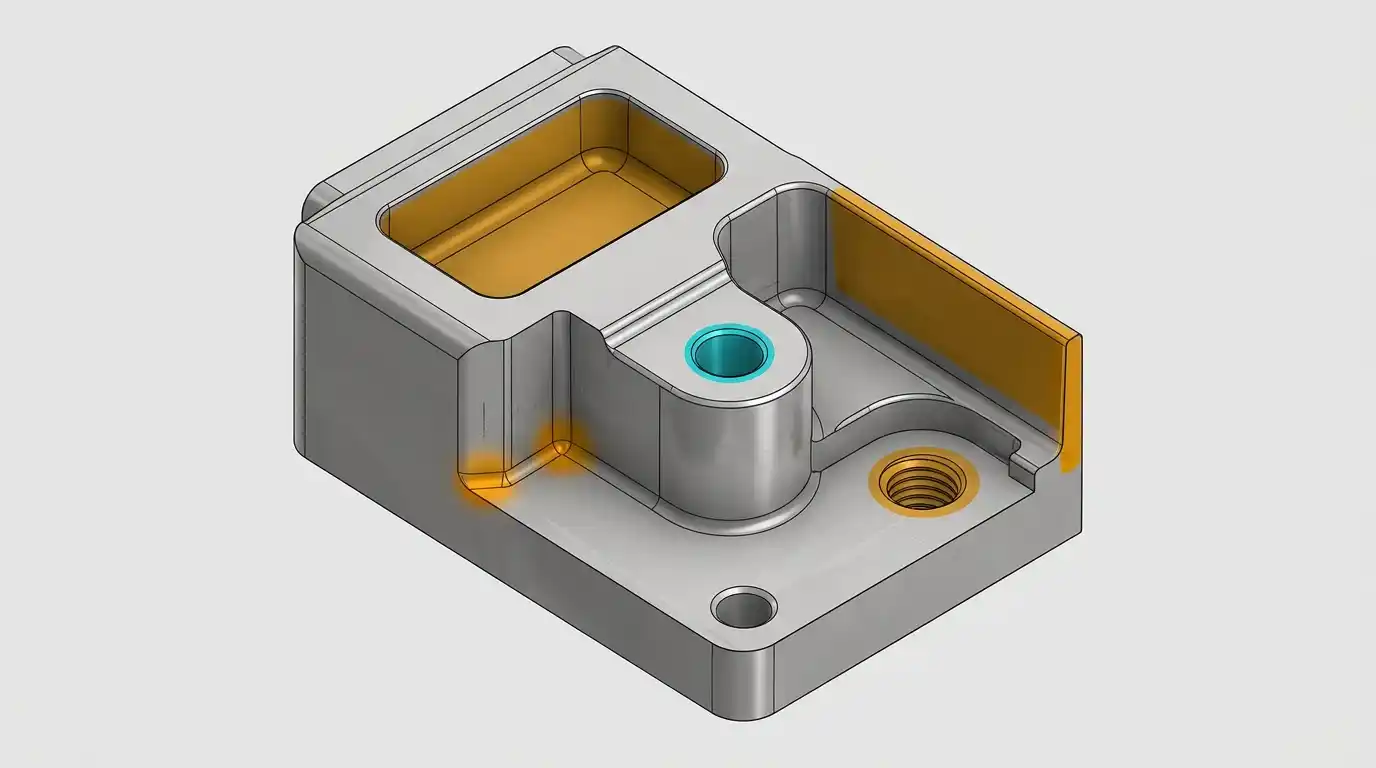
Common DFM items that change cost and lead time
Over-tolerancing, deep pockets/long reach tooling, thin walls, sharp internal corners, thread access for deburr, and weak datum/fixturing surfaces.
Required changes
Geometry/tool access issues that prevent stable manufacturing or inspection. We’ll propose fixes before quoting final.
Advisories
Optional changes that improve yield or reduce cycle time—keeping performance intact.
CTQ-only tolerancing
Hold tight where function requires it; leave the rest standard (ex: ISO 2768 medium) to control cost.
US & Canada purchasing tip
If you have a hard deadline, tell us the need-by date. Often we can offer a schedule option or split shipment to protect your build timing.
Quality Gates, Inspection Options, and What You’ll Receive
Precision isn’t only machine capability—it’s the inspection plan. For precision CNC machining RFQ for tight tolerance parts, we align CTQs with the measurement method and reporting level you actually need.
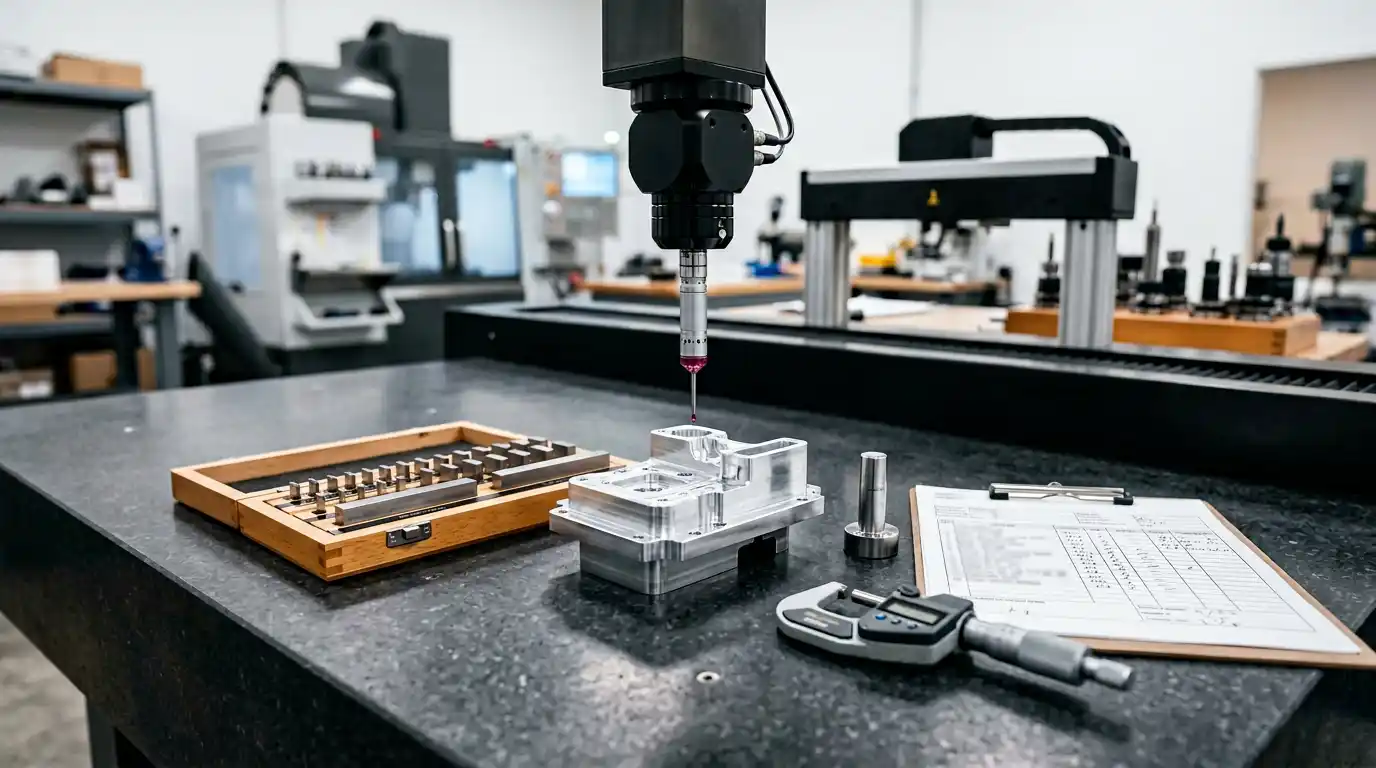
Inspection options (request only what you need)
Standard inspection is included by default. Add CTQ reports, full CMM reports, or first article inspection when your program requires documentation.
| Option | Best for | What you receive |
|---|---|---|
| Standard inspection | Most prototypes and non-critical parts | Functional verification to standard practice |
| CTQ dimensional report | Mating fits, sealing faces, critical bores | Measured results for specified CTQs |
| Full CMM report | Complex geometries or high audit needs | Comprehensive measurement report |
| FAI | First build of a production part | First article inspection package (as specified) |
| Material certs / CoC | Traceability programs | Certificates as requested |
Tip: If you specify a CTQ tolerance, we’ll tell you how we plan to hold and verify it. If we see risk, we’ll propose a geometry/tolerance change before production.
Communication Cadence (So Nothing Gets Lost)
Most RFQ frustration comes from unclear assumptions. We keep decisions explicit: revision lock before production, consolidated questions, and clear approval checkpoints for DFM changes.

Change control is part of quality
Revision lock, documented assumptions, and approval points reduce risk—especially when you’re moving from prototype to repeat production.
Single technical owner
We keep ownership clear so questions get answered without bouncing between contacts.
Consolidated questions
We group questions into one message whenever possible to avoid drip-feed delays.
Revision lock
We confirm the revision before programming and production to protect schedule and cost.
Case Study: Faster Quote, Cleaner First Build (Anonymized)
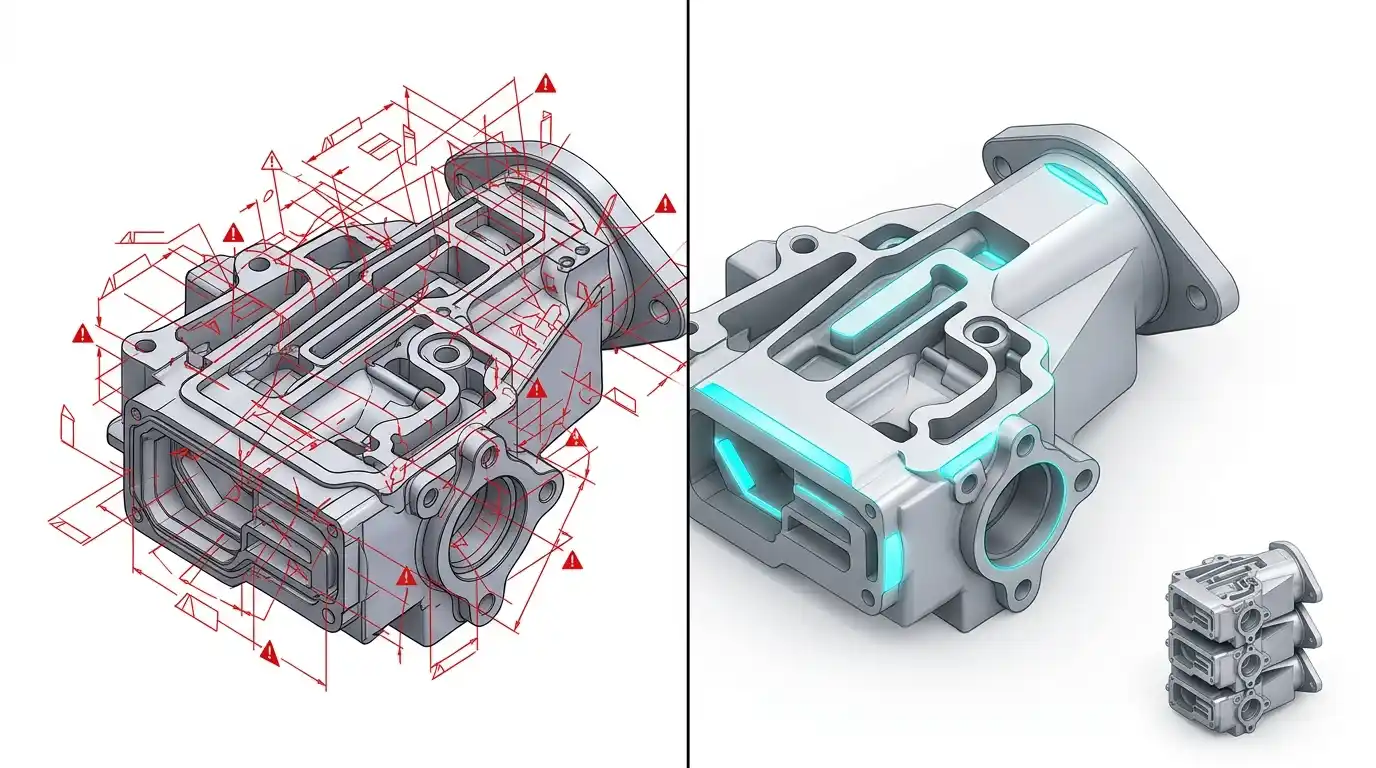
A common path we see for US/Canada engineering teams: early RFQs arrive with CAD only and “tight everywhere” tolerances. After CTQ clarification and a small DFM adjustment, the quote becomes faster to approve—and the first build is more stable.
What changed
Before: unclear CTQs, blanket tight tolerances, missing finish intent. After: CTQ-only callouts, clear datum scheme, and defined cosmetic faces—reducing iteration and scrap risk.
Fewer iterations
One clear RFQ package avoids multiple rounds of clarification.
Faster internal approval
Assumptions are explicit, making procurement review easier.
Lower scrap risk
CTQ-driven inspection focuses on what gates performance.
Ready to Send Your RFQ?
If you want to know how to get a CNC machining quote fast, send CAD + drawing + CTQ notes. We’ll respond with consolidated questions (if needed) and a quote you can action.
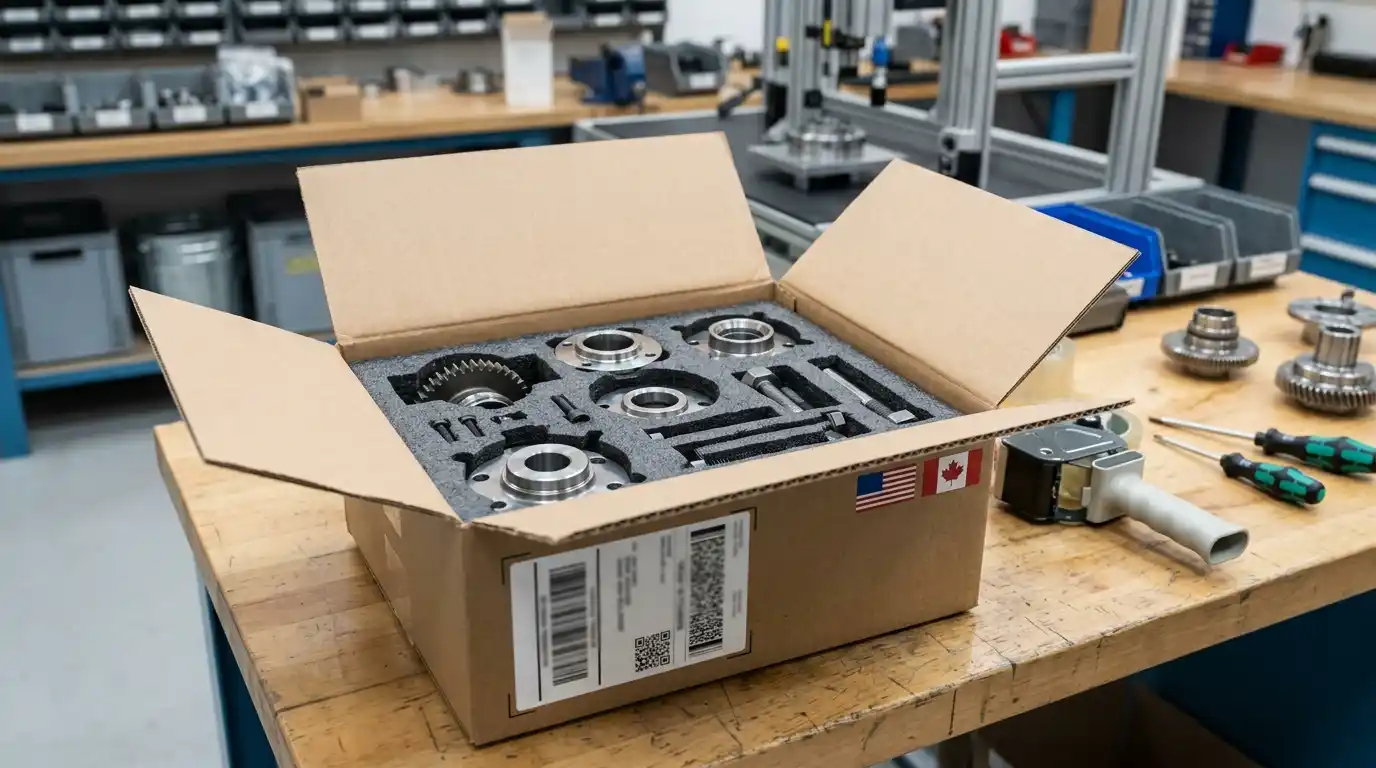
US & Canada delivery-friendly packaging
We protect critical surfaces with foam/separators and label parts clearly. If you have cleanliness or scratch-control needs, specify them in the RFQ.
Send your RFQ using your inquiry form
Use your existing RFQ button/form on this page. For fastest quoting, include: CAD + drawing/CTQs, material/grade, quantity, finish, and need-by date.
FAQ: CNC Machining RFQ Process
Common questions about the cnc machining rfq process, quote timing, DFM, and inspection.
How long does a CNC machining quote take?
For many RFQs, a quote can be prepared quickly once we have CAD, drawing/CTQs, material grade, quantity, finish, and ship-to details. Complex parts may require an engineering review so the quote is buildable (not just fast). The fastest path is to send the RFQ checklist items in one package.
What files do you need for an accurate CNC machining RFQ?
Ideal inputs are a 3D CAD model (STEP preferred) plus a 2D PDF drawing with GD&T/CTQs, material grade, surface finish requirements, quantity, and any inspection/certification needs.
Can you quote from CAD only (no drawing yet)?
Yes—many prototypes start with CAD only. For accuracy, add a CTQ note listing mating bores, sealing faces, datum intent, and critical fits/surface finish.
What tolerances are realistic for CNC machining?
It depends on material, geometry rigidity, datum strategy, and measurement method. A robust approach is CTQ-driven tolerancing: keep standard tolerances (e.g., ISO 2768 medium) for non-critical dimensions and tighten only features that gate performance.
What’s the difference between “required changes” and “advisories” in DFM?
Required changes must be addressed to manufacture reliably (tool access, unstable thin walls). Advisories are optional improvements to reduce cost/lead time or improve yield.
Can you support first article inspection (FAI) and material certifications?
Yes. If you need FAI, CMM reports, material certs/CoC, or other documentation, include it in the RFQ so we can quote accurately and plan inspection.
How do revisions/ECOs affect price and lead time?
We lock the revision before production. If a revision changes geometry, CTQs, or finish, it may change machining and inspection steps—affecting price and lead time. We’ll confirm impact before proceeding.
Do you ship to the US and Canada, and how do you handle packaging?
Yes—Batnon supports US and Canada buyers. Packaging is planned to protect critical surfaces (foam, separators, labeling). If you have cleanliness or scratch-control requirements, specify them in the RFQ.
Related: High performance plastics machining · Delrin/POM machining