
Robotics & Automation CNC Machining
Built for motion-critical assemblies: precision CNC machining for robotic arm joints, tight tolerance CNC machining for harmonic drives, and 5-axis CNC machining for robotic end-effectors—with DFM-first collaboration and inspection-ready deliverables.
STEP / IGES / SLDPRT / PDF accepted
- ±0.00019" tol. • Titanium • Magnesium • 5-axis CNC • ISO 9001

ISO 9001
Material traceability
CMM reporting
Revision Control
Why CNC Machining Powers Robotics & Automation
In an industry where every micron matters, our precision CNC machining delivers the repeatability, lightweight strength, and complex geometries required for robotic arms, cobots, end-of-arm tooling, and manipulators. We help OEMs reduce weight, increase speed, and achieve 24/7 reliability.
Unmatched Precision for Motion Control
±0.00019″/0.005mm tolerances on joints and harmonic drive housings ensure zero backlash and perfect repeatability in collaborative robots.
Lightweight Materials Expertise
Titanium, magnesium alloys, and high-strength aluminum for robotic arms that move faster while consuming less energy.
From Prototype to Production
Rapid prototyping CNC machining accelerates your cobot development from concept to deployment in days, not weeks.
Engineering Pain Points We Solve for Robotics & Automation
Robotics performance is often limited by small geometric errors that accumulate across the kinematic chain. Manufacturing decisions—especially around datums, fits, and inspection—show up as positioning error, vibration, or drift.
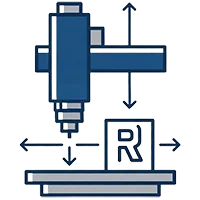
Motion-critical interfaces
Actuator housings, bearing seats, and gearbox interfaces where concentricity and alignment control matter.

Backlash & repeatability risk
Parts that influence backlash sensitivity: joint housings, bearing preload features, and mounting stack-ups.
DFM-first iteration
Tool access, thin walls, deep pockets, and realistic tolerance strategy before committing to production fixtures.
Our CNC Machining Capabilities for Robotics
Precision CNC Machining Services
We deliver unmatched accuracy and tight tolerances in every component.
- 5-axis simultaneous machining
- ±0.00019" tolerances standard
- Surface finishes to Ra 0.4 μm
Precision CNC Machining Services
Tailored solutions engineered precisely to your unique specifications.
- End effectors & grippers
- Custom robot arm linkages
- Sensor mounts & brackets
Precision CNC Machining Services
Rapid, high-quality prototypes that accelerate your product development.
- 1–5 day turnaround
- Functional testing parts
- Iterate designs instantly
What we machine for robotics & industrial automation equipment
custom CNC parts for industrial automation equipment and CNC machining for automated guided vehicle (AGV) components.
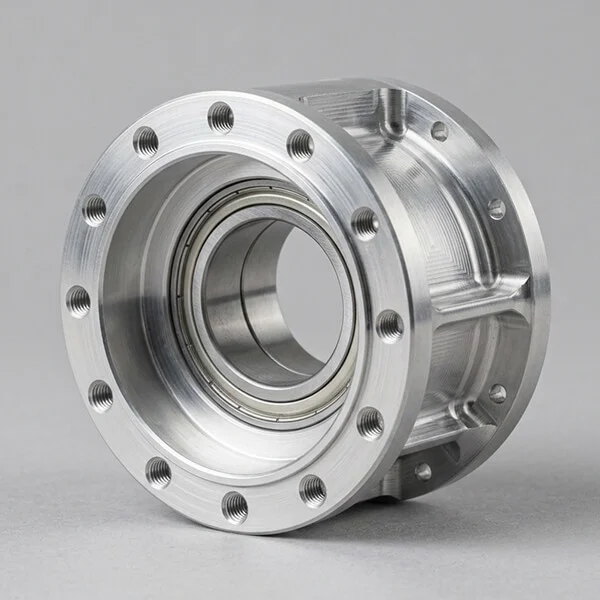
Joint housings & actuator housings
Focus: bearing fits, alignment features, and stable datum references for repeatability.
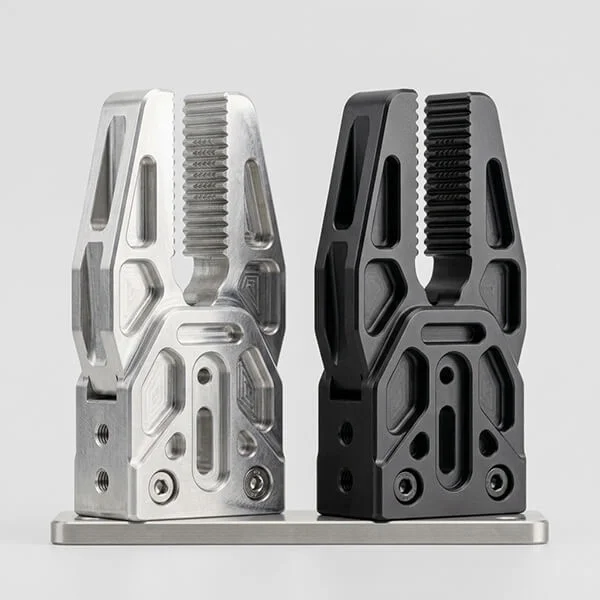
EOAT / end-effector components
Supports searches like 5-axis CNC machining for robotic end-effectors and custom gripper parts.
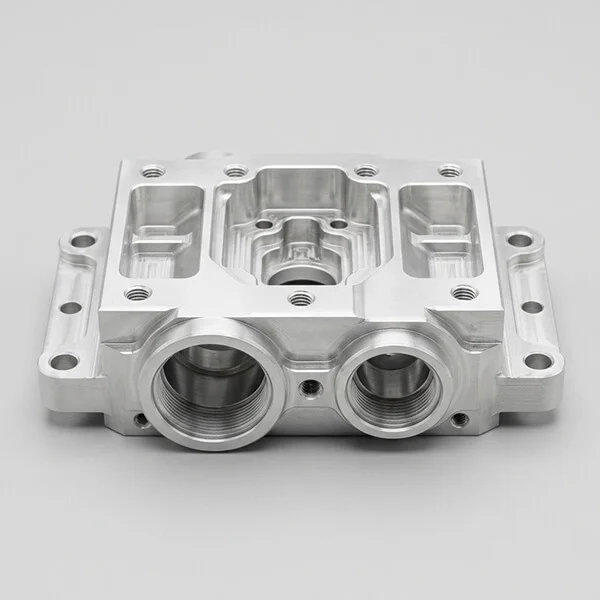
Sensor housings & mounts
Precision bores, alignment features, and rigidity for optical, vision, LiDAR, and force/torque sensors.
| Subsystem | Common machined parts | What to specify | Risk if missed |
| Motion joints & actuators | Actuator housings, bearing seats, gearbox / harmonic drive housings | Datum scheme, bearing/shaft fits (ISO 286), GD&T for coaxiality and position | Stack-up drift, backlash sensitivity, vibration, accelerated wear |
| EOAT (end-of-arm tooling) | Gripper fingers/jaws, tool changers, adapters | Interface datums, tool access, surface protection zones (masking notes) | Mis-pick, inconsistent grip, collision risk |
| Industrial automation hardware | Precision brackets, rails/gantry components, fixture plates | Flatness/parallelism, hole patterns, assembly sequence notes | Assembly rework, line downtime, calibration instability |
high precision robotic components, robotic joint precision machining, tight tolerance automation components.
Robotics machining procurement workflow (DFM → Inspection → Handoff)
A practical sequence you can reuse internally. It aligns with how leading platforms describe machining as part of robotics manufacturing strategy, and it reduces ambiguity when you outsource motion-critical parts.
Robotics & automation CNC machining workflow — from CAD upload to production handoff (fixture + QC plan).
Prototype CNC machining for robotics R&D projects
Use prototypes to validate fits and interfaces early, then freeze datums and CTQ features before volume. If you need speed claims, keep them until operations confirms.
Production handoff checklist
Freeze revision, confirm inspection sampling plan, then decide on fixture strategy (soft jaws / dedicated fixtures) based on volume and repeatability.
Prototype Lead Times & Capabilities
Standard Prototype
Lead Time: 5–7 business days
Simple to moderate geometries, aluminum/plastics. Includes basic DFM feedback and first‑article report.
1–10 parts
No MOQ
Expedited Service
Lead Time: 3–5 business days
Priority scheduling for urgent design validation or critical path projects. Additional fee applies.
Rush option
Dedicated support
Complex / Multi‑Axis
Lead Time: 7–10 business days
5‑axis, magnesium, titanium, deep cavities, or tight tolerances (±0.005mm). Full CMM inspection.
5‑axis capability
Full documentation
Prototype → Production Continuity
The prototype you approve is machined exactly the same way as your production run — same programs, same tooling, same inspection standards. No re‑qualification, no surprises.
Same Toolpaths
We use production‑intent CNC programs from the first prototype. No “quick‑and‑dirty” paths that need re‑writing later.
Same Workholding
Fixtures and soft jaws are designed for scalability, so your first part and your 10,000th part are clamped identically.
Same Documentation
CMM reports, FAIRs, and material certs are generated from the same inspection plan, ensuring continuity from prototype through production.
DFM Gate for Robotics Parts (Avoid Hidden Failure Modes)
micro-precision CNC machining for robotic sensor housings and aluminum CNC machining for robotic structural links.
Tool access
Deep pockets, internal corners, and long reach features increase deflection risk and inspection time.
Thin-wall behavior
Wall thickness decisions impact chatter, distortion, and whether functional fits remain stable after finishing.
Datum clarity
Without a datum scheme, “tight tolerances” are ambiguous—CMM interpretation varies and stack-up becomes guesswork.
Iterate Fast with DFM & Revision Management
Free DFM Review
Every prototype quote includes a detailed Design for Manufacturability analysis. We flag potential issues — thin walls, sharp internal corners, deep pockets — and suggest fixes before machining starts.
at no cost
Revision Management
Design changes happen. Submit your revised CAD with marked changes; we provide a delta‑quote and fast re‑run. We don’t treat every iteration as a new project.
Delta pricing
5–7 day re‑run
Prototype‑Optimized Toolpaths
We use high‑speed machining (HSM) and trochoidal milling to reduce cycle times and tool wear — essential for rapid iteration.
35% faster machining
| DFM checkpoint | What engineers often do | Better for robotics | Why it matters |
| Deep pockets | Maximize depth “because CAD allows it” | Keep depth-to-tool ratio reasonable; split into ops or redesign access | Reduces tool deflection and improves bearing seat integrity |
| Internal corners | Call out sharp corners for “perfect fit” | Add radius or use relief geometry (dog-bone) where needed | Avoids costly secondary processes and prevents assembly hacks |
| Tolerances everywhere | Apply tight bands to all dims | Apply tightness only to CTQ interfaces; relax non-critical dims | Controls cost and inspection effort without sacrificing performance |
Material Selection for Robotics CNC Machining
| Material | Where it shows up in robotics | Why engineers choose it | Notes |
| Aluminum 6061 / 7075 | Arm links, housings, brackets, EOAT bodies | High stiffness-to-weight, machinability, common finishing options | 7075 often used when higher strength is needed; verify finish constraints. |
| Stainless steel (304/316/17-4PH) | Wear parts, shafts, fastener interfaces, harsh environments | Strength + corrosion resistance; useful around fluids/cleaning cycles | Specify passivation requirements when needed. |
| Titanium (Grade 5) | High-end lightweight, medical/field robotics | Strength-to-weight and corrosion resistance in demanding environments | Cost and machinability considerations—DFM early. |
| Carbon steel (1018, 1045, A36) | Structural frames, base plates, high-load brackets, counterweights | Low cost, high strength, weldability, good damping | Requires coating (zinc, paint) for corrosion protection; not for wet environments. |
| Copper & Brass (C110, C360, C464) | Electrical contacts, bushings, heat sinks, pneumatic fittings | Excellent conductivity (thermal/electrical), machinability, corrosion resistance | Brass is often used for decorative or low-friction components. |
| Magnesium (AZ31B, AZ91D) | Ultra-lightweight arms, drone components, portable robotics | Highest strength-to-weight ratio among common metals, good damping | Flammability risk during machining; requires special coolant and permits. |
| POM / Delrin, Nylon | Gears, bushings, housings, insulation parts | Low friction, dimensional stability, lower mass | Verify moisture/creep behavior for your duty cycle. |
| PEEK | High-temp, chemical exposure, insulating applications | Thermal and chemical resistance in aggressive environments | Use only when needed; cost is higher. |
| Inconel (625, 718) | Extreme high-temperature components, chemical exposure | Maintains strength at high temperatures, excellent corrosion resistance | Very difficult to machine; plan for longer lead times and higher cost. |
| Kovar | Glass-to-metal seals in sensors, hermetic connectors, laser housings | Matches thermal expansion of glass and ceramics | Essential for vacuum and high-reliability applications. |
Component Map for Robotics & Automation
CNC is most reliable and effective way where geometry control drives system performance: joints, drivetrains, EOAT interfaces, and precision mounts.
Actuator housings
- monolithic CNC
- Sealed bearing interfaces
- Motor mounting flanges
Motion joints & actuators
- Gearbox / harmonic drive housings
- Bearing seats & preload spacers
- Gripper fingers & jaws
End-of-arm tooling (EOAT)
- Tool changers
- Mounting plates & adapters
- Sensor housings
- Optical mounts
- Calibration fixtures
Chassis & mobility
- Wheel hubs
- Chassis brackets
- Rail/gantry components
RFQ Readiness Checklist
| • 3D Model – STEP (.stp), IGES (.igs), or SolidWorks (.sldprt) |
| • 2D Drawing (PDF) – Critical dimensions, tolerances, GD&T, surface finish |
| • Material Specification – Exact alloy (e.g., 6061-T6 vs 7075) |
| • Finish Requirements – Anodize (Type II/III), Bead Blast, As-Machined, etc. |
| • Special Processes – Heat treatment, plating, passivation, welding, or secondary operations |
| • Inspection Level – CoC, Standard Report, CMM, or FAI |
| • Quantity – Prototype (1–10) or production (100–10k+) |
| • Special Instructions – Edge breaks, thread class, cosmetic zones, packaging needs |
| • Target Lead Time – Standard or expedited (rush orders) |
| • DFM Feedback Request – Request for design optimization or cost reduction |
Please provide all core information when submitting your RFQ to receive an accurate, fast quote.
Case: 28% Scrap Rate Eliminated on Robotic Actuator Housings
Alex Rivera,
Product Design Lead, Apex Motion Controls
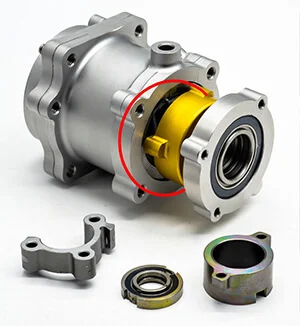
Challenge:
Robotic actuator housings had severe bore misalignment that caused bearing binding and 28% scrap rate. Every misaligned part meant rework, delayed robot arm assembly, missed customer deadlines, and thousands in lost revenue — the kind of problem that kept Marcus up at night.
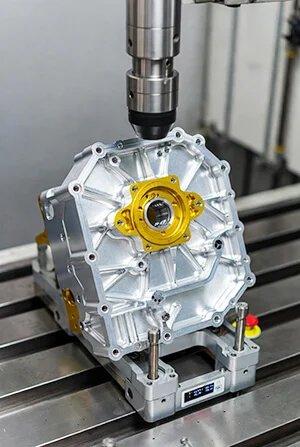
Our Solution:
We moved Marcus’s team from 3-axis to 5-axis CNC machining with in-process probing. This eliminated two setups and gave us full control over concentricity and bore alignment on every part.
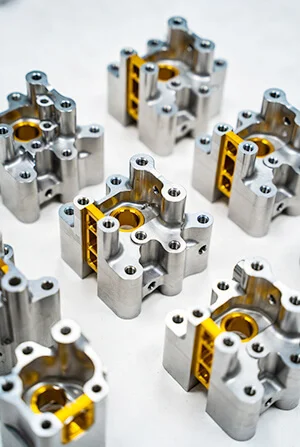
Results:
Scrap rate dropped from 28% → 2%
Concentricity held at 0.005mm
800 precision parts delivered in just 9 days

Impact:
Marcus met his robot launch deadline with weeks to spare
Field failures dropped to near zero
Project completed happily and on budget
Your CNC Machining Questions, Answered
No MOQ, ISO9001 certified, and precision down to ±0.005mm/0.00019in –
everything you need to know before your first quote.
What robotics parts are best suited for CNC machining?
Motion-critical interfaces—actuator housings, bearing seats, gearbox interfaces—and EOAT mounting components are common CNC candidates. CNC is most valuable when you need predictable geometry control and inspection documentation.
How should I specify tolerances for robotic joint components?
Start with function: bearing fits, gear alignment, and sensor datums. Use GD&T and a datum scheme so inspection interpretation is consistent. Tighten only CTQ features; relax the rest. Baseline tiers:
Do you support CMM reports and first article inspection for robotics parts?
Inspection documents can be provided based on your drawing requirements (dimensional reports, CMM reports).
Can you handle prototypes and production for collaborative robot (cobot) parts?
We support CNC machining services for collaborative robot (cobot) parts across prototyping and production planning. Production readiness typically requires revision control, fixture strategy, and a QC plan for CTQ features.
What should I upload for an accurate robotics quote?
STEP/IGES (or native CAD), a 2D drawing with GD&T/tolerance notes, material + finish, quantity, and CTQ features. For sensor mounts, explicitly define datums and alignment surfaces.
What tolerance can you achieve for robotic actuator components?
For critical robotic components such as actuator housings, bearing seats, and shaft interfaces, we can achieve tolerances down to:
- ±0.005mm (±0.00019") on critical features
- Concentricity and positional accuracy controlled to ≤0.01mm
More importantly, we don’t just control individual part tolerances —
we help optimize tolerance stack across assemblies, which is often the real cause of misalignment in robotics systems.
Can you help identify and fix tolerance stack issues in multi-part assemblies?
Yes — this is one of the most common issues we solve for robotics and automation customers.
Even when all parts are within tolerance, assemblies can still fail due to tolerance accumulation across interfaces.
We help by:
- Redefining datum structures across parts
- Tightening only critical alignment features
- Suggesting design-for-assembly improvements
This typically reduces system deviation from 0.2mm → <0.05mm and eliminates rework during assembly.
Turn Your Design Into Reality — Fast & Accurately
Upload your CAD. Get a fast online quote in 12h.
STEP / IGES / SLDPRT / PDF accepted
CNC parts for Robotics & Automation
Batnon provides robotics & automation CNC machining focused on motion-critical assemblies such as actuator housings, bearing seats, gearbox interfaces, and EOAT adapters. Engineering outcomes depend on a clear datum scheme, realistic tolerance strategy, and inspection planning for CTQ features. Our workflow uses a DFM gate (tool access, thin walls, deep pockets) followed by a process plan (setups, fixturing, probing) and optional inspection reporting. For tolerance tier baselines, use the RivCut tolerance guide; Batnon-specific capabilities must be confirmed via [VERIFY] during RFQ.
Entities / terms for retrieval
Robotics CNC machining; industrial automation CNC manufacturing; custom machined robot parts
End-of-arm tooling (EOAT); gripper fingers; tool changer; mounting plate adapters
Harmonic drive housing; gearbox alignment; bearing seat fit; preload spacers
GD&T; datum reference frame; CTQ (critical-to-quality) features; tolerance stack-up
CMM report; first article inspection (FAI); revision control; production handoff QC plan