
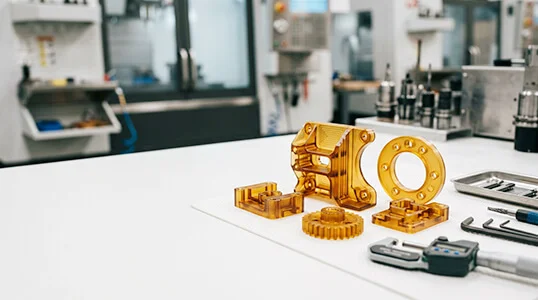
Ultem / PEI CNC Machining Services
Batnon provides ultem cnc machining and pei cnc machining services for high-temperature, electrically insulating components where flame/smoke and dimensional stability matter. Ultem (polyetherimide) is an amorphous high-performance plastic with a high glass transition temperature (~217°C) and inherent flame resistance. The machining “gotchas” are residual stress and heat: for ultem pei tight tolerance machining, we plan stock selection, symmetric roughing, and ultem cnc machining annealing stress relief so your parts stay flat, assemble cleanly, and remain cost-competitive from ultem pei prototype to production machining.
Need lower cost appearance prototypes? Compare with ABS CNC machining. Need low friction and stable fits? See Delrin / POM CNC machining.
Plastic Material Pages
Same structure across materials—different machining physics. Use these pages to compare DFM, tolerances, and cost drivers.
Engineering Plastics
You are here: Ultem / PEI. Compare plastics for DFM, tolerances, heat/chemical performance, and cost drivers.
High Performance Plastics
When temperature/chemicals/purity drive the spec:
PEEK · Ultem / PEI · PTFE · Vespel / PI
Fast selection hint
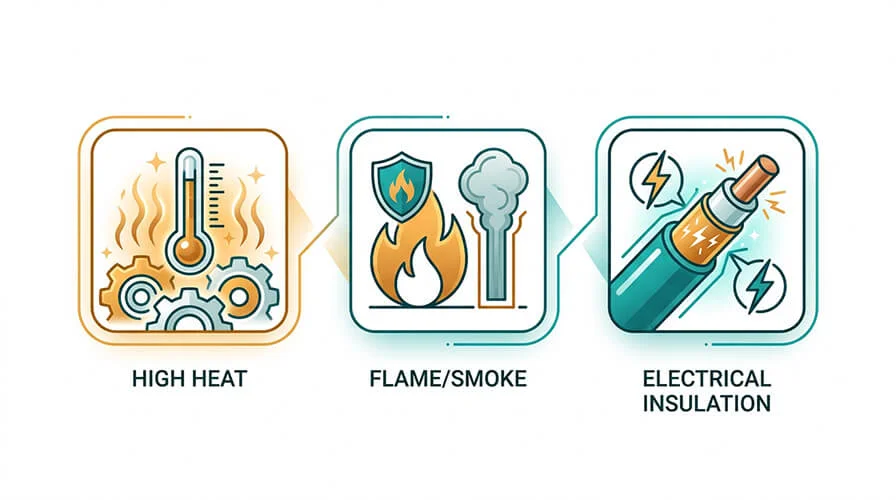
Ultem (PEI) is often chosen when you need high heat capability plus excellent flame/smoke performance and electrical insulation—common in aerospace interiors, electronics, and sterilizable tooling. The “gotchas” are stress and flatness: thin walls and asymmetric material removal can warp parts. For best results, define CTQs and consider annealing/stress relief when removing significant material.
- Best at: high-heat insulators, FST-focused parts, sterilizable fixtures
- Watch: residual stress, warpage, glass-filled abrasiveness (2300)
- Cost lever: CTQ-first tolerances + stress-relief planning
What Ultem (PEI) Is — and When to Choose It
Ultem (polyetherimide / PEI) is an amorphous high-performance thermoplastic known for high heat capability, inherent flame resistance, and strong electrical insulation. It’s common in aerospace interiors and electronics where FST (flame/smoke/toxicity) concerns matter. Successful high temperature plastic cnc machining in Ultem is about controlling heat and residual stress: sharp tools, stable support, symmetric stock removal, and—when needed—annealing/stress-relief planning.
Use case 1: Aerospace interior components
Ultem machining for aerospace parts is common for brackets, clips, and interior components where flame/smoke performance and weight reduction are important.
Use case 2: Electrical insulation + connectors
Ultem is used for ultem electrical insulation components machining such as connector insulators and high-temp housings—especially when dimensional stability matters.
Use case 3: Sterilizable tooling & fixtures
For medical/lab fixtures that see heat/steam cycles, Ultem offers a strong balance of heat capability and stability—define CTQs and edge requirements for repeatable assembly.
Key Polycarbonate Properties That Affect CNC Machining
PC’s strength is toughness and clarity—but heat and stress behavior determine whether it stays clear and crack-free. (Typical datasheets list PC glass transition around ~150°C, water absorption around ~0.1%, and CTE around ~66×10⁻⁶/K—useful context when designing for temperature swings.)
| Property driver | What it means for your part | Why it matters in machining |
|---|---|---|
| Impact resistance | Excellent toughness for guards, covers, and protective components | Supports thin clear panels better than brittle plastics, but thin walls can vibrate—fixture and toolpaths matter. |
| Transparency (amorphous) | Can be optically clear; edges and surfaces show tool marks easily | Define optical faces early; finishing is a major cost driver (deburr, polish, edge finishing). |
| Thermal behavior (Tg ~150°C) | Better heat performance than many commodity plastics | Heat still matters at the cutter—avoid rubbing; keep chips evacuating to reduce haze and smear. |
| CTE (thermal expansion) | Dimensions move with temperature more than metals | Design for clearance where needed, and tolerance CTQs intentionally (don’t over-tolerance cosmetic panels). |
| Chemical sensitivity | Certain solvents/cleaners can trigger crazing under stress | Material selection includes the cleaning environment; avoid sharp corners and consider stress relief for risk parts. |
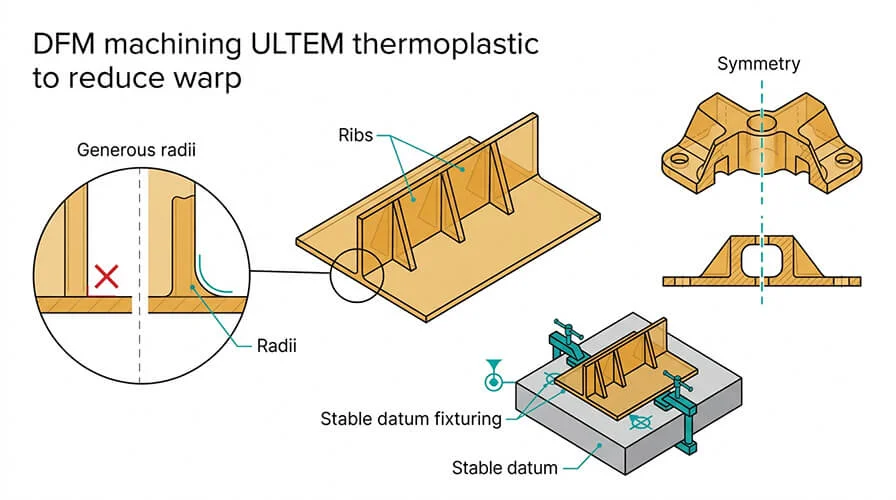
DFM Guide: Stress, Heat Control, and Cost in Ultem (PEI)
Ultem machines well, but tight tolerances depend on stress control. The highest ROI DFM moves are symmetric stock removal, generous radii, and ribbing for stiffness. For large plates or thin features, plan annealing/stress relief and define CTQs so inspection targets what gates performance.
Design radii to prevent stress
Inside corners are common crack starters. Add fillets and avoid knife-edge features—this reduces the chance of polycarbonate machining stress cracking prevention becoming a post-assembly issue.
Protective film + clean workholding
Keep protective film on clear sheet whenever possible. Use soft jaws and clean fixtures to avoid imprinting marks on cosmetic surfaces.
Rough → stabilize → finish CTQs
For warp-sensitive parts, roughing can release stress. A staged process (rough first, then finish) protects CTQs and reduces dimensional drift.
Practical “no regrets” specs to include in your RFQ
To make custom ultem cnc machining service quoting accurate and fast, specify:
- Color/grade: clear PC vs black; flame rating if required
- Optical/cosmetic faces: which surfaces must be clear / polish-ready
- Chemical exposure: cleaners, alcohols, oils, UV environment
- CTQs: mating bores/datum surfaces vs non-critical panels
Tolerances, Flatness, and Visual Expectations in Ultem
Ultem is dimensionally stable for a plastic, but CTQs still matter: thin walls can relax after machining, and glass-filled grades can show more texture. The most reliable route is CTQ-first tolerancing plus stress control (symmetric roughing and annealing when needed).
| CTQ Topic | What to expect | How to get it |
|---|---|---|
| Flatness & warp risk | Use ribs; keep wall thickness consistent; rough symmetrically; consider stress relief for large plates | Controls post-machining movement and improves repeatability. |
| Holes & inserts | Call out true-position/diameter only where assembly requires it; consider metal inserts for repeated torque | Improves durability and reduces stripped threads in plastics. |
| Glass-filled surface texture | Define cosmetic faces; avoid over-specifying polished finish on 2300 | Glass can print texture; polishing everywhere increases cost. |
| Cleaning/coolant compatibility | Avoid petroleum-based coolants when cracking risk matters; align cleaning agents to end-use | Reduces risk of stress cracking and cosmetic haze. |
| Standard vs tight tolerances | Use ISO 2768 medium for non-critical dimensions; tighten only CTQs | Keeps ultem pei tight tolerance machining cost-competitive. |
Post-Processing, Cleaning & Packaging (As Required)
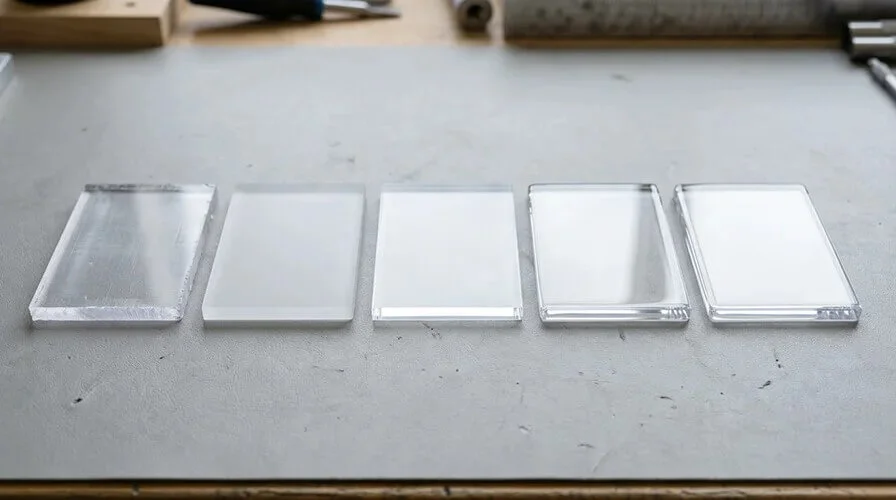
Polycarbonate often goes into customer-facing or safety-facing assemblies. We treat scratch control and contamination control as part of the manufacturing process—especially for ultem cnc machining optical clarity applications.
Deburr + edge finishing
Clean, safe edges reduce crack initiation and improve appearance. We can edge-break consistently and protect corners for guard panels.
Polishing for transparency (targeted)
When transparency is critical, polishing can be applied to specific faces/edges. Mark optical areas so the finishing cost is applied only where it helps.
Protective packaging
Clear parts scratch easily. Film, separators, and clean packaging reduce handling marks—especially important for display-visible covers.
Common Polycarbonate CNC Machining Applications
These are typical RFQs for cnc polycarbonate light pipe machining, guards, and clear covers—where PC’s toughness and transparency are valuable.
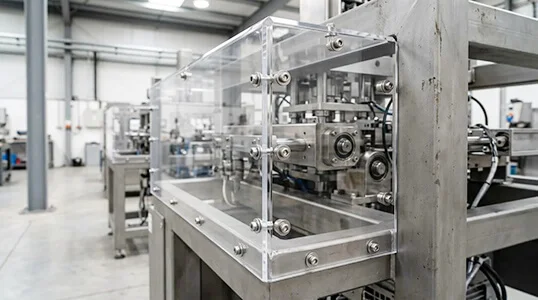
Machine guards & safety covers
Clear guard panels and safety shields with mounting holes and edge finishing to reduce stress concentration.
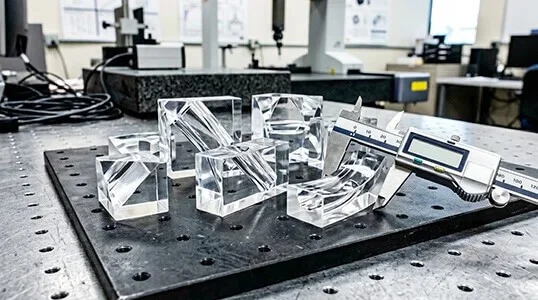
Light pipes & optical blocks
Clear PC components for indicators and inspection windows—where edge clarity and surface control matter.
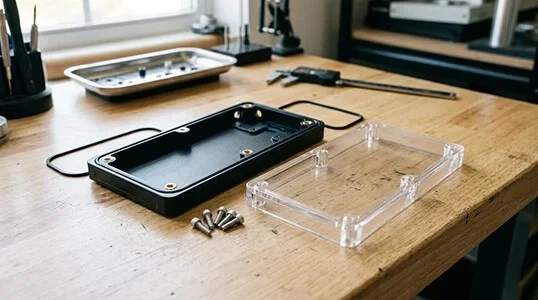
Covers & protective housings
Transparent lids and covers that must survive impact and handling—often paired with gaskets and threaded hardware.
Polycarbonate Grades (If Specified)
If you already specify a particular PC grade (clear vs tinted, FR grades, UV-stabilized, or filled), we’ll match it. If not, we can recommend based on impact needs, optical requirements, and chemical exposure.
How to specify quickly
When requesting ultem cnc machining, include:
- Grade intent: clear PC vs black PC; FR/UV requirements
- Optical intent: which faces must be clear/polish-ready
- Environment: chemicals/cleaners, UV exposure, temperature range
If you’re unsure, tell us the failure mode (cracking/crazing, scratching, haze, fit drift) and we’ll recommend.
FAQ: Ultem / PEI CNC Machining
Common questions about transparency, stress cracking, and material selection for ultem cnc machining.
Ultem (PEI) vs PEEK—what should I choose for CNC machining?
Choose Ultem (PEI) when you need high heat capability plus excellent flame/smoke performance and electrical insulation in an amorphous polymer. Choose PEEK when you need higher mechanical/wear performance and chemical resistance in a semi-crystalline polymer—often at higher material cost.
Which Ultem grade is best for machining—ULTEM 1000 or ULTEM 2300?
ULTEM 1000 is unfilled and often selected for electrical properties and clean machining. ULTEM 2300 is 30% glass-filled for higher stiffness and dimensional stability, but it’s more abrasive to tools and can show a more textured surface.
Do you recommend annealing for ultem CNC machining?
Yes for warp-sensitive or tight-tolerance parts. Annealing (stress relief) helps reduce machining-induced residual stress that can cause warping, cracking, or dimensional drift—especially when removing significant material or machining thin walls.
What tolerances are realistic for ultem pei tight tolerance machining?
Ultem can hold precise tolerances when the geometry supports stable fixturing. The most reliable approach is CTQ-driven tolerancing: hold tight datums/bores only where functional, and use standard tolerances elsewhere (e.g., ISO 2768 medium) to reduce cost and scrap risk.
Why can Ultem parts warp after machining?
Warping is usually driven by residual stress (from stock, machining heat, or asymmetric material removal), thin sections, and insufficient support during machining. Symmetric roughing, ribs, generous radii, and annealing/stress-relief planning help reduce risk.
What coolants should be used for PEI CNC machining services?
Many shops avoid petroleum-based coolants on Ultem because they may contribute to future cracking. Water-soluble coolants, air blast, or light mist strategies are commonly used; confirm compatibility with your cleaning and end-use environment.
What finishes are common for Ultem CNC machined parts?
Common finishes include as-machined, fine bead-blast (frosted), and targeted polishing on edges or cosmetic faces. Ultem is naturally amber and may appear slightly frosted after machining; define which faces are cosmetic vs functional to control cost.
What applications are a good fit for ultem machining for aerospace parts and electronics?
Typical applications include aerospace interior brackets, electrical connector insulators, medical sterilization fixtures/trays, semiconductor equipment insulators, and high-temperature housings where flame/smoke performance and dimensional stability matter.
Polycarbonate CNC Machining for Prototypes and Production
Batnon supports Polycarbonate/PC CNC machined parts for engineering teams worldwide—from rapid prototypes to repeat production. Share your optical/cosmetic intent, chemical exposure, CTQs, and quantity, and we’ll build a stress-aware machining and inspection plan so parts stay clear, crack-free, and cost-competitive.
For higher temperature or aggressive chemistry, use: High Performance Plastics CNC Machining.
Explore Other Plastic Materials
Compare machining behavior, tolerances, and DFM notes across plastics:
- Engineering plastics: Delrin / POM · Nylon / PA · ABS · Ultem / PEI
- High performance plastics: PEEK · Ultem / PEI · PTFE · Vespel / PI
If you’re unsure where to start, tell us the failure mode (scratching, crazing, haze, fit drift, temperature, chemicals, purity) and we’ll route you to the right material page.