
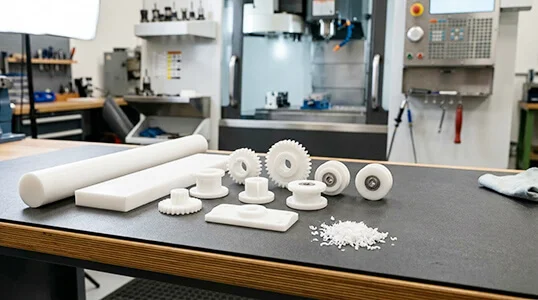
Delrin / POM CNC Machining Services
Batnon provides delrin cnc machining (acetal/POM, polyoxymethylene) for engineers who need clean edges, reliable fits, and repeatable wear performance—without paying for tolerances that don’t change function. From delrin cnc machining services for prototypes to repeatable production runs, we control chip evacuation, tool sharpness, and workholding so you receive precision delrin cnc machining parts that assemble cleanly and stay cost-competitive.
Also searching for acetal cnc machining or pom cnc machining? Delrin/POM is one of the most machinable engineering plastics for functional parts.
Plastic Material Pages
These pages share the same structure but focus on different resins. Use them to compare machining behavior, tolerances, and design rules.
Engineering Plastics
You are here: Delrin / POM. Explore the other engineering plastics pages:
High Performance Plastics
When temperature/chemicals/purity drive the spec:
PEEK · Ultem / PEI · PTFE · Vespel / PI
Fast selection hint
Delrin is often chosen when you need dimensional stability, low friction, and crisp machining. If the part must be tougher under impact, check Nylon/PA; if it must be clear or impact-resistant, check Polycarbonate.
- Best at: bores, gears, bushings, wear pads
- Watch: thin plates, heat buildup, chip wrapping
- Cost lever: CTQ-only tight tolerances
What Delrin (Acetal / POM) Is — and When to Choose It
Delrin® is an acetal homopolymer (POM-H). In CNC machining it’s a go-to engineering plastic when you want clean edges, stable fits, and low-friction sliding behavior. For teams sourcing acetal cnc machining service for low friction components, Delrin is often the fastest path to a part that behaves predictably in assembly.
Use case 1: Bushings & rollers
Choose Delrin for delrin cnc turning for bushings and rollers when roundness, smooth motion, and repeatable press fits are CTQ.
Use case 2: Gears & wear components
For delrin pom cnc machining for gears and bushings, Delrin provides low friction and crisp teeth geometry with cost-effective machining.
Use case 3: Fixtures & manifolds
Delrin is popular for delrin cnc milling for manifolds and fixtures where stiffness and clean threads support repeat setups and assembly.
Key Delrin / POM Properties That Matter in CNC Machining
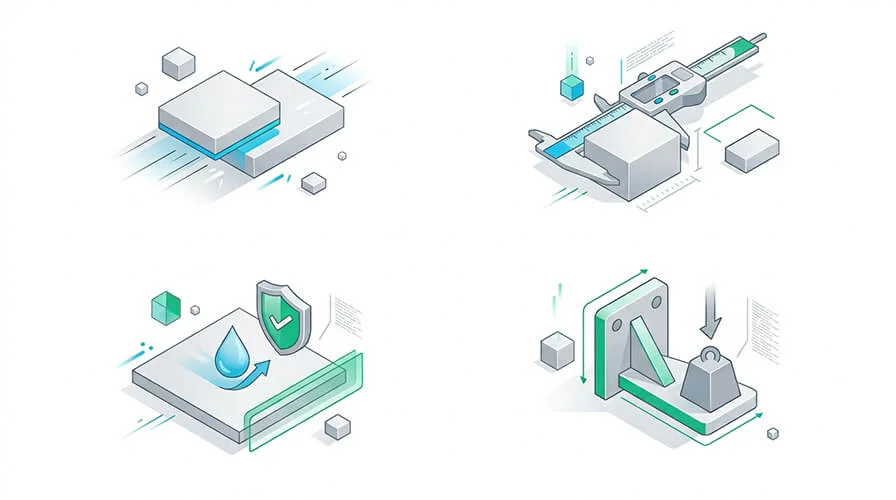
Instead of listing every datasheet value, this section focuses on the properties that affect machining outcomes: edge quality, stability, and how the part behaves under load and humidity.
| Property driver | What it means for your part | Why it matters in machining |
|---|---|---|
| Dimensional stability | Better size repeatability than many plastics in typical shop and field conditions | More predictable bores, fits, and hole patterns—great for precision assemblies. |
| Low moisture absorption plastic | Less swelling in humidity than many nylons (application dependent) | Improves repeatability for machinable acetal (POM) plastic for tight tolerance parts. |
| Low friction engineering plastic | Sliding behavior supports guides, wear pads, and gears | Finish strategy can target friction faces instead of polishing everything. |
| Creep resistance | Holds load better than many commodity plastics | Bosses, clamps, and fixtures maintain function longer. |
| Chemical resistance (practical) | Often compatible with fuels, oils, and many solvents (verify chemistry) | Useful for non-extreme fluid handling components and industrial environments. |
Delrin vs Nylon (quick decision)
If you’re deciding “Delrin vs Nylon,” use this rule-of-thumb:
- Choose Delrin/POM for precision fits, low friction, and moisture stability.
- Choose Nylon/PA for higher toughness and abrasion resistance—but plan for moisture-driven size change.
Deep dive: Nylon / PA CNC Machining Services.
Machining Notes (DFM): Chip Control, Thin Walls, Threads & Inserts
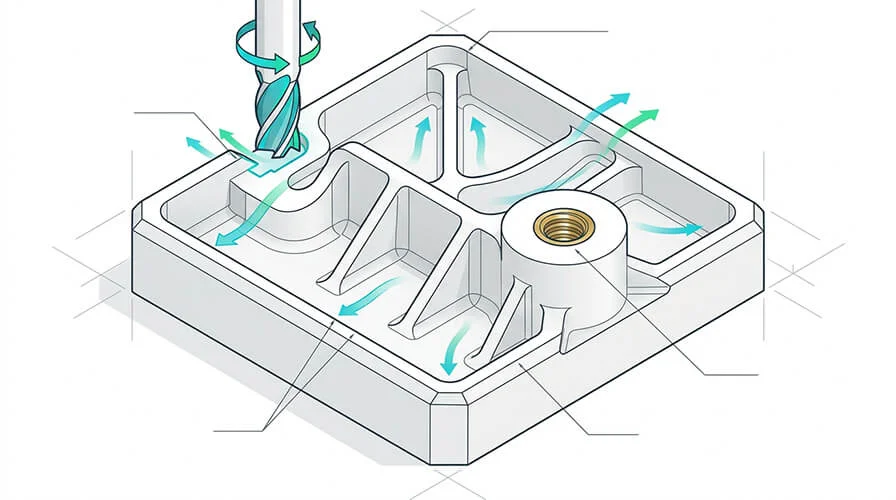
Delrin machines “clean,” but defects usually come from heat and chip behavior. The goal is controlled chip evacuation and geometry that resists vibration—especially for thin features.
| DFM item | Recommendation | What it prevents |
|---|---|---|
| Chip control | Keep tools sharp, avoid rubbing, prioritize chip evacuation in slots/pockets | Stringy chip wrapping, heat marks, edge fuzz. |
| Tool choice (high level) | Use sharp carbide; choose flute counts that clear chips for deep pockets | Re-cutting chips and poor finish on internal walls. |
| Thin walls | Add ribs; keep wall thickness consistent; avoid tall thin webs | Chatter, taper, scallops, and dimensional drift. |
| Snap-fits | Use generous radii at roots; validate by test builds | Cracking from stress risers; unpredictable assembly force. |
| Threads & inserts | Threads can work for light duty; use inserts for repeated torque and higher clamp loads | Stripped threads and long-term creep under fastener load. |
Cost control (DFM-led)
For delrin cnc machining tolerances and surface finish, cost is usually driven by three things: setups, tight tolerances everywhere, and unnecessary finishing.
- CTQ-only tolerances: tighten bores/datum features; relax hidden faces
- Reduce setups: design datums and part orientation to minimize flips
- Finish only where needed: friction faces and cosmetic faces—not the whole part
Tolerances & Surface Finish Guidance for Delrin CNC Machining
Delrin can hold practical CNC tolerances, but the most robust results come from CTQ-driven specification and geometry that resists movement during clamping and cutting.
| Topic | What’s realistic | Where it fails |
|---|---|---|
| Boress & fits | Very achievable when wall thickness supports stiffness and heat is controlled | Thin sleeves can deform during clamping; support features are key. |
| Large thin plates | Achievable with balanced machining and ribbing where allowed | Stress release can cause movement after machining, especially with deep pocketing. |
| Surface finish | As-machined satin is typical; matte and deburr options can improve handling/cosmetics | Over-finishing can round edges or change fit—define cosmetic faces clearly. |
Post-Processing, Cleaning & Packaging (As Required)
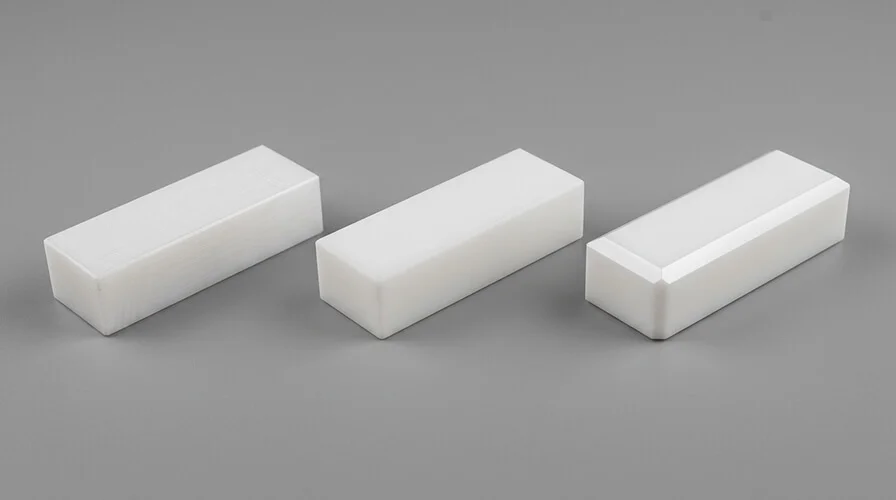
For most Delrin parts, the best result is a controlled edge break and a clean as-machined surface. For sensor-adjacent or cosmetic builds, cleaning and packaging can be scoped to your requirements.
Deburr + edge break
Prevents shaving during assembly and improves handling. Specify edge intent so CTQ fits aren’t overworked.
Cleaning (by request)
Removes chips and residue for cosmetic parts or contamination-sensitive assemblies.
Packaging (by request)
Protects surfaces and keeps parts organized for kitting and line-side assembly.
Common Delrin CNC Machining Applications
Delrin is common anywhere sliding wear, stable fits, and repeatable machining are needed—especially in automation and industrial equipment.
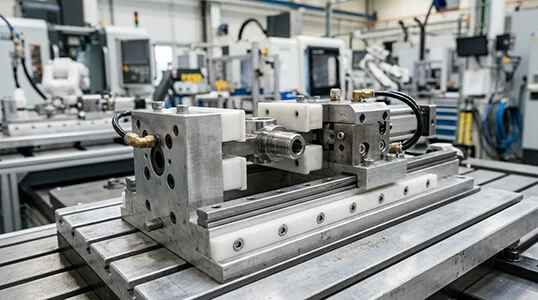
Automation & fixtures
Wear pads, guides, grippers, and nest plates—when you want repeatability and low friction at speed.
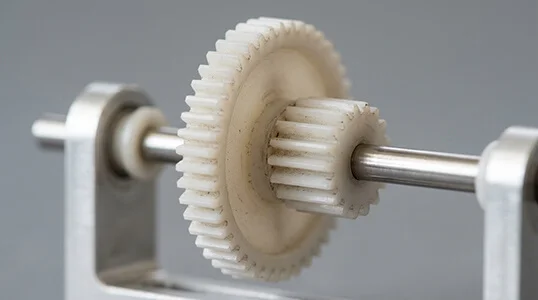
Gears, bushings, rollers
Quiet motion and good wear behavior for many mechanical interfaces (validate load and temperature).
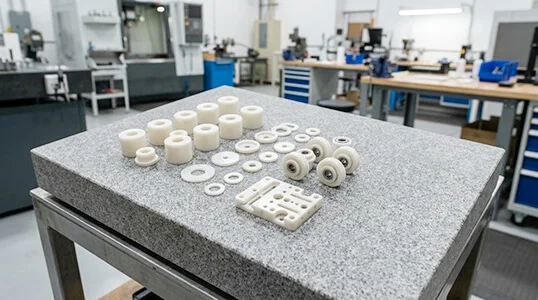
Inspection-ready builds
For repeat production, we align inspection to CTQs so you get evidence where it reduces risk.
Typical parts we see
- Wear strips, slide plates, guides, gripper pads
- Bushings, rollers, spacers, washers, gear components
- Fixture plates, alignment tools, sensor mounts, insulators
- Non-extreme fluid components (verify chemistry): spacers, manifolds, valve parts
Delrin / Acetal Grades (If Specified)
If you already specify a grade/brand, we’ll match it. If not, we can recommend a practical option based on wear, friction, environment, and whether black/natural color matters for your assembly.
How to specify quickly
When requesting delrin cnc machining services, include the following to avoid back-and-forth:
- Grade intent: general-purpose vs regulated vs filled/wear-optimized
- Color: natural vs black (if needed for optics/identification)
- Operating environment: temperature, humidity exposure, lubrication, chemicals
If you’re unsure, tell us how the part fails (wear, fit drift, cracking, creep) and we’ll recommend.
FAQ: Delrin / Acetal CNC Machining
Practical questions about resin selection, DFM, and what drives cost and quality in delrin cnc machining.
Delrin vs Nylon for CNC machining—which is better?
Choose by the dominant requirement. Delrin/POM is often preferred when dimensional stability, crisp machining, and low friction are key. Nylon/PA is commonly chosen when toughness and abrasion resistance matter, but its higher moisture absorption can affect size in humid or wet environments. If fit is CTQ, Delrin is frequently the first resin to evaluate.
What tolerances are realistic for Delrin CNC machining?
Delrin can hold practical CNC tolerances when features are designed for stiffness and heat control. The most reliable approach is CTQ-driven tolerancing: apply tight tolerances to bores, datums, and mating faces, and use standard tolerances elsewhere to keep cost controlled.
Why do Delrin parts show burrs or fuzz?
Burrs and fuzz are usually caused by dull tooling, rubbing (too high RPM with too low chip load), or chip re-cutting. Sharp tools, correct chip load, and good chip evacuation reduce fuzz and improve edge quality.
Are threads in Delrin strong enough, or should I use inserts?
For occasional assembly, machined threads may be acceptable. For repeated torque cycles, higher clamp loads, or service where creep matters, inserts are usually more durable. A good design uses a properly sized boss and lets the fastener load pull the insert into the plastic.
How do you keep cost competitive for precision Delrin CNC machining parts?
We keep costs down by selecting the right stock form, reducing setups, using DFM to avoid fragile features, and applying tight tolerances only to CTQ features. This is especially important for precision delrin cnc machining parts where over-spec can drive cost without improving function.
How do you prevent warping in Delrin CNC machining?
We manage heat and stress release: stable workholding, balanced material removal, controlled cutting parameters, and (when needed) process steps that reduce movement on thin plates or deep pockets. Defining CTQs allows the machining plan to prioritize stability where it matters most.
Delrin CNC Machining for Prototypes and Production
Batnon supports Delrin/acetal CNC machined parts for engineering teams worldwide—from rapid prototypes to repeat production. Share your operating environment, CTQs, and quantity, and we’ll confirm the right POM choice, DFM, and inspection plan so parts assemble cleanly and remain cost-competitive.
For higher temperature or aggressive chemistry, use: High Performance Plastics CNC Machining.
Explore Other Plastic Materials
Compare machining behavior, tolerances, and DFM notes across plastics:
- Engineering plastics: Delrin / POM · Nylon / PA · ABS · Polycarbonate / PC
- High performance plastics: PEEK · Ultem / PEI · PTFE · Vespel / PI
If you’re unsure where to start, tell us the failure mode (wear, fit drift, temperature, chemicals, purity) and we’ll route you to the right material page.