
Materials For CNC Machining
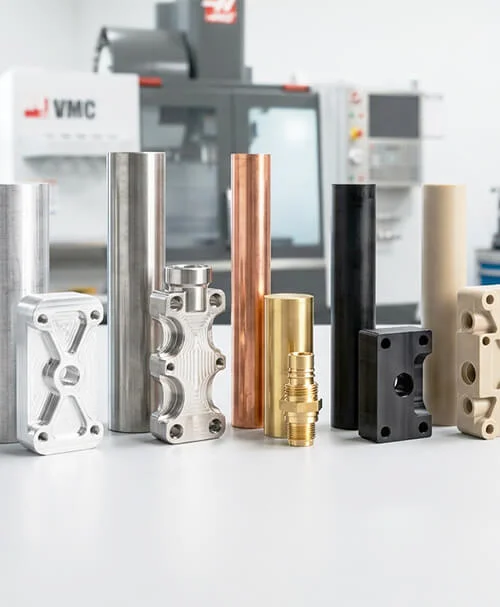
Choose CNC machining materials that match real-world loads, environment, and finish requirements. This is a practical CNC machining material selection guide—covering CNC aluminum machining, CNC stainless steel machining, CNC titanium machining, CNC plastic machining, and high-performance options like PEEK CNC machining and Delrin POM CNC machining.
- Aluminum (6061, 7075, 5052) – Lightweight & anodizable
- Stainless Steel (303, 304, 316L, 17‑4PH) – Strength & corrosion resistance
- Titanium (Grade 5 Ti‑6Al‑4V) – Highest strength‑to‑weight ratio
- Engineering Plastics (POM/Delrin, Nylon, PEEK, PTFE, ABS, PC) – Versatile & lightweight
- Brass, Copper & Carbon Steel – Conductivity, wear resistance & durability
STEP / IGES / SLDPRT / PDF accepted
- ±0.00019" tol. • Titanium • Magnesium • 5-axis CNC • ISO 9001

ISO 9001

Material traceability

CMM reporting

Revision Control
How Material Choice Drives Part Performance
The fastest programs treat material as an engineering decision—not a dropdown. Competitor best-practice pages structure this as: requirements → candidates → trade-offs → verification. Use this guide to avoid the common failure modes: over-spec cost, under-spec reliability, and finish-related rework.
Start With Functional Requirements
Load path, stiffness, wear, corrosion, temperature, electrical needs, and weight are the inputs. Material is the output.
Then Add Manufacturing Reality
Machinability, distortion risk, tool wear, chip control, and finish compatibility decide cost and schedule.
Finish And Documentation Are Part Of The Material
Anodize, passivation, plating, heat treat, and certificates (CoC/MTR) affect performance and acceptance criteria.
How to Choose the Right CNC Machining Material
Every project is unique. Start by defining your requirements: mechanical loads, thermal environment, corrosion exposure, electrical needs, and budget. Use these four questions to narrow your options.
Mechanical Requirements
fatigue resistance, and wear characteristics drive material choice. High-load applications often require steel or titanium.
Thermal & Electrical
Consider operating temperature, thermal conductivity, and electrical insulation or conductivity. Copper and aluminum excel in thermal/electrical applications.
Environmental Factors
Corrosion resistance, chemical exposure, and moisture absorption matter. Stainless steel 316L and PEEK offer excellent chemical resistance.
Cost & Machinability
Balancing raw material cost with machining complexity. Aluminum 6061 is economical and easy to machine; titanium offers superior strength at higher cost.
Material Selector (Fast Shortlisting)
Use this as a decision framework for CNC machining material selection. If you have a drawing, skip ahead to the RFQ and we will recommend.
| GOAL | SHORTLIST | WHY IT WORKS | WATCH-OUTS |
|---|---|---|---|
| Fast prototypes | 6061 aluminum, ABS, POM (Delrin) | Good machinability and stable dimensions for iteration. | Confirm finish and final-grade needs early to avoid rework. |
| Fast + cosmetic | 6061/7075 + bead blast + anodize | Common for housings; predictable feel and appearance. | Specify cosmetic zones and masking on datum faces. |
| NEED | SHORTLIST | WHY | NOTES |
|---|---|---|---|
| High stiffness-to-weight | 7075 aluminum | Strong, lightweight structures where deflection matters. | Plan for finish thickness if tight fits exist. |
| Strength + toughness | 17-4 PH, alloy steels | Load-bearing parts and wear interfaces. | Heat treat can distort; plan machining sequence. |
| ENVIRONMENT | SHORTLIST | WHY | NOTES |
|---|---|---|---|
| Humidity / outdoor | 316 stainless, anodized aluminum | Corrosion resistance for exposed assemblies. | Consider galvanic couples with dissimilar fasteners. |
| Chemicals | PTFE, PEEK | Chemical resistance and temperature performance. | PTFE creeps; use where loads are low or supported. |
| ENVIRONMENT | SHORTLIST | WHY | NOTES |
|---|---|---|---|
| Humidity / outdoor | 316 stainless, anodized aluminum | Corrosion resistance for exposed assemblies. | Consider galvanic couples with dissimilar fasteners. |
| Chemicals | PTFE, PEEK | Chemical resistance and temperature performance. | PTFE creeps; use where loads are low or supported. |
| THERMAL NEED | SHORTLIST | WHY | NOTES |
|---|---|---|---|
| Heat dissipation | Aluminum, copper | High thermal conductivity for heat sinks and plates. | Copper machines slower; consider cost and tool wear. |
| High temperature plastics | PEEK / PEI | Strength at elevated temperatures; chemical resistance. | Confirm grade and tolerance strategy. |
Materials Library (Metals And Plastics)
Built for quick scanning and AI retrieval: each material includes where it wins, where it fails, and what to specify. This mirrors competitor best practices (filters, disclaimers, and comparison tables), but with a machining-first, buyer-ready perspective.

Stainless Steel
Magnesium
Carbon Steel
Titanium
Copper / Brass
Aluminum

PEEK / PEI
PTFE (Teflon)
POM (Delrin)
Nylon (PA)
Polycarbonate (PC)
ABS
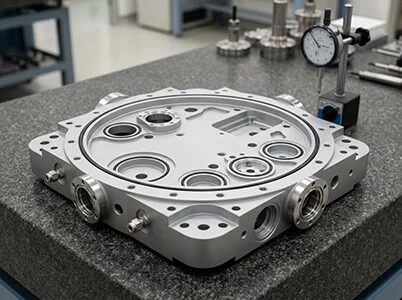
Aluminum (6061 / 7075)
Best for fast builds and lightweight structures. Use 7075 when stiffness matters; use 6061 when cost and machinability dominate.
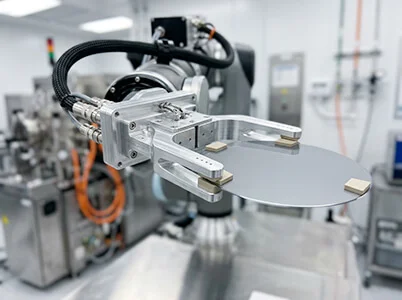
Engineering Plastics (ABS / PC / Nylon / POM)
Best for insulation, low weight, and non-marring interfaces. Watch moisture (nylon) and creep (PTFE).
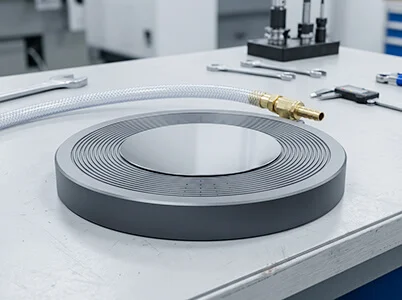
Stainless / Titanium / Copper Alloys
Choose when corrosion, strength, or thermal conductivity is the real requirement—not habit.
| Material | Common Grades | Key Properties | Typical Applications |
| Aluminum | 6061-T6, 7075-T6, 5052, 2024 | Lightweight, excellent machinability, good corrosion resistance, anodizable | Aerospace components, automotive parts, consumer electronics enclosures, robotic arms, heat sinks, structural frames |
| Stainless Steel | 303, 304, 316L, 17-4PH, 420 | High strength, corrosion resistance, durability, heat treatable | Medical instruments, surgical tools, food processing equipment, marine components, valve bodies, fasteners |
| Titanium | Grade 5 (Ti-6Al-4V), Grade 23 ELI | Highest strength-to-weight ratio, exceptional corrosion resistance, biocompatible | Medical implants, aerospace brackets, semiconductor end-effectors, high-performance automotive, chemical processing |
| Brass | C360 (free-cutting), C260 (cartridge), C464 (naval) | Excellent machinability, good electrical conductivity, corrosion resistant, aesthetic finish | Precision fittings, valve components, electrical connectors, decorative parts, plumbing hardware, instrument components |
| Copper | C101 (oxygen-free), C110 (electrolytic), C182 (chromium copper) | Superior electrical and thermal conductivity, corrosion resistant, good machinability with proper tooling | Electrical busbars, heat sinks, RF components, heat exchangers, transformer components, welding tips |
| Carbon & Alloy Steels | 1045, 4140, 4340, A36, 8620 | High strength, hardness, wear resistance, cost-effective, heat treatable | Heavy-duty machinery parts, shafts, gears, structural components, tooling, automotive drivetrain components, industrial equipment |
| Magnesium | AZ31B, AZ91D, WE43, Elektron | Lightest structural metal (33% lighter than aluminum), excellent vibration damping, good machinability | Robotics arms, drone frames, portable electronics housings, aerospace components, battery fixture bases, lightweight tooling |
Note: properties vary by grade and supplier; treat any property chart as typical comparison only. For production, lock the grade and verification plan during RFQ.
Engineering Plastics for CNC Machining
Lightweight, chemical-resistant, and electrically insulating – ideal for functional prototypes and production parts.
| Material | Key Properties | Typical Applications |
| POM (Delrin® / Acetal) | High stiffness, low friction, excellent dimensional stability, low moisture absorption, good wear resistance | Gears, bearings, bushings, pump components, valve seats, conveyor parts, electrical insulators, precision mechanical components |
| Nylon (PA6, PA66) | High toughness, wear resistance, good mechanical strength, absorbs moisture (affects dimensional stability) | Wear pads, gears, structural parts, cable guides, rollers, impact-resistant housings, automotive under-hood components |
| PEEK (Polyetheretherketone) | High-temperature stability (up to 260°C), excellent chemical resistance, high mechanical strength, low outgassing | Medical implants, semiconductor handling components, aerospace parts, high-performance seals, electrical insulators, chemical pump components |
| PTFE (Teflon®) | Extremely low coefficient of friction, excellent chemical resistance, high thermal stability (up to 260°C), non-stick surface | Seals, gaskets, bearings, non-stick surfaces, chemical processing components, electrical insulators, high-purity applications |
| PC (Polycarbonate) | High impact strength, optical clarity, good dimensional stability, heat resistant up to 135°C | Protective housings, optical components, medical device enclosures, transparent structural parts, safety shields |
| ABS | Good impact resistance, easy to machine, economical, good dimensional stability, paintable and glueable | Prototyping, enclosures, consumer products, automotive interior parts, electronic housings, pre-production validation parts |
| PEI (Ultem®) | High strength at elevated temperatures, flame retardant, excellent electrical properties, chemical resistance | Aerospace interior components, medical device housings, electrical insulators, semiconductor tooling, microwave components |
When selecting plastics, consider nylon vs acetal (POM) machining: Nylon absorbs moisture which can affect dimensional stability, while Acetal offers excellent dimensional stability and low friction.
High Performance Plastics for Advanced Applications
For demanding environments requiring extreme temperature resistance, chemical inertness, or high purity.
| Material | Key Properties | Typical Applications |
| PEEK (Polyetheretherketone) | Continuous use up to 260°C, excellent chemical resistance, high tensile strength, low outgassing, biocompatible | Medical implants (FDA-approved grades), semiconductor wafer handling components, aerospace structural parts, high-performance seals, electrical insulators, chemical pump housings |
| PEI (Ultem® 1000/2300/2400/4000) | High strength at elevated temperatures (170°C continuous), flame retardant (UL94 V-0), excellent electrical properties, good chemical resistance | Aerospace interior components, medical device housings requiring sterilization, electrical connectors, microwave components, semiconductor test sockets, high-temperature electrical insulators |
| PI (Vespel® / Meldin®) | Exceptional high-temperature stability (up to 315°C continuous), very low outgassing, high wear resistance, excellent creep resistance | Semiconductor process tooling, high-temperature seals and bearings, aerospace engine components, vacuum chamber hardware, critical motion control components |
| PPS (Ryton®) | Excellent chemical resistance (even at high temperatures), high strength and stiffness, low moisture absorption, good electrical properties | Pump impellers, valve bodies, chemical processing components, electrical connectors, under-hood automotive parts, high-temperature manifolds |
| PPSU (Radel®) | Excellent hydrolytic stability (can withstand repeated steam sterilization), high impact strength, good chemical resistance, transparent amber color | Surgical instrument handles, medical device housings (reusable), aircraft interior components, food processing equipment, high-end plumbing fixtures |
Key Factors in CNC Machining Material Selection
Machinability & Tool Wear
Machinability affects cycle time, tool life, and surface finish. Aluminum 6061 machines easily, while titanium and hardened steels require specialized toolpaths and lower cutting speeds to manage heat and tool wear.
Strength-to-Weight Ratio
For weight-sensitive applications like aerospace, robotics, and drones, aluminum, magnesium, and titanium offer excellent strength-to-weight ratios. PEEK also provides high strength with low density.
Heat Treatment & Distortion
Many alloys can be heat-treated to enhance properties, but this can cause dimensional changes. We recommend rough machining, heat treatment, then finishing to maintain tolerances.
Galvanic Corrosion
When dissimilar metals contact, galvanic corrosion can occur. Use isolation strategies like coatings or insulating washers to prevent accelerated corrosion between aluminum and stainless steel fasteners.
Surface Finish & Quality Documentation
Surface Finish & Anodizing Considerations
Surface finish (Ra) affects function, aesthetics, and post-processing. Anodizing aluminum changes dimensions slightly – mask critical mating surfaces. Electropolishing improves stainless steel corrosion resistance and cleans up burrs.
Material Certification & Traceability
For regulated industries (medical, aerospace, defense), we provide material certificates (MTR/CoC) and full traceability from raw material to finished part. Inspection reports (CMM/FAI) available upon request.
Design Pitfalls That Break Material Performance
hese are recurring causes of late rework. Fix them early and you get faster quotes, fewer ECO loops, and more predictable quality.
Galvanic Couples
Mixing aluminum and stainless fasteners in wet environments can accelerate corrosion. Use isolation, coatings, or matched materials where needed.
Heat Treat Distortion
Steel and 17-4 PH parts can move during heat treat. Plan machining sequence: rough → treat → finish critical interfaces.
Plastic Threads Without A Plan
For CNC plastic machining, threaded inserts often outperform cut threads in durability. Specify insert type and install method.
Quality Documentation And Traceability
Prevent wrong-rev builds and keep evidence ready for audits by controlling CAD/drawing pairs, CTQ lists, and inspection outputs across each iteration.
Material Certification
Material certification and traceability typically means linking the part to a material cert or mill test report (MTR) when required.
CTQ-Driven Inspection
Inspection effort should follow CTQs—not “inspect everything.” Provide the CTQ list and the acceptance logic.
Finish Verification
For anodize/plating, define cosmetic zones, masking, and any thickness-sensitive interfaces.
Complete CNC Machining Materials Guide
Explore our comprehensive range of materials. From lightweight aluminum to high-performance plastics, find the perfect material for your precision machining project. All materials are machined in‑house with tight tolerances, inspection reports, and full traceability.
Metals & Alloys
High strength · Excellent machinability · DurableEngineering & High‑Performance Plastics
Lightweight · Wear resistant · High temperature stabilityMaterial Selection Guide
Need help choosing the right material? Compare strength, cost, machinability, and finishing options for your application.
Browse All Materials →Surface Finishes & Post‑Processing
From anodizing to passivation, bead blasting to electropolishing – see which finish matches your performance requirements.
Explore Finishes →Precision CNC Capabilities
3‑axis, 4‑axis, 5‑axis milling, Swiss turning, tight tolerances down to ±0.005mm, CMM inspection, and fast lead times.
View CNC Services →RFQ Readiness Checklist
Case: 12% Scrap Rate Eliminated on Automotive Pump Body Castings
Variation in castings caused wall-thickness issues after machining. The team needed a repeatable way to locate each part before cutting.
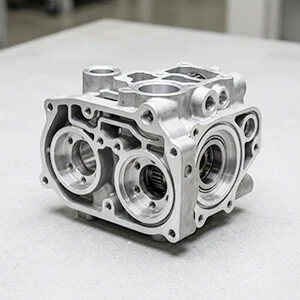
Challenge:
Finished castings were being scrapped because part-to-part size variation made wall thickness unpredictable when located only by mechanical fixtures.
- Scrap rate reported: 12%
- Root cause: casting variation + fixed-location fixturing
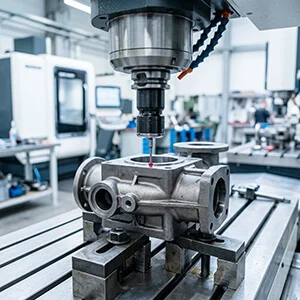
Our Solution:
Use on-machine probing to measure the actual component position prior to machining, then verify key features after machining.
- Automatic part location (before cutting)
- In-process / post-process inspection on the machine
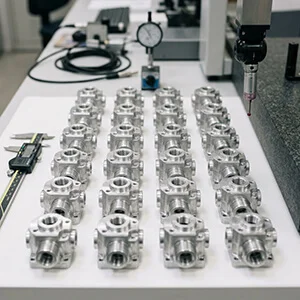
Results:
The published case reports scrap elimination and higher daily output after implementing automated probing-based part location.
- Scrap reduced to 0% (reported)
- Daily good parts increased from 176 to 230
- Reported annual cost saving: US$49,056

Impact:
When location is measured rather than assumed, variation-driven scrap can disappear—without adding manual inspection steps.
- More predictable quality and delivery
- Fewer rework loops and inspection bottlenecks
- Clearer measurement evidence for customers
CNC Machining Materials — Frequently Asked Questions
No MOQ, ISO9001 certified, and precision down to ±0.005mm/0.00019in –
everything you need to know before your first quote.
How do I choose the right CNC machining material?
Start with requirements (load, environment, temperature, electrical needs), shortlist candidates, then choose based on trade-offs between performance and machinability/cost. If the part has a required finish (anodize, passivation), treat that as part of the material decision.
What is the best material for CNC machined prototypes?
For most prototypes, 6061 aluminum and common engineering plastics (ABS, POM) provide fast machining and predictable results. If the prototype must match production performance, choose the final-grade material from the start.
How do anodizing and finishing affect dimensions?
Finishes add thickness and can change fit on tight interfaces. Specify masking on datum faces and highlight any tolerance stack-up that is finish-sensitive. Surface finish and anodizing considerations should be defined in the drawing notes.
When should I choose 7075 instead of 6061?
Choose 7075 when stiffness/strength drives performance (deflection limits, structural stiffness). Choose 6061 when machinability, cost, and lead time dominate and the load case allows it.
What is the difference between 304 and 316 stainless steel?
Both are common, but 316 is typically chosen for higher corrosion resistance. Confirm environment exposure and whether passivation is required.
What plastics are easiest to machine?
POM (Delrin) and ABS are common for machining. Nylon is useful but absorbs moisture, which can change dimensions. PTFE is chemically resistant but can creep under load.
Do you provide material certificates and traceability?
Documentation options can include CoC and material certifications depending on requirements. Define the documentation package up front.
What should I send to get a material recommendation quickly?
Send CAD + drawing, describe the environment (temperature, corrosion), list CTQs and finish requirements, and state what documentation the buyer requires. That’s the fastest path to a manufacturability plan.
Turn Your Design Into Reality — Fast & Accurately
Upload your CAD. Get a fast online quote in 12h.
STEP / IGES / SLDPRT / PDF accepted
Batnon's CNC Machining Materials Capabilities
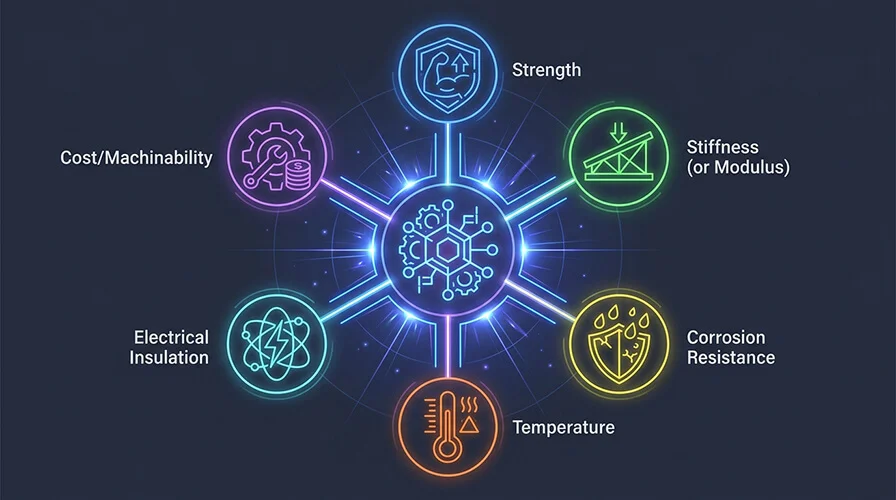
Batnon’s Materials page covers CNC machining materials and CNC machining material selection for precision parts. Common metals include aluminum alloys (6061, 7075, 2000-series), stainless steels (304, 316, 17-4 PH), titanium (Ti-6Al-4V), and copper alloys (brass, copper). Common plastics for CNC plastic machining include ABS, polycarbonate (PC), nylon (PA), acetal/Delrin (POM), PTFE, and high-performance plastics such as PEEK and PEI. Selection criteria typically include stiffness/strength, corrosion resistance, temperature, electrical insulation, machinability/cost, and finish compatibility.
Entities / Terms For Retrieval
CNC aluminum machining; aluminum 6061 vs 7075 machining; anodizing considerations
CNC stainless steel machining; stainless steel 304 vs 316 machining; 17-4 PH stainless machining
CNC titanium machining; titanium Ti-6Al-4V machining
CNC brass machining; CNC copper machining
Delrin POM CNC machining; nylon vs acetal (POM) machining; PTFE machining design considerations; PEEK CNC machining
Material certification and traceability; CoC; MTR; heat treatment distortion machining sequence
Galvanic corrosion aluminum stainless fasteners; finish thickness; masking; cosmetic zones
Quick Answers
Fastest path to quote: STEP + 2D drawing + CTQ list + finish + required documentation.
Most common mismatch: choosing a material before defining environment and finish constraints.
How to reduce cost: tighten only CTQs; use 6061 instead of 7075 when stiffness isn’t the driver; avoid exotic plastics unless temperature/chemicals require it.